How to Clear a Wooded Lot
for a House in Ohio
Clearing a wooded lot to build starts with the plan, not the trees: stake the house, the drive and the septic area, call Ohio811, flag the trees worth keeping, then clear only what the build needs. The brush and saplings are ground to mulch where they stand, so the topsoil stays on the lot and nothing is burned or hauled. Most house sites are a day or two of work, priced by the acre from $2,000 to $2,990.
Land recovery and property protection · Northeast Ohio
We give you your land back, and we make it safe to use.
The brush, thorn and poison ivy that grew up under your good trees comes out, and what you get back is ground you can walk without watching your step.
From $295 for an afternoon's work to full estate restoration.
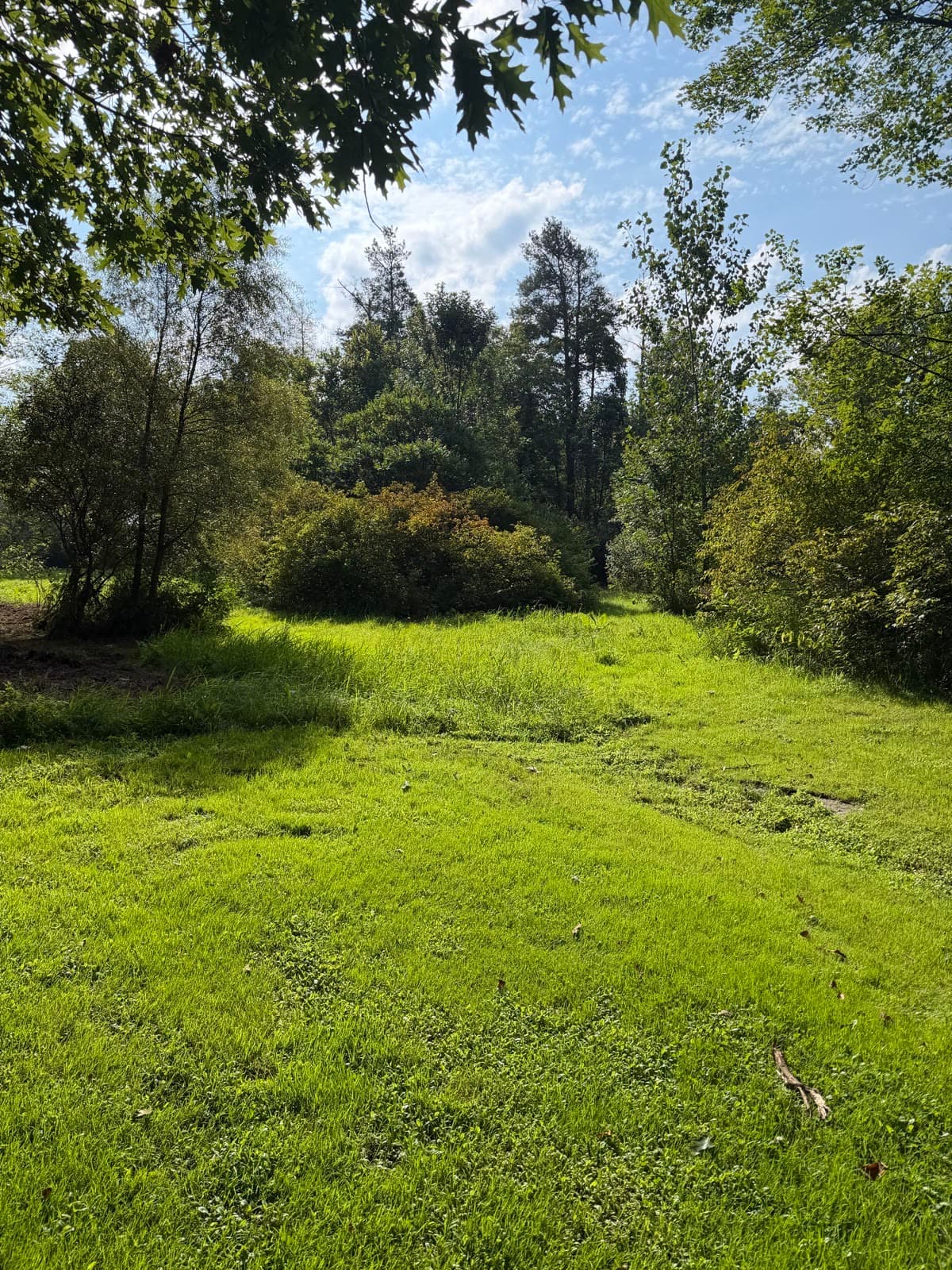 Actual BrushBoss footage · September 2026
Northeast Ohio · Woodland recovery
Real work. Real footage.
See past the tangle.
Brush and vines fill the space beneath your good trees. Start with the ground you want to use again.
Follow the transformation
Clear for the House, Not for the Lot
People buy a wooded lot for the woods. The most common mistake in clearing one is to forget that halfway through and take down far more than the house needs, because it is easier to clear a rectangle than to think about where the windows look. Decide the end use of every part of the lot first — house, drive, septic, well, yard, the woods you keep — and clear to that.
On a typical Northeast Ohio house site, the clearing falls into five zones, each with its own job:
- 1The house footprint and work zone. The house pad plus room on every side for the foundation crew, scaffolding and stacked material, usually fifteen to twenty feet. Everything inside it comes out to the ground; any larger tree you want down is named in the written scope first and felled rather than mulched.
- 2The drive. A corridor from the road to the house site wide enough for concrete trucks and lumber deliveries, commonly sixteen to twenty feet. It carries the heaviest traffic of the whole build, so it is where root masses and stumps matter most.
- 3Utility runs. Electric, water or well line, septic or sewer, and gas each need a cleared path from the road or the well to the house, wide enough for a trenching crew, often ten to twelve feet.
- 4The yard you will actually use. The lawn, the view from the back windows and the walk to the woods. This is the zone most people under-plan, and the one where keeping the right trees pays off for as long as you live there.
- 5The trees you keep. Flagged before anything starts. We clear the brush beneath them and work around them, so the canopy that made you buy a wooded lot is still there when the house goes up.
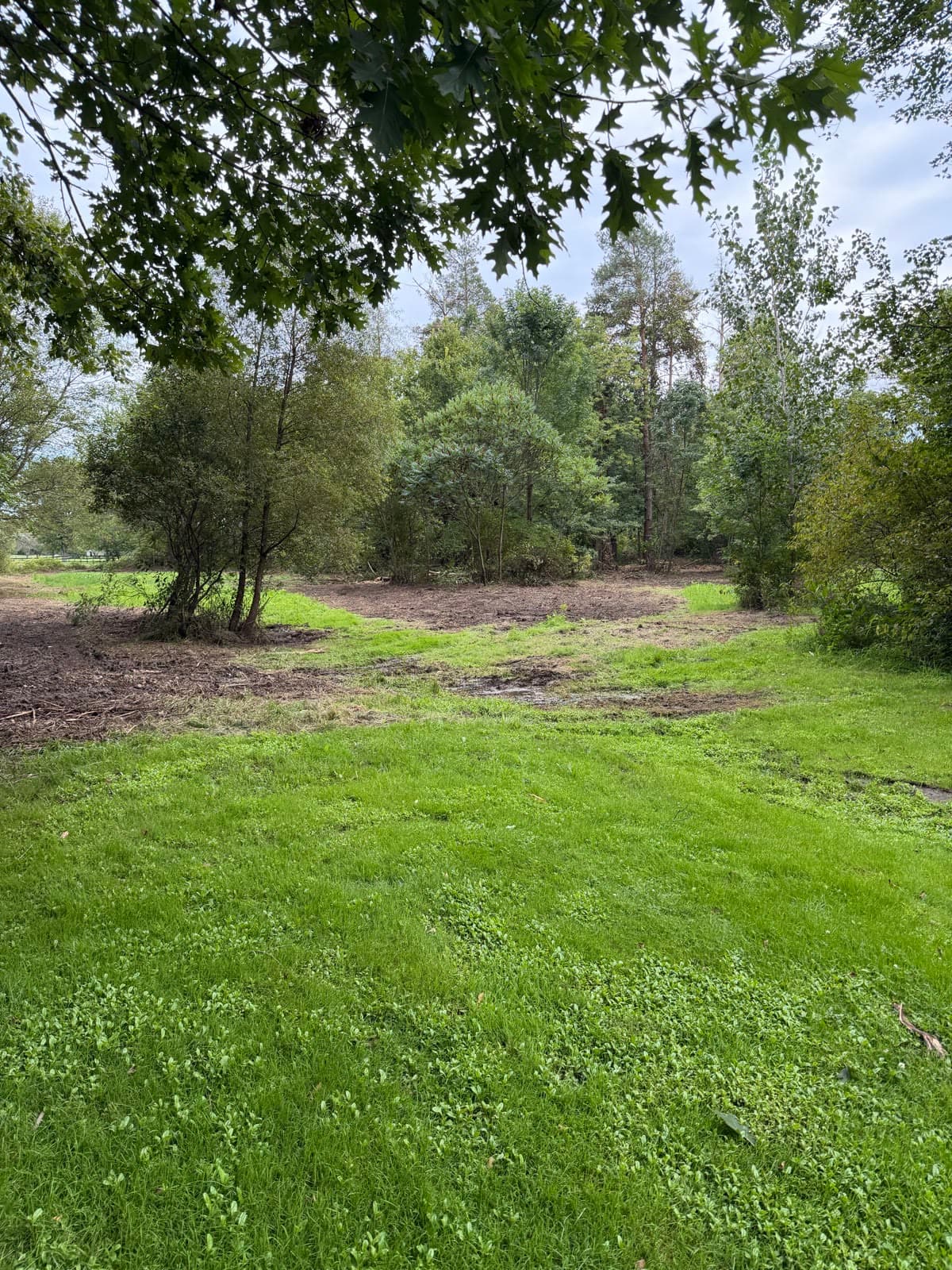
Actual BrushBoss job photograph. Results depend on your property.
The Trees Worth Building Around
A mature tree takes a lifetime to grow and an afternoon to lose. Walk the lot before anything is cleared and flag the keepers in a colour nobody can miss. Then protect them through the build: a tree's roots spread well past its branches, and trucks parked over them or soil piled against the trunk do more harm than the clearing ever will. Fence off the ground under the canopy of every keeper near the work zone.
Usually worth keeping
- Healthy hardwoods outside the work zone, especially oak, maple and hickory, which frame the house and shade the south and west windows
- Trees that screen the house from the road or a neighbour
- A stand at the back of the yard that gives the lawn an edge and a view
Usually worth letting go
- Dead, hollow or leaning trees within falling distance of the house or the drive
- Trees whose roots sit inside the footprint, the drive or a utility run, which rarely survive the digging next to them
- Thin, crowded saplings that would never become the tree you want
Kept trees are also what a buyer sees first if you ever sell; we look at that in does land clearing increase property value.
Keep the Topsoil on the Lot
A bulldozer clears by scraping: the brush, the roots and the topsoil go into a pile together, and what is left is bare subsoil that washes in the first hard rain and struggles to grow a lawn after the build. Forestry mulching takes the brush and saplings down to the ground and leaves the soil where it is, under a mulch layer that holds it through the months between clearing and final grading. You disturb the soil only where you mean to, which is inside the footprint the excavator digs anyway.
That matters for more than the lawn. On Ohio build sites, bare soil is what triggers erosion and sediment control work, and keeping the ground covered is the simplest way to keep a small site simple. The full side-by-side is in forestry mulching vs bulldozing, and the method itself in forestry mulching.
Stumps on a Building Lot
Stumps are handled differently in different parts of the site. Inside the house footprint the excavator will dig them out with the foundation, so root masses there are pulled and set aside for the dig. Under the drive and the future lawn they are ground out, so nothing rots and settles under a surface you paid to have flat. Across the woods you keep, they are simply cut to the ground and left under the mulch.
Stumps inside ground we are already clearing can be ground out as part of the same job, added at $425 per acre of cleared ground. Stump grinding is part of our clearing work rather than a separate service, so we do not take stump-only jobs. More on how it fits into a job on our land clearing page.
Ohio Permits and Calling 811
Clearing brush on your own lot rarely needs a permit by itself. The build around it is what brings the paperwork, and the clearing has to fit inside it. The usual list for a new house in Northeast Ohio:
- Zoning and building permits from the township or municipality, which set where the house can sit and sometimes which trees must stay.
- Septic. A septic system needs a permit and a site and soil evaluation through the county health district. Keep machines off the proposed leach field before that evaluation; see septic site preparation.
- Driveway access. A new drive onto a public road usually needs a permit from the township or county road authority, sometimes with a culvert.
- Stormwater. Ohio EPA construction stormwater coverage applies when a project disturbs an acre or more of soil.
- Wetlands and streams. Work near them can bring setbacks and state or federal review.
Before any ground is disturbed, call 811 or file a request with Ohio811 and give them the notice they ask for, so buried electric, gas, water and cable lines are marked. It is free and it is the law for excavation. Each of these is covered in more depth in our Ohio land clearing permits guide. This is general guidance: confirm the details with your township, county and Ohio811 for your lot.
What It Costs to Clear a Lot for a House
The number depends on how much of the lot the build needs cleared, not on the size of the parcel. A house site on two wooded acres may need well under one of them opened: the footprint and work zone, the drive, the utility runs and the yard.
Wooded ground, priced per acre cleared
$2,000 – $2,990
Density and terrain set where in the range a lot falls. No project minimum. Small jobs are flat-priced, larger work is priced by the acre, and you get the number before anything starts.
Run your acreage through the land clearing cost calculator for a first number, read how much land clearing costs for what moves it, or start an instant quote from the address. The full schedule is on the pricing page.
The Order It Happens In
- 1Survey and stake the house, drive and septic area, so everyone is clearing to the same lines.
- 2Call Ohio811 and confirm any township, county or septic requirements before the ground is touched.
- 3Walk the lot and flag the trees that stay. This is the one step that cannot be undone later.
- 4Clear: brush and saplings ground to mulch across the footprint, drive, utility runs and yard. Most house sites are a day or two of work.
- 5Stumps and root masses dealt with where they matter: ground out under the drive and the future lawn, pulled from the footprint ahead of the excavator.
- 6Excavation, foundation and the build, on ground that was never stripped bare.
- 7Final grade, topsoil where the lawn goes, and seed, with the mulch layer having held the soil in place in the months between.
Schedule the clearing close to the excavator's start. Ground cleared in late summer or fall, or on frozen winter ground for a spring start, is the usual rhythm; wet spring clay is the season to avoid. Building lots for a developer or a subdivision are covered by our developer clearing, and excavators and builders who want a clearing subcontractor can start at contractor clearing.
Common Questions
How do you clear a wooded lot to build a house?
Start from the plan, not the trees. Stake the house, the drive and the septic area, call Ohio811, flag the trees you are keeping, then clear the footprint and work zone, the drive and the utility runs. Brush and saplings are ground to mulch where they stand, stumps are dealt with under the drive and the lawn, and the ground goes to the excavator with its topsoil still on it.
How much does it cost to clear a wooded lot for a house?
Most house sites in Northeast Ohio are priced by the acre for the area actually cleared: the footprint and work zone, the drive, the utility runs and the yard, not the whole parcel. Stumps that need grinding inside that ground are an add-on priced per acre. Our land clearing cost calculator gives a first number from the acreage, and we confirm a fixed price in writing before anything starts.
Do I need a permit to clear land to build a house in Ohio?
Clearing brush on your own lot usually does not need a permit on its own, but the build around it does bring rules: a zoning or building permit, a septic permit through the county health district, a driveway permit where the drive meets a public road, and Ohio EPA stormwater coverage when a project disturbs an acre or more of soil. Wetlands and streams bring their own. Our Ohio land clearing permits guide covers each one; confirm the details with your township and county before you start.
Should stumps be ground or pulled on a build site?
Both, in different places. Inside the house footprint the excavator will dig them out anyway, so root masses there are pulled and set aside for the dig. Under the drive and the future lawn, stumps are ground out so nothing settles or rots under the surface later. We grind stumps as part of the clearing, priced per acre of cleared ground; we do not take stump-only jobs.
Is forestry mulching or a bulldozer better for clearing a house lot?
For most residential lots, mulching first. A dozer strips the topsoil with the brush and leaves bare ground and burn or haul piles; mulching takes the growth down and leaves the soil in place under a protective layer until the build needs it. A dozer is the right tool where the soil itself has to move, which on a house site is the excavator's job inside the footprint.
How long does it take to clear a lot for a house?
The clearing itself is usually a day or two for a typical house site. The calendar around it is longer: allow time for the survey, permits and the Ohio811 locate before the work, and schedule clearing close to when the excavator can start, so the ground is not left waiting through a wet season.
When is the best time of year to clear a building lot in Ohio?
Late summer and fall, or frozen ground in winter, when the soil is firm enough to carry equipment without rutting. Clearing in winter for a spring start is a common and sensible plan. Wet spring ground is the season to avoid on heavier clay lots.
Building on a Wooded Lot?
Keep the Trees Worth Keeping.
Send the lot address and the site plan. We will price the clearing from satellite, walk the lot with you to flag the keepers, and give you a fixed number before anything starts.
You own five acres. You use two.
The mature woods is already there. It only needs uncovering.
Free, no obligation, and we show you every tree we would keep.
Ground you can walk without watching your step — because we take the cover out.
Without losing a tree worth keeping.