You cannot walk into your own back yard
Thorn, vines and brush have closed the way in, so the part of the property you paid for is somewhere you look at rather than go. One morning opens it back up, and the trees stay exactly where they are.
Small jobs · Geauga County
Yard cleanup is the small job: the prickly strip along the drive, the corner behind the garage, the poison ivy and tangle at the end of the lawn that nobody has walked into for ten years. It is flat-priced — $295 up to 500 sq ft, $495 for a longer strip, $750 up to a quarter acre — with no project minimum, and you have the price before anything starts.
We are usually on a road in Geauga within the week. Send the address and we will tell you when we are next nearby — if it is your road, the machine is already coming out.
Land recovery and property protection · Northeast Ohio
We give you your land back, and we make it safe to use.
The brush, thorn and poison ivy that grew up under your good trees comes out, and what you get back is ground you can walk without watching your step.
From $295 for an afternoon's work to full estate restoration.
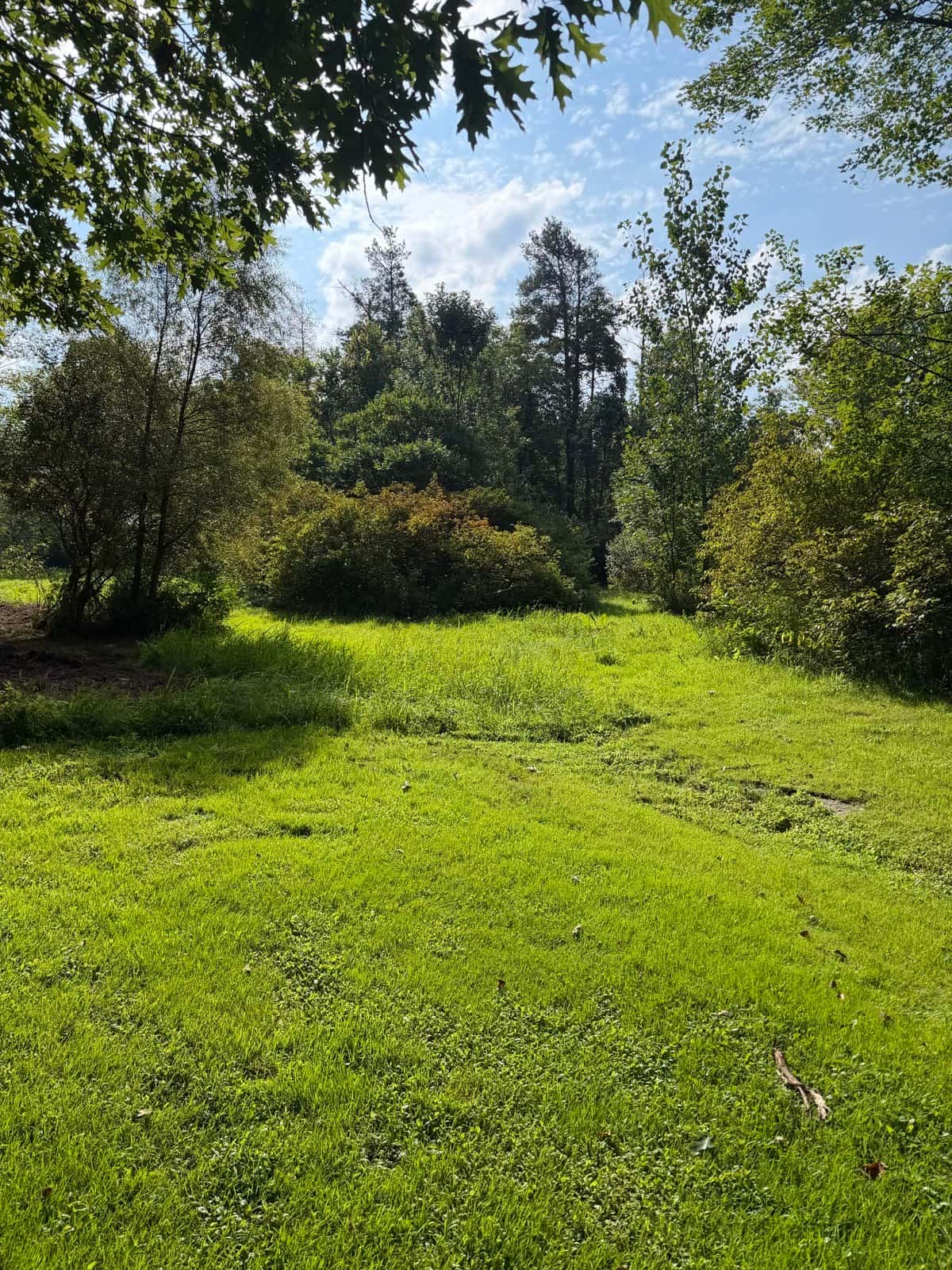 Actual BrushBoss footage · September 2026
Northeast Ohio · Woodland recovery
Real work. Real footage.
Brush and vines fill the space beneath your good trees. Start with the ground you want to use again.
Follow the transformation
Thorn, vines and brush have closed the way in, so the part of the property you paid for is somewhere you look at rather than go. One morning opens it back up, and the trees stay exactly where they are.
Along the ground and up the trunks, right where you would put a hand out. It is the single fastest reason a family stops using the back of a property — and it comes out with everything else.
Deep shade over damp leaves that never dry, at the edge where the kids and the dog actually go. Clearing takes the cover away, and leaves open ground that dries in the sun.
The drive narrowing, the tree line creeping over the lawn, the corner gone wild. It happens a few feet a year, which is exactly why you stopped noticing — and why it is so obvious to anyone pulling in.
None of these are about tidiness. They are all the same thing — you own the land and cannot use it. Getting the run of your own place back is the whole job.
Flat prices for defined areas. No project minimum, never by the hour.
Two or more on the same road the same day and you each get a $50 credit toward your next visit. The machine only comes out once, so the saving is real.
Bigger than this? Woodland restoration covers acreage, trails, ponds and open views, and the pricing page shows the whole ladder.
The reason most people miss
The prickly, thorny stuff at the back of the yard does not just block your view. It holds deep shade, a layer of wet leaves that never dries out, and thick cover deer bed down in — the cover ticks live in. Much of it is bush honeysuckle, though most people just call it brush.
And it sits right between the house and everywhere the grandchildren, the guests and the dog actually go. That wall of green is the reason the back of the property stopped being part of it.
It is rarely just brush, either. That same edge is where poison ivy runs — along the ground, up the trunks, through the tangle where you cannot see it until you are already in it. Vines are what make an overgrown edge genuinely unusable rather than merely ugly, and they come out with everything else.
Cover
What the tangle holds
Deep shade, a layer of wet leaves that never dries out, and thick cover deer bed down in. That is habitat: the cover ticks live in, and where poison ivy runs along the ground unseen.
Step one
The CDC's advice for a yard
The CDC's advice for reducing tick encounters in a yard starts with clearing brush and leaf litter. That is the entire job.
Open
Ground you can use again
Open ground, dry, with light reaching the floor and every good tree still standing — somewhere the family, a guest who does not know the property, and the dog can all walk without watching their step.
Clearing takes that layer out. The big trees stay, the canopy stays, and the wet tangle at knee height is what goes — fewer places for ticks to live, and ground that dries in the sun. What is left is somewhere the people you love, and the animals, can be without anyone checking the ground first.
We describe what leaves the property — the brush, the vines, the damp layer underneath — and nothing more. We make no promise about what lives in it, and we will not let a statistic make one for us.
Source: CDC, Preventing Tick Bites — “Remove leaf litter. Clear tall grasses and brush around homes and at the edge of lawns.”
Not sure what is growing at the edge? The invasive species guide shows how to tell honeysuckle, multiflora rose, autumn olive and buckthorn apart. If it is mostly poison ivy, the poison ivy removal page covers how it comes out and what to expect afterwards.
Kept — the yearly plan
Clearing is a strong first move, not a cure. Mulching knocks everything back and the result commonly holds for three to five years, but it does not kill the roots or empty the seed bank — so what happens in the first couple of seasons decides whether the ground stays open or slowly closes again.
Years one to three
From $195 / year
The window that decides whether the clearing holds. Cut stumps resprout and the seed bank is still live, so this is one visit a year while that settles — the cheapest possible version of the work, because it is catching growth at ankle height instead of head height.
Every property, for the first three years after clearing
Every two to three years
Quoted by area
Once it has settled, the main ground does not need annual attention. A pass every couple of years keeps it where it is, and most of what we take is thin regrowth rather than anything established.
Restored woodland and acreage that has been through Establish
Yearly, or twice yearly
From $195 / year
The parts that genuinely do come back fast — the lawn edge, a drive line, a trail you walk, anywhere vines and thorn have light. High-traffic ground held open every season.
Trails, drive lines, lawn edges, pond surrounds
Clearing ground the first time is the expensive part. Holding it costs a fraction of that, because a season of regrowth on open ground is nothing like the tangle that was there before — and because a scheduled visit means the machine is already on your road. You can put one area on a plan and leave the rest — most people start with the edge they actually walk. A lawn mower for the woods. The lawn does not get mown once.
Ask about a plan →A real price. A driveway, fence line or corner up to 500 sq ft is $295, a longer strip is $495, and up to a quarter acre is $750. We agree the number before anything starts and it does not change. There is no project minimum.
Yes, and we would rather you asked. Most of what people call about is an hour or two of work. The way it works economically is that we clear a whole road in a day rather than making one trip for one small job. Two or more on the same road the same day and you each get a $50 credit toward your next visit. The machine only comes out once, so the saving is real.
Prickly briars, scrub and the unwanted stems crowding your good trees go in one end and clean mulched wood chips come out the other. The chips are spread where they fall and left as cover. Nothing is burned, nothing is hauled away, and no roots are pulled, so the soil stays put and the ground is walkable the same day.
No. Every tree worth keeping stays. We walk it with you and show you which ones before anything starts. What comes out is the brush, the vines, the thorn and the crowding saplings — not the trees you have been looking at for twenty years.
A brush hog knocks material down and leaves a rough stubble, and it cannot take woody stems. This grinds everything to a fine mulch and spreads it, so what you walk out onto is groomed rather than merely cut — and it takes the woody stems a mower cannot. A landscaper with hand tools will quote you weeks for what this does in a morning.
Send the address and we will tell you what it costs. If we are already working your road that week, we will say so.
The tree line took a few feet a year until the lawn got small.
It goes back where it was, and every tree stays standing.
A drive or lawn edge up to 500 sq ft is $295 and about an hour.
Ground you can walk without watching your step — because we take the cover out.
Without losing a tree worth keeping.