Common Land Clearing Problems
— and How to Solve Them
Most land clearing problems share the same pattern: they started small and got ignored. A few saplings became a thicket. A patch of honeysuckle became an acre. Now the property you bought for the space is unusable — and the problem is growing every season.
Land recovery and property protection · Northeast Ohio
We give you your land back, and we make it safe to use.
The brush, thorn and poison ivy that grew up under your good trees comes out, and what you get back is ground you can walk without watching your step.
From $295 for an afternoon's work to full estate restoration.
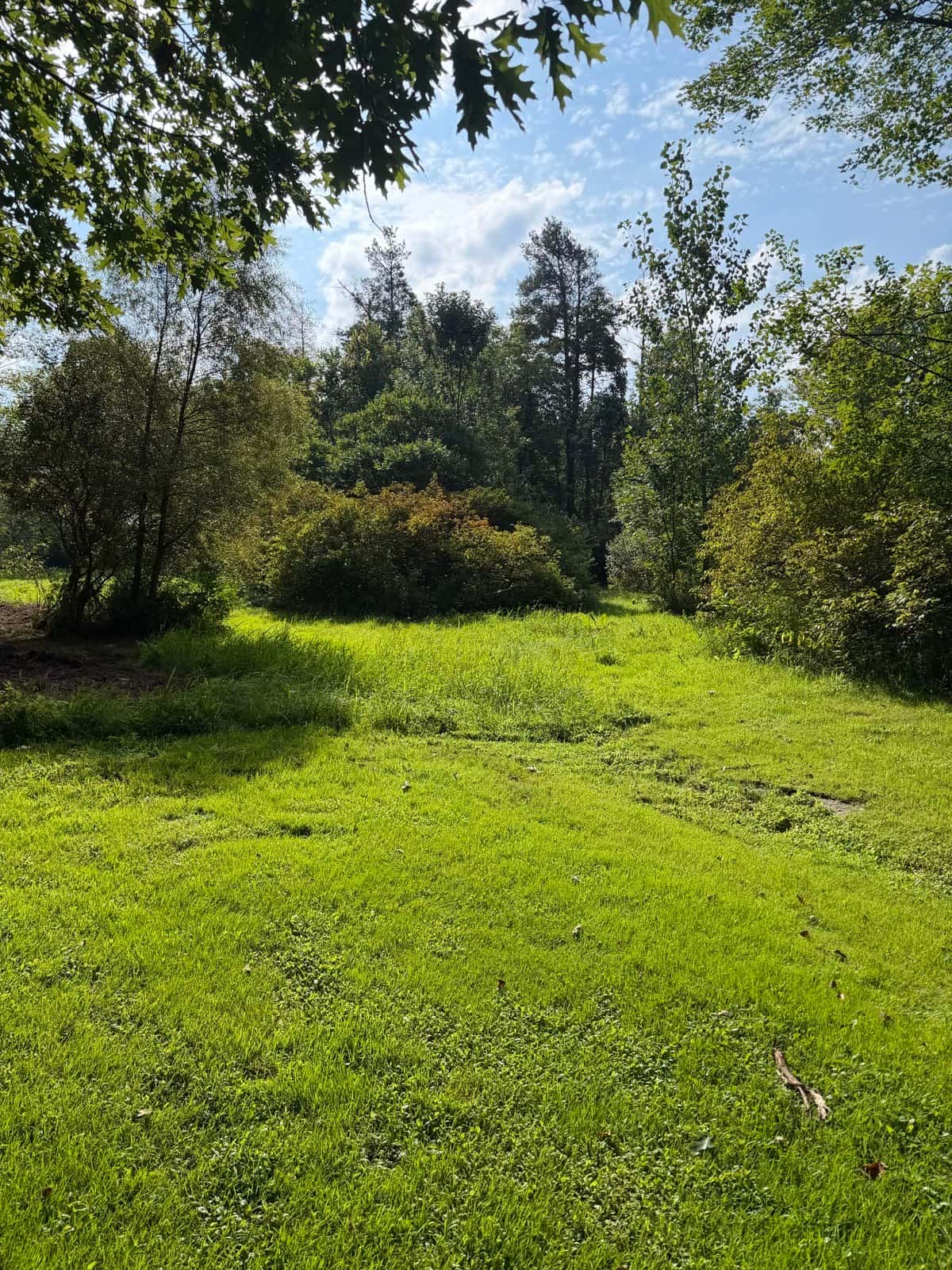 Actual BrushBoss footage · September 2026
Northeast Ohio · Woodland recovery
Real work. Real footage.
See past the tangle.
Brush and vines fill the space beneath your good trees. Start with the ground you want to use again.
Follow the transformation
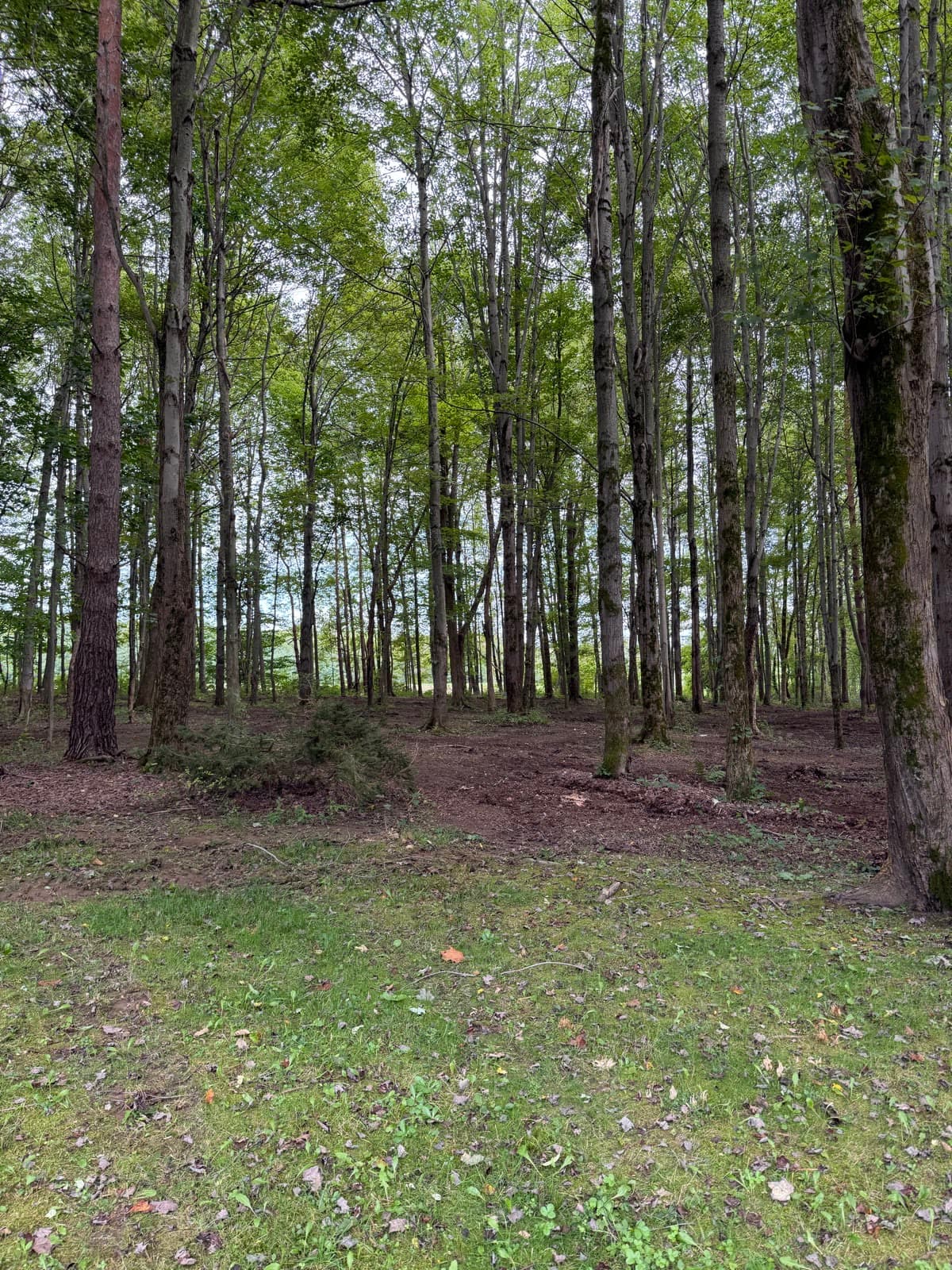
Actual BrushBoss job photograph. Results depend on your property.
Why Do Land Clearing Problems Get Worse Every Season?
Every one of these is the same problem wearing a different coat: you own the land and cannot use it. The prickers and thorn stop you walking in. The poison ivy runs along the ground and up the trunks where you do not see it until you are already in it. The damp tangle underneath is the cover ticks live in, right at the edge where the family and the dog actually go. Meanwhile the tree line takes another few feet off the lawn, and the stems that were ankle-high are now young trees.
It happens a few feet a year, which is why nobody notices until the back half of the property has quietly become somewhere they drive past. The cost of fixing it climbs with the stem thickness — ankle-high seedlings are a morning’s work, a decade’s saplings are a machine job.
Which Land Clearing Problem Are You Facing?
Pick the issue that matches your property: overgrown land, invasive species, fire risk, storm damage, buried property lines, or blocked trails. Each guide explains what you are seeing and why it happens, then points you to the service that gets the ground back or the guide for doing a small patch yourself.
The prickers and brush have taken the back of the property. You can see it from the house but you cannot walk into it.
Read the full guide →🪵Invasive SpeciesThe wall of green that leafs out first and holds on longest. Most people just call it brush — and it is the structure the whole tangle is built on.
Read the full guide →🔥Fire HazardDry dead material stacked up against the tree line and the outbuildings, thick enough that nothing gets through it but fire.
Read the full guide →🗺️Lost Property LineThe fence has disappeared and nobody is quite sure where the line runs any more. Poison ivy up every post does not help.
Read the full guide →🧳Trails That Close InThe deer paths and old lanes into the back acreage have grown shut, and every path you beat open is gone by the next summer.
Read the full guide →⚡Storm DamageFallen trees, broken limbs, and tangled debris left behind after storms making your property unusable.
Read the full guide →Common Questions
Why does overgrown land get worse every year?
Two to three feet a year in this climate. Ankle-high seedlings are chest-high brush in two seasons and young trees in a decade, and the price follows the thickness — a morning at year one can be three days at year five. The other thing that compounds is what moves in behind it: vines climbing the trees you want to keep, poison ivy along the edge you walk, and the deep damp cover that ticks live in.
What invasive species are the biggest problem in Ohio?
Bush honeysuckle (Amur and Morrow varieties) is Ohio's most aggressive invasive, forming dense thickets that shade out native plants. Multiflora rose creates impenetrable thorny barriers. Autumn olive and Bradford pear spread rapidly via bird-dropped berries. All four species resist mowing because the root systems survive and resprout — clearing that takes the root crown down, followed by visits to cut back the resprouts, is the most effective mechanical control.
How does overgrown brush create a fire hazard?
Dead brush and accumulated vegetation act as ladder fuels that carry ground fires into the tree canopy. Dense undergrowth close to the house creates a direct path for fire to reach buildings. Defensible space means cleared zones around structures where fire has no fuel to reach the building. Forestry mulching creates defensible space by grinding brush into a thin mulch layer that decomposes rather than burns.
How do I find my property lines when they're overgrown?
Start with a professional land survey to locate and mark your exact boundaries; the surveyor quotes that work. Once markers are set, we clear a walkable corridor along the property line. This exposes old fences, reveals encroachments, and creates a maintained boundary you can see year-round. Without clearing, property line disputes and encroachments go unnoticed for years.
Can you cut trails through wooded property?
Yes. We open walking and riding trails through brush and young trees, grinding everything into a natural mulch surface that suppresses regrowth in the trail bed and gives a clean surface underfoot. Most residential trail systems are completed in a day.
How do you clean up storm damage on wooded property?
Storm damage cleanup on wooded lots requires two capabilities: moving and organizing large debris (fallen trunks, root balls) and processing smaller material (broken limbs, tangled brush). Large pieces are stacked and sorted, while smaller trees and brush are ground into mulch on-site. This eliminates hauling costs for most of the material — the debris becomes ground cover instead of filling a dumpster.
What actually comes out
Five things go. Everything worth keeping stays.
People say “land clearing” and picture a bulldozer and an empty lot. This is the opposite of that. Here is the actual list of what we take out of a Northeast Ohio property.
- 01
Prickly bushes thorn, briar, multiflora rose
The reason nobody has walked back there in ten years. You cannot mow it, you cannot pull it, and every year it takes a few more feet. This is the single thing most people call us about, whatever they end up calling it.
- 02
Poison ivy and the rest of the vines
Running along the ground and climbing the trunks, right through the tangle where you cannot see it until you are already in it. Vines are what turn an overgrown edge from untidy into genuinely unusable — and left alone, they strangle the good trees they are climbing.
- 03
Ticks and what holds them
The damp tangle at knee height is where they live — deep shade, wet leaves that never dry, and thick cover the deer bed down in. It sits between the house and everywhere the family walks. Take the layer out and you take away what they depend on.
- 04
Invasive brush mostly bush honeysuckle
The wall of green that leafs out before anything native and holds on after everything else has dropped. It shades out the forest floor, so nothing else grows, and it is the main structure the whole tangle is built on.
- 05
Crowding saplings the volunteers between the good trees
Not the trees you want — the volunteers that came up thick in the gaps and are now competing with the trunks worth keeping. Thinning them is what gives the good trees room and lets light back down to the ground.
And what is left standing?
The woods you already own. Northeast Ohio is maple and beech country — sugar maple, American beech, red oak, shagbark hickory, black cherry, birch in the wetter ground. Those trees are already there, full grown, and have been the whole time. They are just behind the tangle.
Nothing here needs planting. It needs uncovering.
Know Your Problem?
Get a Free Instant Quote.
Enter your address, tell BrushBoss what is blocking the land, and get a quick planning estimate based on acreage, access, density, and terrain. The answer helps you decide whether the job is still a DIY cleanup or ready for professional mulching.
You own the land. You just cannot use it.
That is one layer of brush, and it comes off in a morning.
We'll tell you what it costs. From $295, no project minimum.
Ground you can walk without watching your step — because we take the cover out.
Without losing a tree worth keeping.