Cover
What the tangle holds
Deep shade, a layer of wet leaves that never dries out, and thick cover deer bed down in. That is habitat: the cover ticks live in, and where poison ivy runs along the ground unseen.
Most people do not know these by name. They know them as the prickers, the wall of green, the stuff you cannot walk into. They crowd out everything native, they hold the damp cover ticks live in, and poison ivy runs right through them. Mowing does not kill them — the roots survive and come back thicker every season.
Land recovery and property protection · Northeast Ohio
We give you your land back, and we make it safe to use.
The brush, thorn and poison ivy that grew up under your good trees comes out, and what you get back is ground you can walk without watching your step.
From $295 for an afternoon's work to full estate restoration.
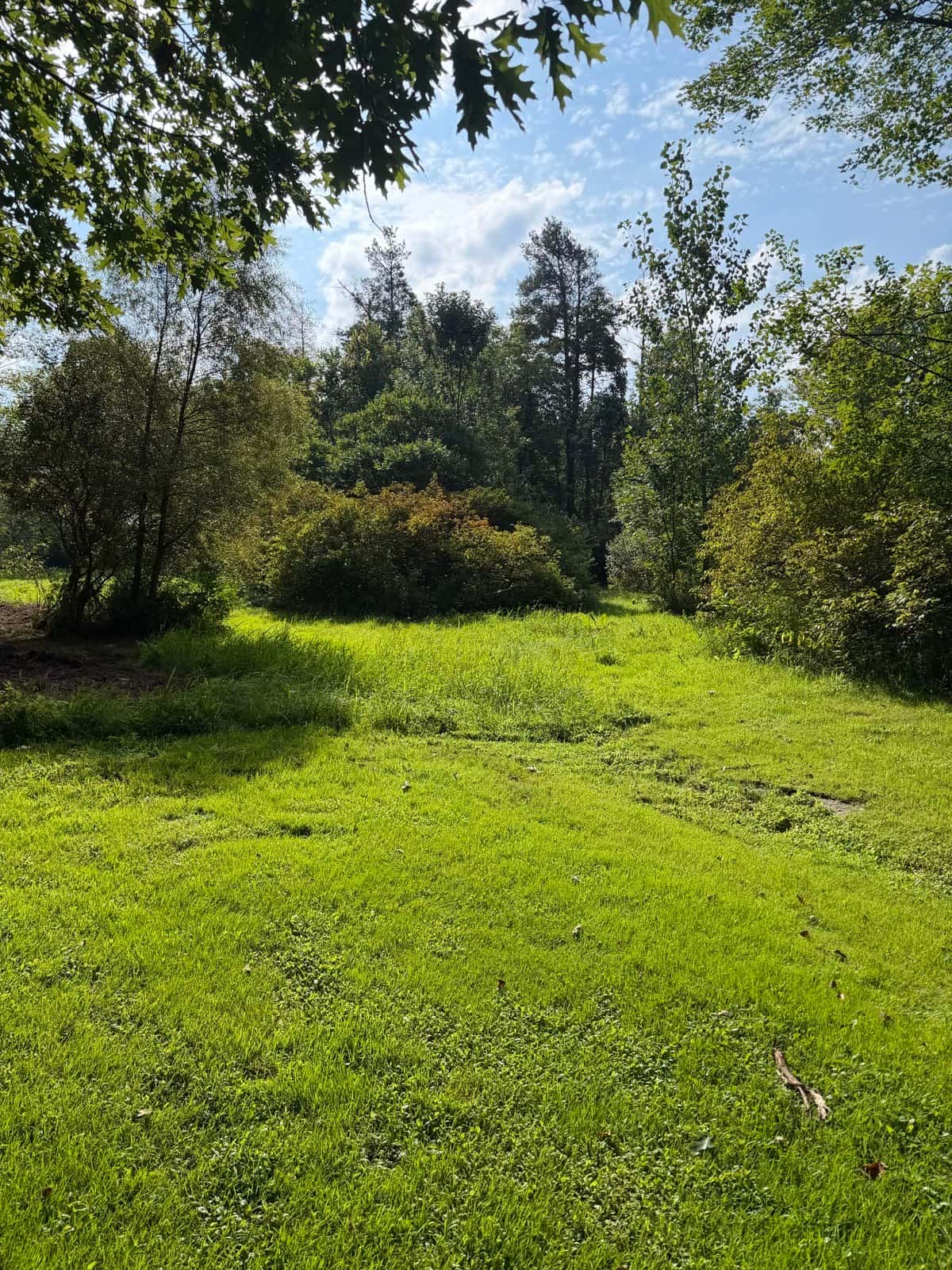 Actual BrushBoss footage · September 2026
Northeast Ohio · Woodland recovery
Real work. Real footage.
Brush and vines fill the space beneath your good trees. Start with the ground you want to use again.
Follow the transformation
Invasive plants were introduced to Ohio for landscaping, erosion control, and wildlife habitat. They escaped cultivation decades ago and now dominate millions of acres of woodland, field edges, and residential properties. Bush honeysuckle alone is among the most widespread invasive shrubs in Ohio's woodlands.
These species share a strategy: they outcompete native plants for sunlight, water, and soil nutrients, then spread rapidly through bird-dispersed berries and aggressive root systems. Each year without intervention, the infestation expands and becomes more expensive to control. Ohio State University Extension puts it plainly in its fact sheet on bush honeysuckle (F-68): left alone, it forms pure, dense thickets with nothing else growing in them.
The giveaway is late fall. Walk the property in November, after the maples and oaks are bare, and the understory that is still green is almost all invasive: bush honeysuckle along the lawn edge, and common and glossy buckthorn in the fencerows and the wetter ground. In spring the order reverses — they are the first green in the woods, weeks ahead of the natives.
In an old field the sign is different: thorny saplings coming up through the grass in rows along the edges. That is usually wild Callery (Bradford) pear, illegal to sell or plant in Ohio since January 1, 2023 according to the Ohio Department of Natural Resources, often mixed with autumn olive, which OSU fact sheet F-69 places on woodland edges and abandoned fields. For a second opinion on what you are looking at, the Geauga Park District's naturalists answer identification questions, and the Geauga Soil & Water Conservation District keeps a homeowner resource list for invasives.
How It Comes OutThe thicket is ground to mulch where it stands, stems and crowns together, and every tree worth keeping is left standing. The mulch stays on the floor as cover, which shades the seed bank these shrubs leave behind and slows the next wave of seedlings. Nothing is hauled and nothing is burned.
Where the seed bank is heavy, plan on follow-up visits through the first year or two: what comes back from root fragments and seed is cut back while it is still soft. The work is mechanical throughout. Public land managers run the same long game — Cleveland Metroparks has run a standing program against its top invasive plants since 2009.
Ohio's most aggressive invasive. Leafs out before native plants and holds leaves later, shading out everything underneath. One of the most widespread invasive shrubs in Ohio's woods.
Full removal guide →🌹Multiflora RoseImpenetrable thorny thickets that spread by root suckers and bird-dropped seeds. Originally planted for erosion control, now classified as a noxious weed in Ohio.
Full removal guide →🍂Autumn OliveNitrogen-fixing shrub that changes soil chemistry to favor more invasives. Produces massive quantities of speckled red berries spread by birds across entire properties.
Full removal guide →🌸Bradford PearBanned in Ohio since 2023. Seeds escape to form thorny Callery pear thickets with weak wood that splits in storms. A growing problem on rural properties and field edges.
Full removal guide →🌳BuckthornCommon and glossy buckthorn fill woodland edges, fencerows and wet ground across Northeast Ohio, staying green into late fall and shading out everything beneath them.
Full removal guide →Bush honeysuckle has opposite leaves (pairs facing each other on the stem), tubular flowers that start white or yellow and fade to pink, and clusters of red berries in fall. The easiest identification is in November — honeysuckle holds its green leaves 2-3 weeks after native trees have dropped theirs. Every green patch you see in late fall is likely honeysuckle.
Mowing and bush hogging cut invasive species above ground but leave the root system intact. Most Ohio invasives — honeysuckle, multiflora rose, autumn olive — have extensive root networks that survive cutting and resprout vigorously. Some species like multiflora rose actually spread faster after mowing because cut canes that contact soil can root and form new plants. Clearing takes the root crown down with the stems, and follow-up visits cut back what resprouts while it is still small.
For small infestations — a dozen plants or fewer — yes. Pull seedlings and young shrubs when the soil is moist so the whole root comes out, and cut back resprouts while they are ankle-high. Once an invasive covers a quarter acre or more, the volume overwhelms hand methods: a half-acre honeysuckle thicket with hundreds of stems is weeks of weekend work.
Clearing invasive brush from standing woods costs $2,000 to $2,990 per acre in Northeast Ohio, depending on how dense the growth is, and smaller patches are flat-priced from $295. Everything is ground to mulch on site, so there are no hauling fees. Resprouts and seedlings from the seed bank follow in the first seasons, so plan on follow-up visits to cut them back while they are ankle-high.
Sources: Ohio State University Extension fact sheet F-68: Bush Honeysuckle; Ohio State University Extension fact sheet F-69: Autumn Olive and Russian Olive; ODNR: Invasive Plants; ODNR: Callery Pear; Geauga Soil & Water Conservation District: invasive plant resources; Geauga Park District: Ask a Naturalist; Cleveland Metroparks: Invasive Plant Management. All checked October 10, 2026.
The reason most people miss
The prickly, thorny stuff at the back of the yard does not just block your view. It holds deep shade, a layer of wet leaves that never dries out, and thick cover deer bed down in — the cover ticks live in. Much of it is bush honeysuckle, though most people just call it brush.
And it sits right between the house and everywhere the grandchildren, the guests and the dog actually go. That wall of green is the reason the back of the property stopped being part of it.
It is rarely just brush, either. That same edge is where poison ivy runs — along the ground, up the trunks, through the tangle where you cannot see it until you are already in it. Vines are what make an overgrown edge genuinely unusable rather than merely ugly, and they come out with everything else.
Cover
What the tangle holds
Deep shade, a layer of wet leaves that never dries out, and thick cover deer bed down in. That is habitat: the cover ticks live in, and where poison ivy runs along the ground unseen.
Step one
The CDC's advice for a yard
The CDC's advice for reducing tick encounters in a yard starts with clearing brush and leaf litter. That is the entire job.
Open
Ground you can use again
Open ground, dry, with light reaching the floor and every good tree still standing — somewhere the family, a guest who does not know the property, and the dog can all walk without watching their step.
Clearing takes that layer out. The big trees stay, the canopy stays, and the wet tangle at knee height is what goes — fewer places for ticks to live, and ground that dries in the sun. What is left is somewhere the people you love, and the animals, can be without anyone checking the ground first.
We describe what leaves the property — the brush, the vines, the damp layer underneath — and nothing more. We make no promise about what lives in it, and we will not let a statistic make one for us.
Source: CDC, Preventing Tick Bites — “Remove leaf litter. Clear tall grasses and brush around homes and at the edge of lawns.”
Tell us about your property and the species you're dealing with. We'll send a satellite assessment and ballpark estimate the same day.
The cover ticks live in sits at the edge of your lawn.
Taking it out leaves fewer places for them to live, and it is a morning's work.
We'll tell you what the edge you walk would cost. From $295.
Ground you can walk without watching your step — because we take the cover out.
Without losing a tree worth keeping.