Fence Line Clearing in Northeast Ohio
Fence line clearing in Northeast Ohio starts at $295 for a run up to 500 sq ft, with a longer strip at $495 and whole boundaries from $2,000 per acre. The brush, vines and volunteer trees grown into the wire are ground to mulch right up to the line, while the posts, rails and wire stay standing. It suits pasture fences, estate boundaries and property lines you can no longer see.
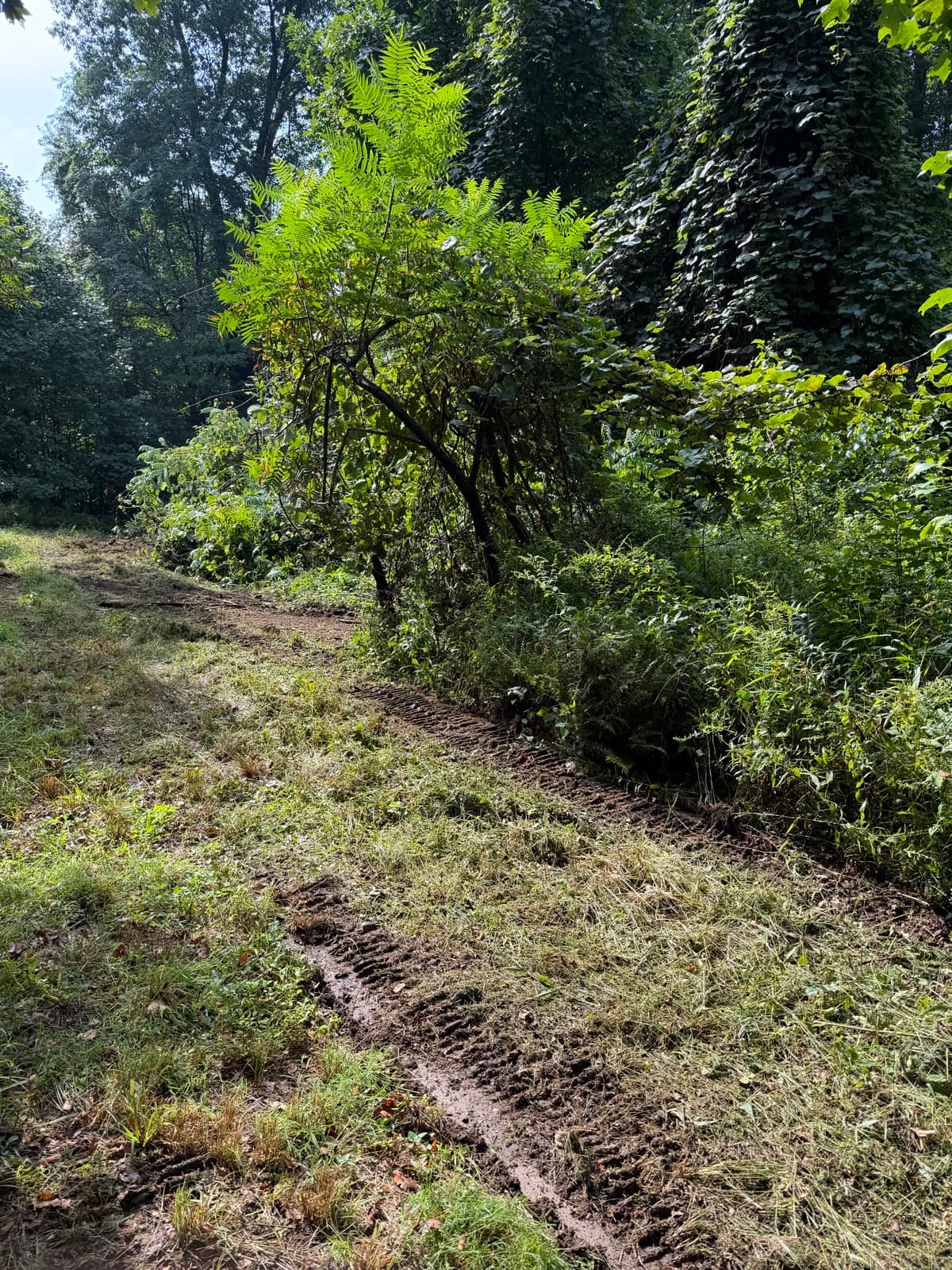
Land recovery and property protection · Northeast Ohio
We give you your land back, and we make it safe to use.
The brush, thorn and poison ivy that grew up under your good trees comes out, and what you get back is ground you can walk without watching your step.
From $295 for an afternoon's work to full estate restoration.
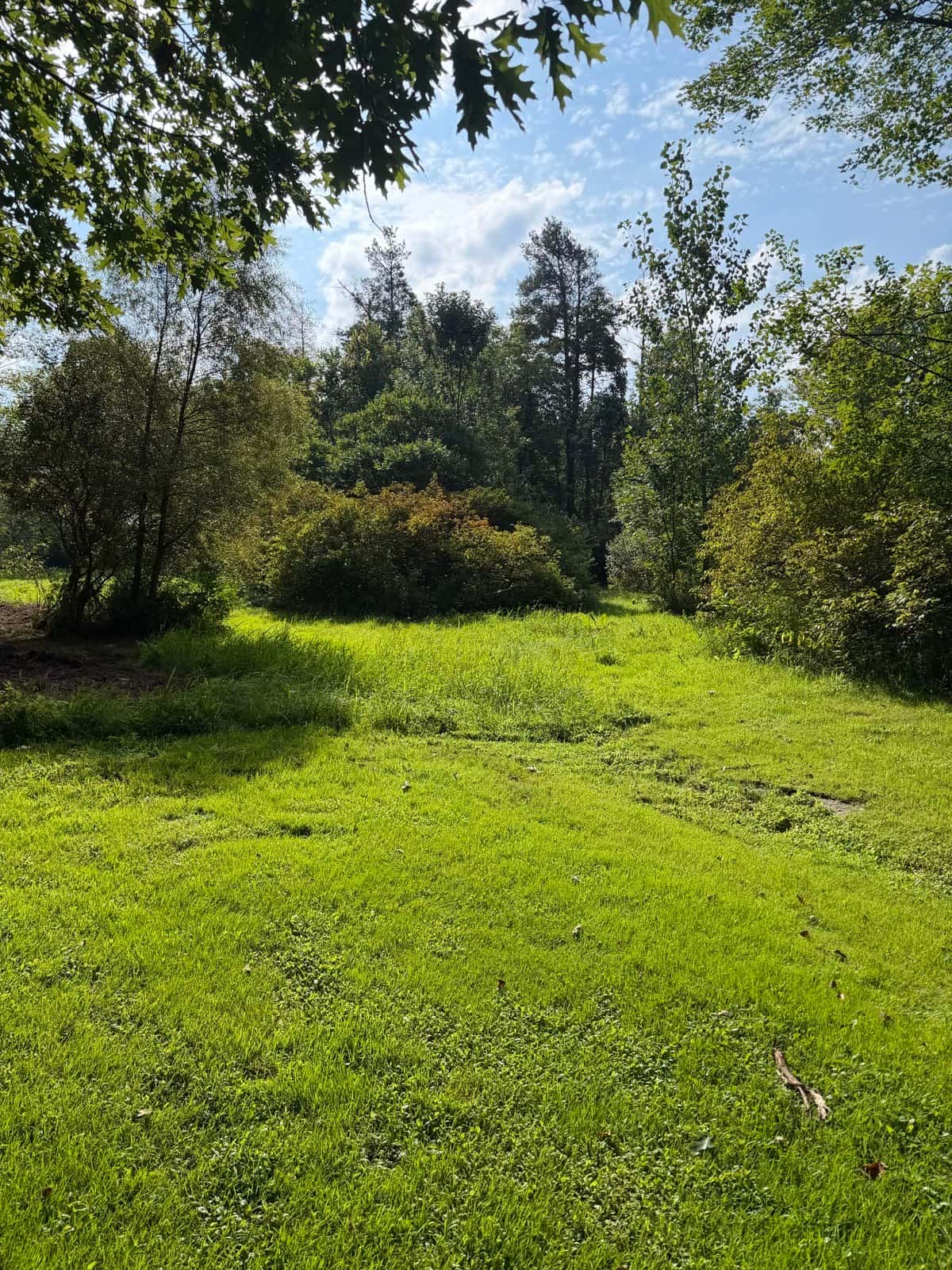 Actual BrushBoss footage · September 2026
Northeast Ohio · Woodland recovery
Real work. Real footage.
See past the tangle.
Brush and vines fill the space beneath your good trees. Start with the ground you want to use again.
Follow the transformation
Clearing Without Fence Damage
Fence line clearing is forestry mulching done with care along existing fence rows and property boundaries. The challenge is not just clearing vegetation — it is clearing vegetation that has grown through, over, and around wire, posts, and rails without destroying the fence underneath.
Every tree is set down away from the fence before it is ground, never into it. That is what makes it possible to clear right up to a fence line without touching it.
The result is a clean, visible property boundary with intact fencing. Vegetation that took years to bury your fence is removed in hours. The ground mulch left behind suppresses regrowth so the fence line stays clear longer.
What Happens When Fence Rows Go Wild
In Northeast Ohio, an unmaintained fence row disappears into brush within a few seasons. Trees grow through wire fencing, bending posts and snapping wire. Multiflora rose, once promoted as a “living fence”, spreads along the row and builds a thorny barrier on both sides.
Once the fence row is overgrown, you lose sight of your property boundary. Survey markers get buried under leaf litter and roots. Neighbors encroach without realizing it, because no one can see where the line actually is, and by the time a surveyor comes out the cleanup has grown with it.
Clearing Brush From a Fence Line
Trees growing through wire fencing call for judgment. If a tree has grown around the wire, the wire is already compromised and will need replacing regardless; we clear the tree and flag that section for fence repair. Where trees are simply growing beside the fence, we take them down and grind them without the fence ever being touched.
A fence line clearing opens a corridor on your side of the boundary wide enough to see the fence along its whole length and to keep it open afterwards with an ordinary mower. The mulch layer left behind holds regrowth back along the corridor, which stretches the time between maintenance visits.
Property Line Clearing
Property line clearing is the same work along a boundary that may have no fence on it at all: the back line of a wooded lot, the edge between two estates, the line a surveyor needs to walk. The brush comes out, the trees that mark or screen the line stay, and you can see and walk where your land ends.
It is usually wanted before a survey, before a new fence, or when a neighbor’s brush has been working its way onto your side. We clear your side of the line, and both sides when your neighbor agrees, in the same visit. Short runs are flat-priced from $295; long boundaries are priced by the acre from $2,000.
For the questions that come before the clearing — surveys, encroachment and who is responsible for what — read the guide to why property lines disappear. For the whole property rather than the boundary, see land clearing services.
Fence Line Clearing Is Ideal For
The Fence, the Posts, the Ground
Fence line work is careful work. What leaves is the growth that swallowed the row; what stays is the wire, the posts, the rails and any tree along the line you want kept.
The work is light on the ground and leaves no ruts along your fence line. We clear the vegetation and leave the soil intact, so fence posts stay firmly planted in undisturbed ground.
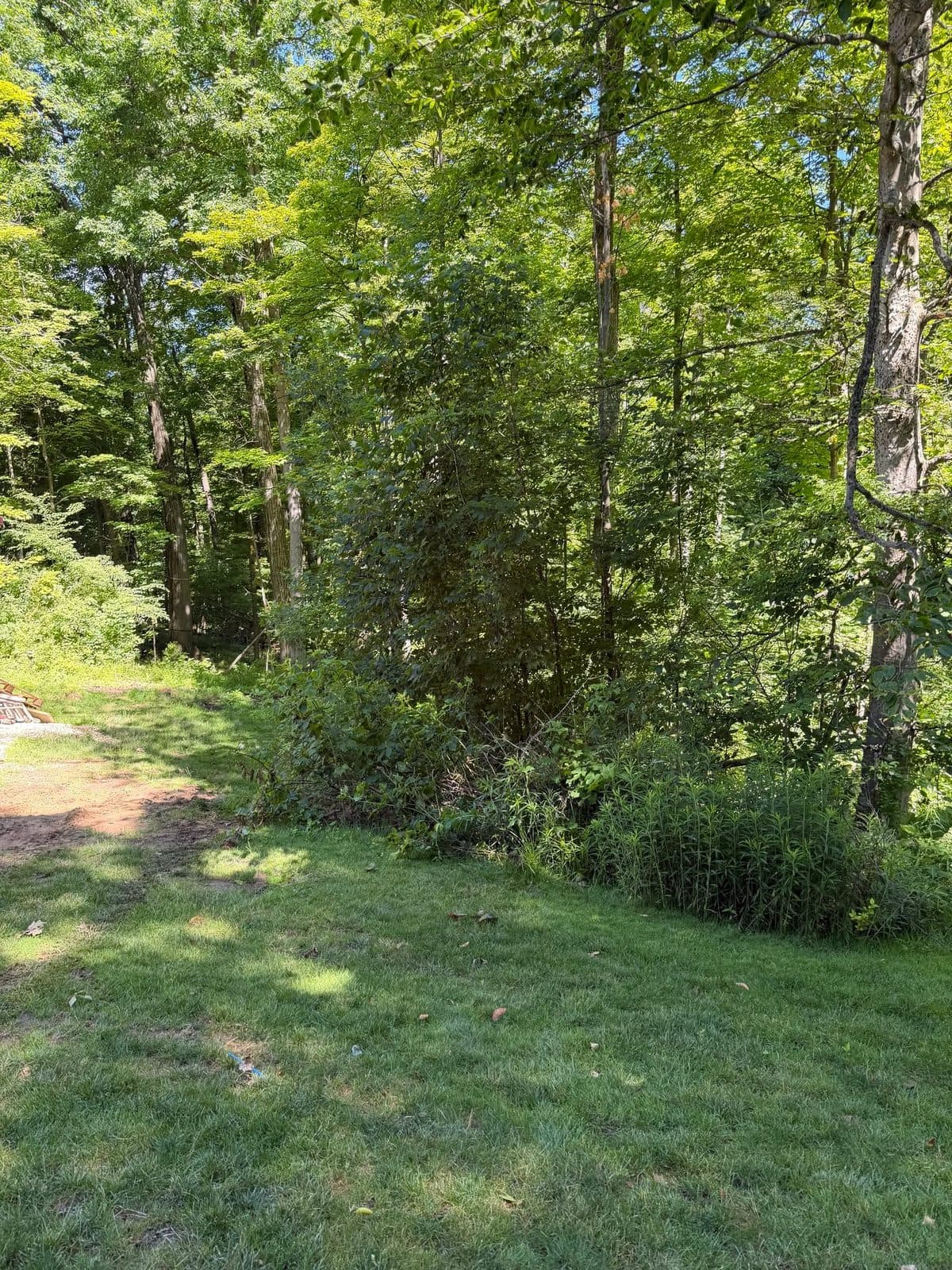
Actual BrushBoss job photograph. Results depend on your property.
Fence Line Clearing Cost
Short runs are flat-priced: $295 up to 500 sq ft and $495 for a longer strip. Whole boundaries are priced by the acre from $2,000. Within that, every fence row is different — some have light brush along them, others have mature trees growing through the wire — so we read each one from satellite imagery and give one fixed number before work starts. Price your own line with the land clearing cost calculator.
Every Fence Line Job Includes
More Land Clearing Services
Is BrushBoss insured, and what is guaranteed?
- Insured
- BrushBoss is insured. A certificate of insurance is available on request, before anyone sets foot on the property.
- Reviewed
- 5.0 out of 5 from 8 Google reviews. Read every review
- Quoted in writing
- You have a written, fixed price before any work starts, and the price quoted is the price you pay. Every published rate is on the pricing page.
- Guaranteed
- We agree with you what stays before anything starts — without losing a tree worth keeping. Every BrushBoss clearing project includes a workmanship guarantee: if we miss material within the agreed clearing zone, we come back and finish — free.
- Local
- Based at 14669 Castlewood Dr, Newbury Township, Geauga County. (440) 557-4660, or book a walk-through.
Fence Line Clearing Questions
How much does fence line clearing cost?
A short run of fence line up to 500 sq ft is $295, a longer strip is $495, and whole boundaries are priced by the acre from $2,000. Each row is quoted on its length, how thick the growth is and the condition of the fence, and the number is fixed in writing before we start.
How do you clear brush from a fence line without damaging the fence?
Each tree is set down away from the wire before it is ground, never into it, and the brush is cleared right up to the line without touching posts or wire. Where a tree has grown around the wire, the wire is already compromised; we clear the tree and flag that section for repair rather than pretend it can be saved.
What is property line clearing?
Property line clearing opens the boundary between your land and the next so it can be seen, walked and surveyed again. It is the same careful clearing as a fence row, applied to a line that may have no fence at all, and it is usually wanted before a survey, a new fence or a conversation with a neighbor.
Do you clear fence lines and property lines around Cleveland?
Yes. Cleveland and Akron are both inside the working area, and boundary work is a large share of it because that is where an encroaching neighbor, a survey or a fence replacement forces the issue. Cleveland east through Chagrin Falls, Gates Mills, Hunting Valley and Moreland Hills is the densest part of it; the suburbs south and west, Akron, and the acreage around the Cuyahoga Valley follow the same pricing.
Can you clear both sides of the fence?
One side or both. If your neighbor wants their side done as well, we clear both in the same visit, which is cheaper for everyone than coming out twice. Clearing both sides is also what actually keeps the line open, since the growth advances from whichever side is left alone.
What happens to everything you grind?
It stays along the fence row as a mulch layer. That suppresses regrowth on the strip you just paid to reclaim and leaves a clean, maintained appearance: no debris hauling, no burn pile, and nothing for you to dispose of after we leave.
Do you need to come out before quoting?
Usually not. We assess the fence line from satellite imagery to measure the run and the vegetation density and to spot the sections where the fence has disappeared under growth. Send the approximate length plus photos or a satellite view and we will price it before we arrive.
Are you insured?
Yes — insured; a certificate of insurance is available on request.
What actually comes out
Five things go. Everything worth keeping stays.
People say “land clearing” and picture a bulldozer and an empty lot. This is the opposite of that. Here is the actual list of what we take out of a Northeast Ohio property.
- 01
Prickly bushes thorn, briar, multiflora rose
The reason nobody has walked back there in ten years. You cannot mow it, you cannot pull it, and every year it takes a few more feet. This is the single thing most people call us about, whatever they end up calling it.
- 02
Poison ivy and the rest of the vines
Running along the ground and climbing the trunks, right through the tangle where you cannot see it until you are already in it. Vines are what turn an overgrown edge from untidy into genuinely unusable — and left alone, they strangle the good trees they are climbing.
- 03
Ticks and what holds them
The damp tangle at knee height is where they live — deep shade, wet leaves that never dry, and thick cover the deer bed down in. It sits between the house and everywhere the family walks. Take the layer out and you take away what they depend on.
- 04
Invasive brush mostly bush honeysuckle
The wall of green that leafs out before anything native and holds on after everything else has dropped. It shades out the forest floor, so nothing else grows, and it is the main structure the whole tangle is built on.
- 05
Crowding saplings the volunteers between the good trees
Not the trees you want — the volunteers that came up thick in the gaps and are now competing with the trunks worth keeping. Thinning them is what gives the good trees room and lets light back down to the ground.
And what is left standing?
The woods you already own. Northeast Ohio is maple and beech country — sugar maple, American beech, red oak, shagbark hickory, black cherry, birch in the wetter ground. Those trees are already there, full grown, and have been the whole time. They are just behind the tangle.
Nothing here needs planting. It needs uncovering.
Fence Lines Buried in Brush?
Get a fixed quote for your fence line or property line. Send us the approximate length and photos or a satellite view — we will price it before we arrive.
The tree line took a few feet a year until the lawn got small.
It goes back where it was, and every tree stays standing.
A drive or lawn edge up to 500 sq ft is $295 and about an hour.
Ground you can walk without watching your step — because we take the cover out.
Without losing a tree worth keeping.