Forestry Mulching & Land Clearing in Summit County, Ohio
BrushBoss works fourteen communities in Summit County — the large-lot ring around the Cuyahoga Valley and the lake country south of Akron, where properties still have acreage behind the house. Forestry mulching, land clearing, brush hogging, trail cutting and invasive removal, priced per acre and fixed in writing.
Land recovery and property protection · Northeast Ohio
We give you your land back, and we make it safe to use.
The brush, thorn and poison ivy that grew up under your good trees comes out, and what you get back is ground you can walk without watching your step.
From $295 for an afternoon's work to full estate restoration.
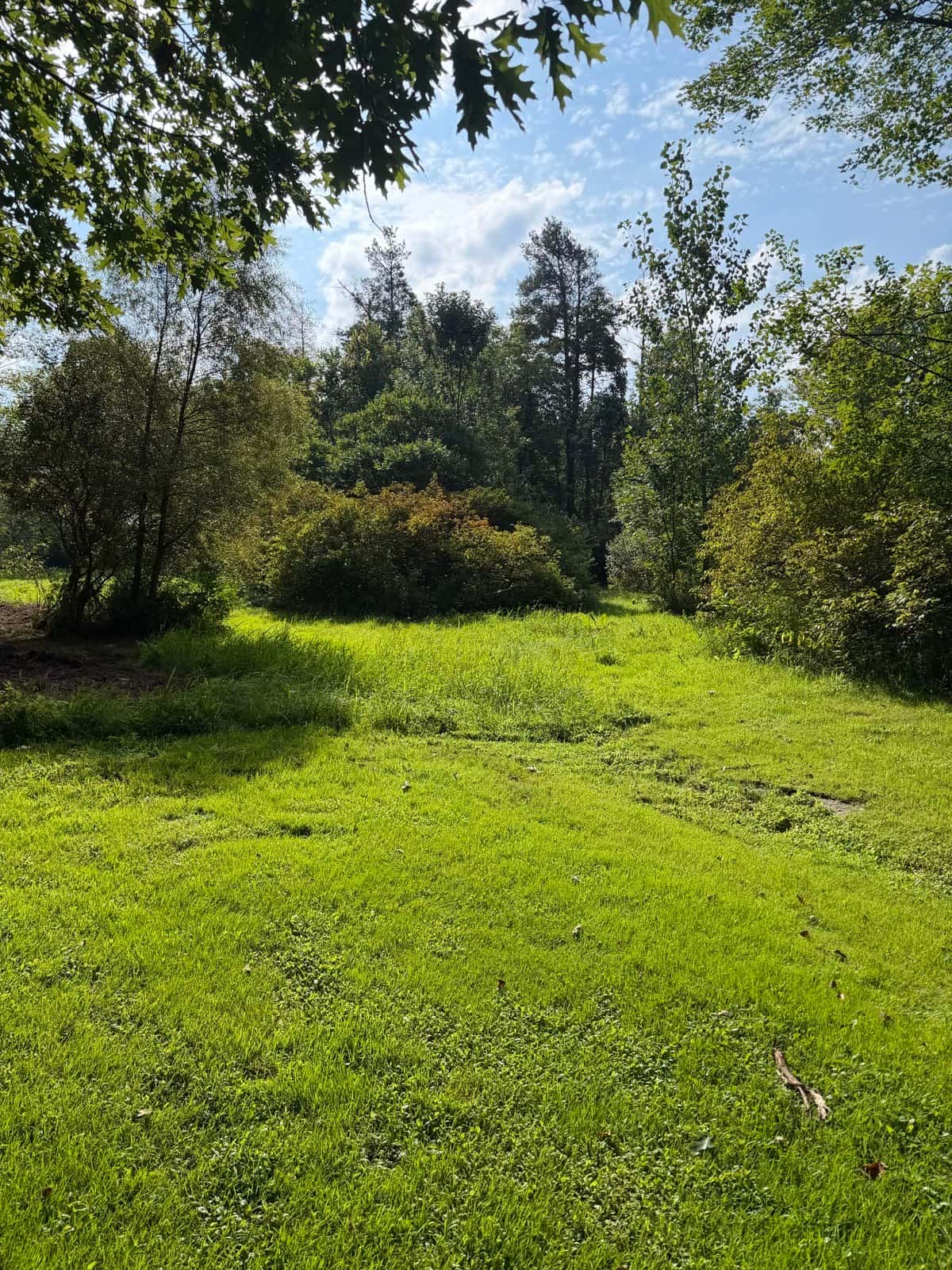 Actual BrushBoss footage · September 2026
Northeast Ohio · Woodland recovery
Real work. Real footage.
See past the tangle.
Brush and vines fill the space beneath your good trees. Start with the ground you want to use again.
Follow the transformation
Summit is a metropolitan county with rural edges, and the edges are the work. Akron sits at over three thousand people per square mile and the small villages are denser still on a square mile of platted lots. We do not pretend to serve them. The acreage is in Bath, Hudson, Richfield, Peninsula, Coventry and the ten other communities listed below.
The Cuyahoga Valley cuts the county in half and sets the hardest constraint. A belt one to three miles wide along the east side of the valley is cut into ravines and narrow divides, and the ridges between them are where the houses went. Ground like that is steep, wooded on both flanks, and unforgiving of equipment put in the wrong place.
Slope stability is the county's signature problem, not a footnote. The valley's interbedded silty tills and lake clays move on slopes whether the slope was cut or left alone, and the state's own survey does not hedge about it. On the ravine communities we walk the edge before anything tracked goes near it, and we will say no to a line of work rather than take a slope down with it.
South of Akron the ground changes completely. The Portage Lakes belt is kames and kettle holes, farms subdivided into wooded lots, and the thicket sits down in the hollows where you cannot see it from the house. It is the opposite failure from the valley: not dangerous, just invisible until someone walks it.
The Work We Take On in Summit County
Forestry Mulching
Brush, thorn and crowding saplings ground into a mulch layer beneath the trees you keep, $2,000 to $2,990 per acre by density. On the valley communities this is usually the only method that makes sense, because nothing gets hauled across a ravine.
How mulching works →Invasive Removal
Honeysuckle under mature canopy is the estate problem in Bath, Hudson and Richfield. Garlic mustard off the park trail edges is the Peninsula problem. Both come with a written regrowth plan, because clearing an invasive stand once only resets its clock.
Invasive species →Slope and Ravine Work
Ground too steep to walk, up to 55 degrees, cleared with nobody on the hill, leaving a cover layer that holds the slope while it revegetates. $3,900 to $5,100 per acre. This is the service Summit needs more than any other county we work, and it is the band a lot of valley-side work lands in.
Slope work →Brush Hogging
A flat per-acre rate for fields, pastures and food plots that still cut, in Green, Norton and the southern farm country where reverting ground comes back thorny long before it comes back wooded. The cheapest way to stop a field becoming a clearing project.
Brush hogging →Small Jobs
Below an acre the price is flat: $295 for a driveway or fence line, $495 for a strip, $750 for a corner or back edge. From that up to full estate restoration, and no project minimum. Two properties on the same road the same day and you each get a $50 credit toward the next visit.
The full ladder →Land Clearing
Whole-parcel work for build sites, pole barns and septic corridors, with the topsoil left where it is rather than piled up with the brush.
Land clearing →Trail Cutting
Ten-foot lanes through wooded acreage for access, riding or hunting, $2,000 to $2,600 per acre with a mulched surface you can walk the day it is finished.
Trail cutting →Where We Work in Summit County
Fourteen communities, each with a page of its own. The note under each one is what the ground tends to be like there, because a job in Peninsula and a job in Green have almost nothing in common.
Bath
Estate parcels on hummocky moraine, knolls and kettle hollows, with honeysuckle built up under otherwise excellent canopy. The wet ground is all down in the hollows.
Boston Heights
Ridge parcels on the divides above the Cuyahoga, a buildable spine with timbered ravine falling away either side. Almost the whole property is edge.
Copley
Old bog ground around the Copley highland, drained generations ago for market gardens. Drained ground reverts, and it reverts to reed and thicket rather than woodland.
Coventry
Portage Lakes kettle country. Subdivided farm lots with wooded back halves, and thicket in the hollows that is invisible from the road.
Green
Southern farm ground on the Kent Moraine, coarse stony till. Most of the open acreage is reverting field, and it comes back thorny.
Hudson
Large lots with some of the best-kept canopy in the county, which is why the conversation here is nearly always about what stays rather than what comes out.
New Franklin
Ground moraine with the Buck Hill kames along the Clinton edge, lakes in the kettles. Reverting pasture and lake-margin reed are the two jobs.
Northfield Center
A long wet depression running toward Hudson, flat and slow to drain, with drier shoulders either side. Reed and cattail hold the low ground.
Norton
Thin drift on rounded rock, level enough that water sits. More woody growth lives in the fencerows than in any block of woodland here.
Peninsula
The valley floor and the park boundary. Steep, wooded, ravine-cut ground where slope comes before everything else in the plan.
Richfield
The high end of the county at 1,320 feet, thin soil over rock, and the Furnace Run ravines cutting the east. Estate plantings mixed into native canopy.
Sagamore Hills
Dry gravel terrace and wet Brandywine ravine within a few hundred feet of each other, which means two different problems on one property.
Springfield
Kame gravel and old canal and rail corridors. The abandoned corridors carry growth across property lines faster than a woodlot does.
Twinsburg Township
A bedrock highland between Pond Brook and Tinker's Creek with swampy lowland either side. Wet and dry interlock at close range on a single parcel.
Working in Summit County — What People Ask
Why does the list stop at fourteen communities?
Because the rest of the county is built. Akron, Barberton, Cuyahoga Falls, Stow and the small villages sit on platted lots with no overgrown acreage to recover, and a land-clearing page about them would be padding. If your property is outside the fourteen and still has real ground behind it, call and we will tell you honestly whether it is worth a visit.
Do you work the steep ground along the Cuyahoga Valley?
Yes, and it is most of what we do on that side of the county. It is also the ground we are most willing to walk away from. The valley's clay and silt layers slide on slopes whether or not anyone cut them, so we walk an edge before putting tracked weight near it and we will tell you when a line of work is not worth the risk to the slope.
What does a Summit County job cost?
Woodland restoration and site prep run $2,000 to $2,990 per acre by density. Brush hogging is a separate mowing service at its own flat rate. Trails are $2,000 to $2,600 per acre. Steep ground — creek banks, ravines and pond edges up to 55 degrees — is $3,900 to $5,100 per acre, and on this county's valley parcels that is the band a good deal of the work lands in. Below an acre it is flat-priced: $295 for a driveway or fence line, $495 for a strip, $750 for a corner or back edge. No project minimum.
Can you quote without coming out?
For most of the flatter communities, yes — acreage and brush density read well from satellite imagery. On the ravine parcels in Peninsula, Boston Heights and the Furnace Run side of Richfield we would rather walk it, because slope and access are what set the price there and neither shows up properly from above.
Is anything burned or hauled away?
Neither. Standing material is ground into a mulch layer on the ground it grew on. No burn permits, no dump trailers past the neighbours, no tipping fees buried in the line items — and on a ravine property, no hauling route that has to cross a slope.
We back onto the national park. Does that change anything?
On your own land, no. It does change what arrives: deer densities are high along the park boundary and garlic mustard runs the trail edges onto adjoining parcels, so properties in Peninsula, Sagamore Hills and Boston Heights tend to face steady pressure from the boundary inward rather than from one corner.
More From BrushBoss
You own the land. You just cannot use it.
That is one layer of brush, and it comes off in a morning.
We'll tell you what it costs. From $295, no project minimum.
Ground you can walk without watching your step — because we take the cover out.
Without losing a tree worth keeping.