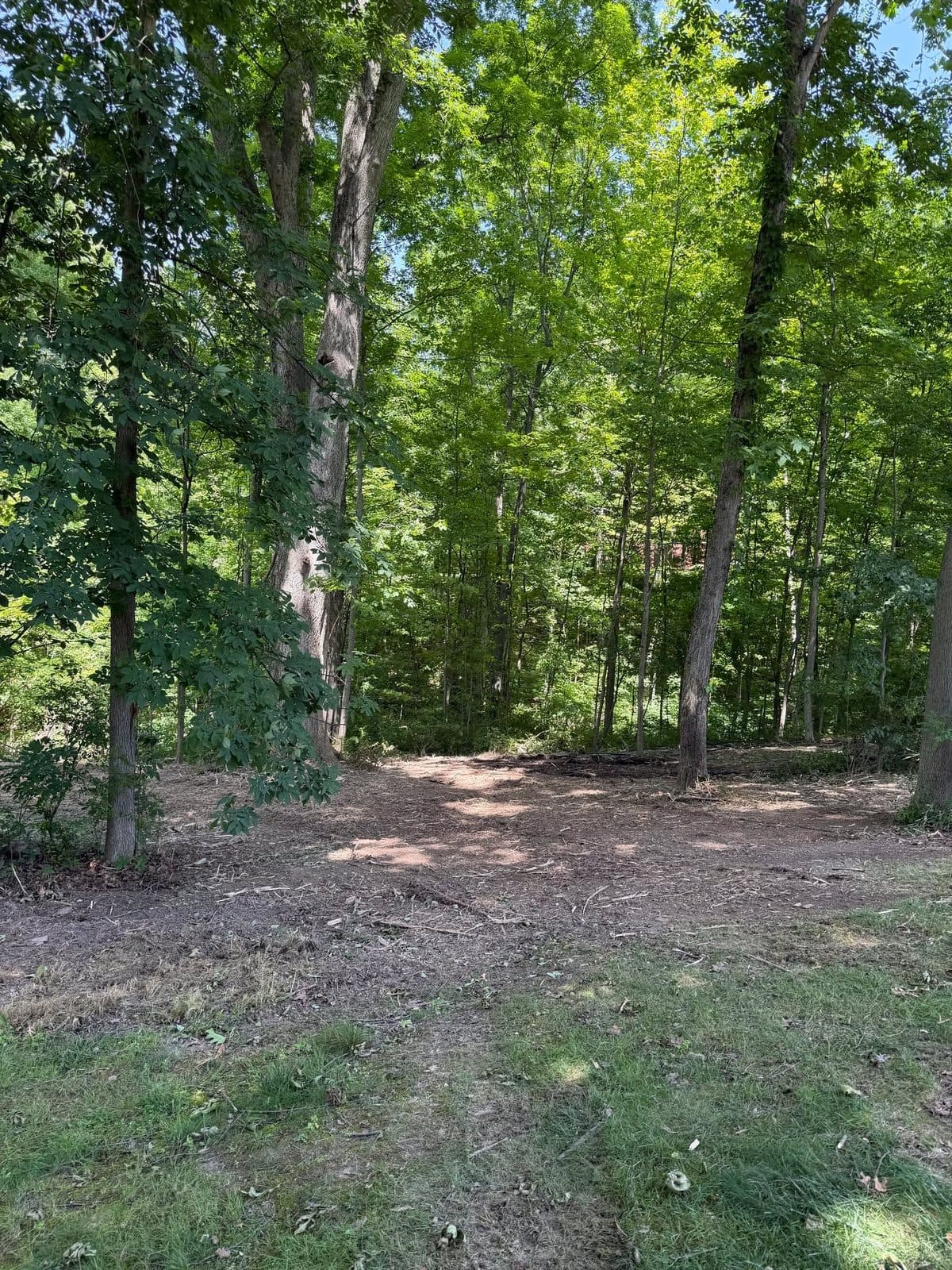
The light
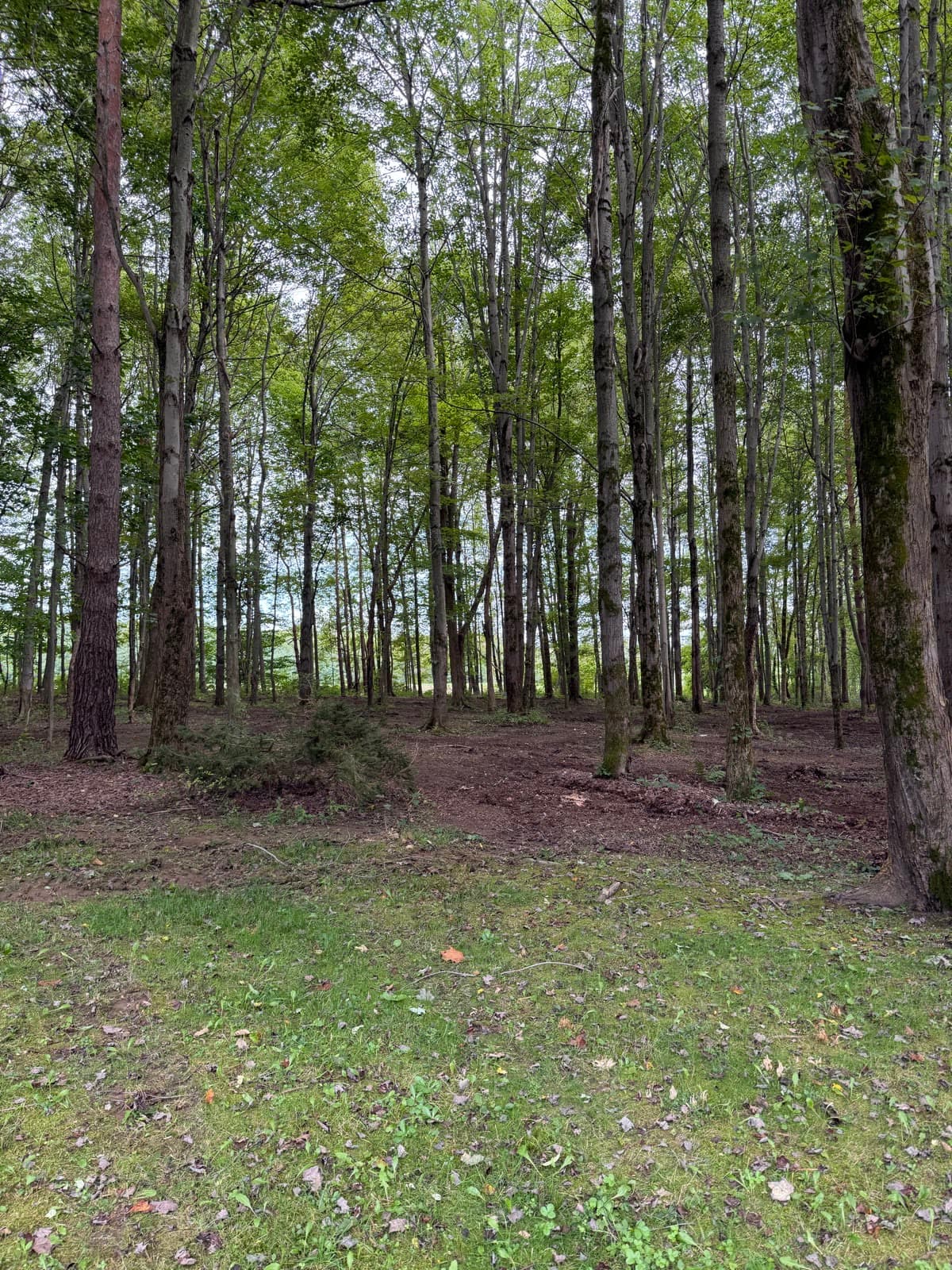
Removing unwanted brush opens sight lines beneath the canopy. We agree on the trees and plants to keep before work begins.
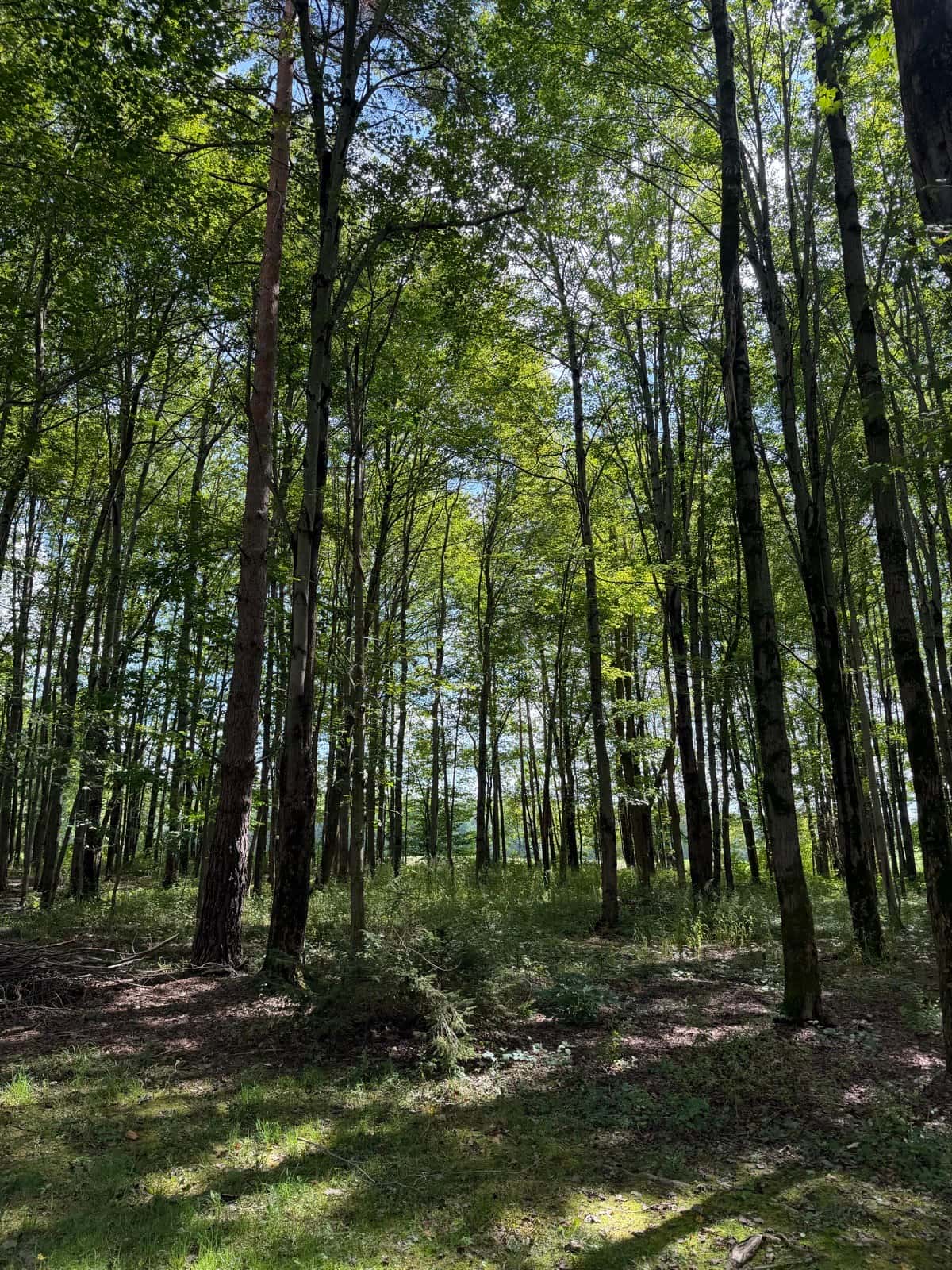
Woodland restoration · Northeast Ohio
Woodland restoration takes out the thorn, scrub, poison ivy and crowding stems that grew up beneath a mature Northeast Ohio woods and leaves the canopy standing, so light reaches the floor and the long view comes back. It is for owners of wooded acreage they have stopped walking into, priced from $2,000 per acre. What is left is the woods you thought you were buying.
Land recovery and property protection · Northeast Ohio
We give you your land back, and we make it safe to use.
The brush, thorn and poison ivy that grew up under your good trees comes out, and what you get back is ground you can walk without watching your step.
From $295 for an afternoon's work to full estate restoration.
The idea
Walk into an old European forest and the first thing you notice is that you can see. Full canopy overhead, clean open ground below, and you can set off in whatever direction you like. The Germans gave the feeling its own word — Waldeinsamkeit, the fullness of being alone among trees. Emerson carried it into American thought, Thoreau took it to a pond, and the whole idea of going to the woods came from it.
Those forests are not wild. They look that way because someone has kept the floor open for three hundred years.
None of which requires a flight. What it requires is that the hundred feet past your own lawn be walkable — and the trees standing back there are already the right trees.
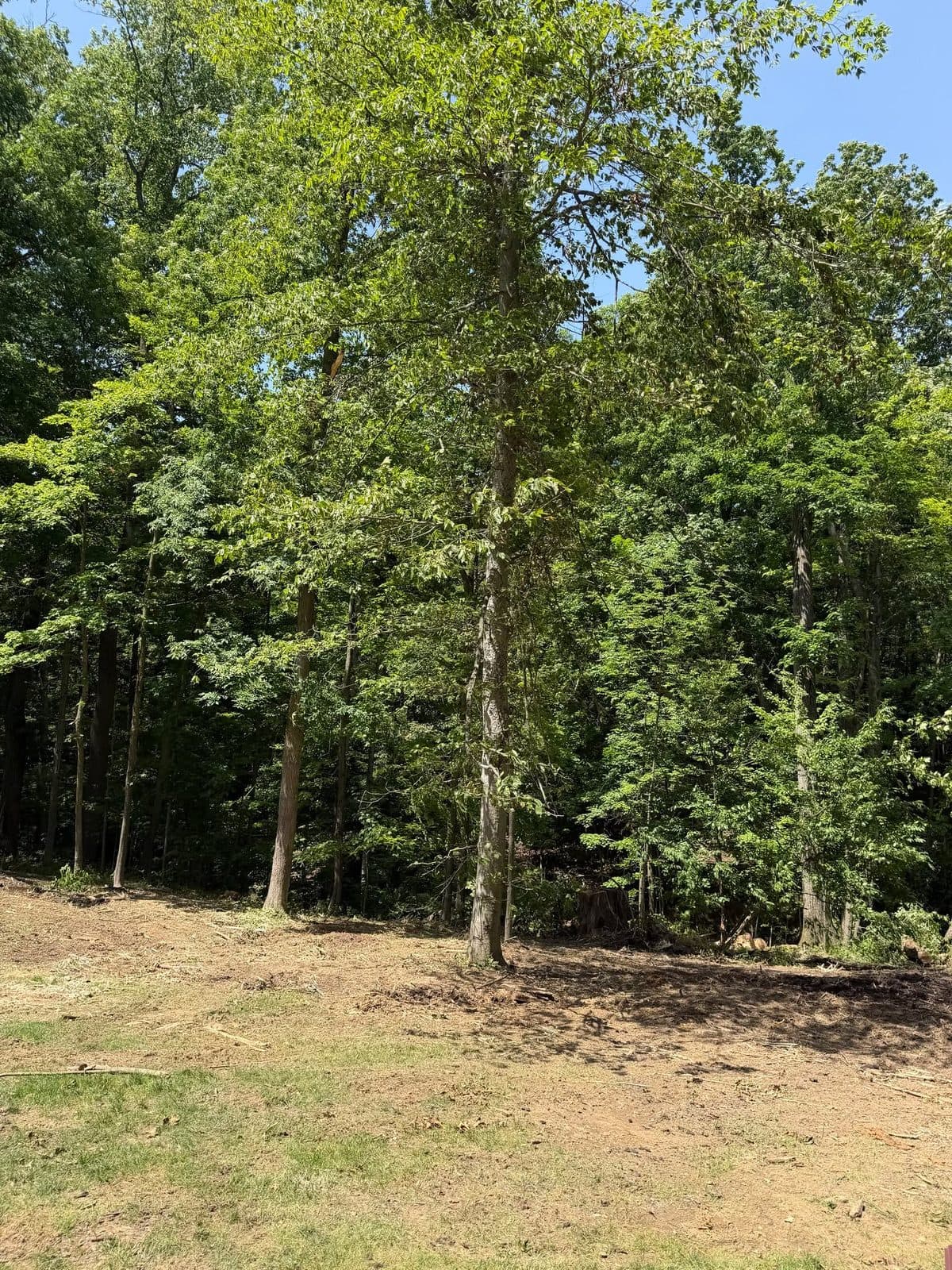
The hundred feet past your lawn
The back of the property is the same mature hardwood as the front — sugar maple, red oak, hickory, beech — buried under fifteen years of bush honeysuckle and multiflora rose. You can see it from the kitchen window. You cannot walk into it.
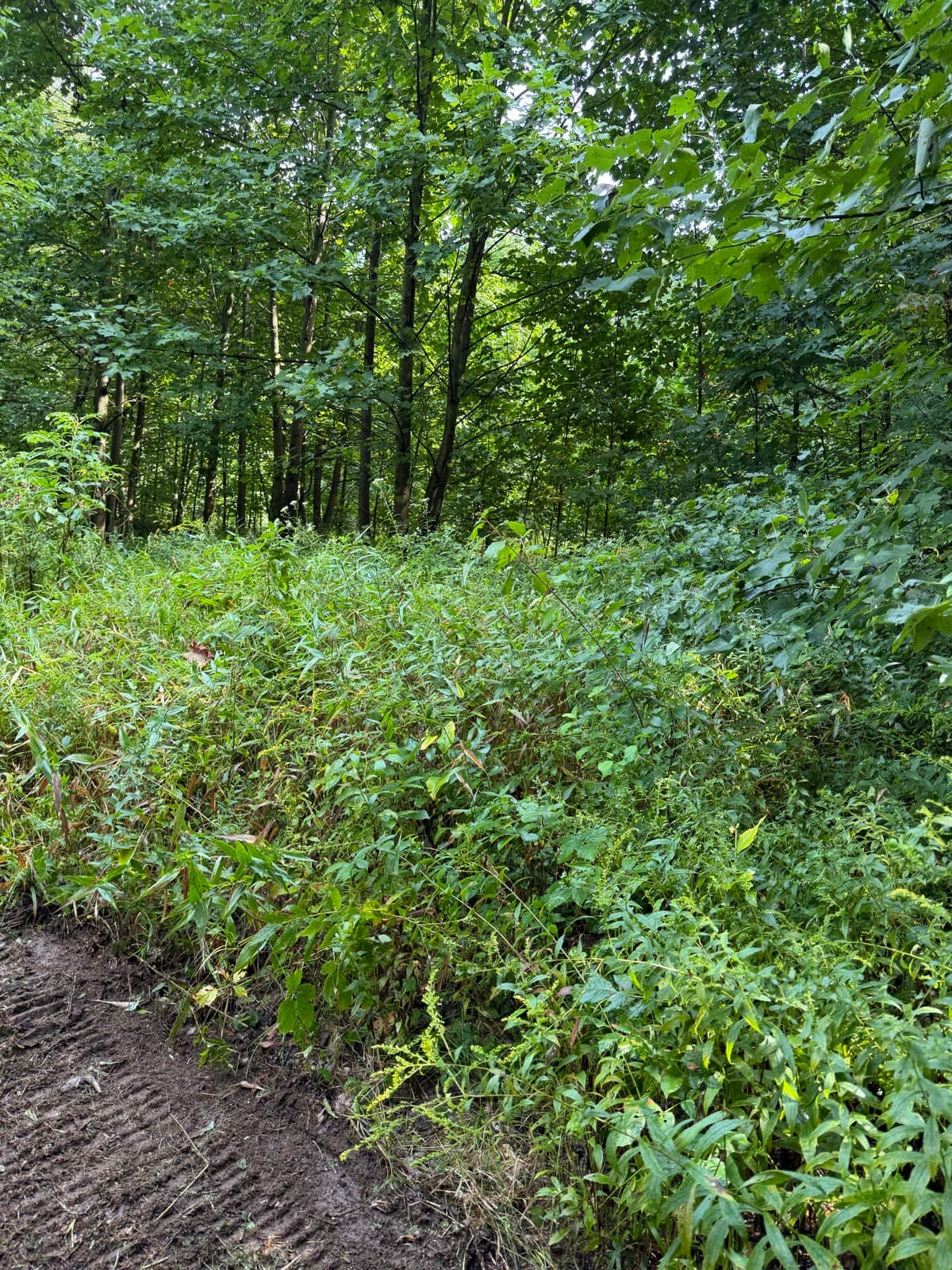
What comes back
Everything worth having in a woods happens in the space between the canopy and the ground — which is the space the honeysuckle is currently using.
Removing unwanted brush opens sight lines beneath the canopy. We agree on the trees and plants to keep before work begins.
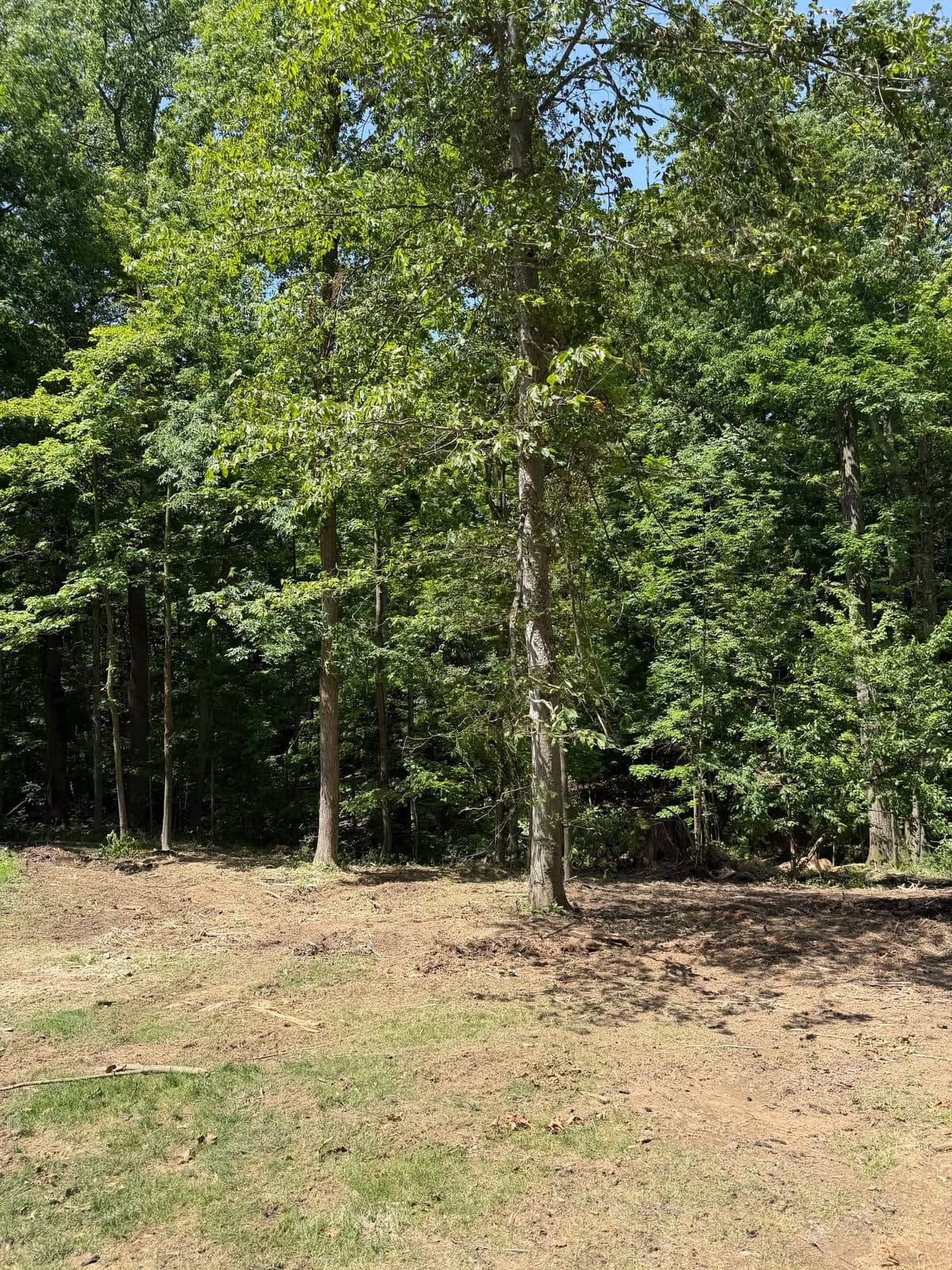
Open the areas you want to reach again, with access and boundaries agreed on site.
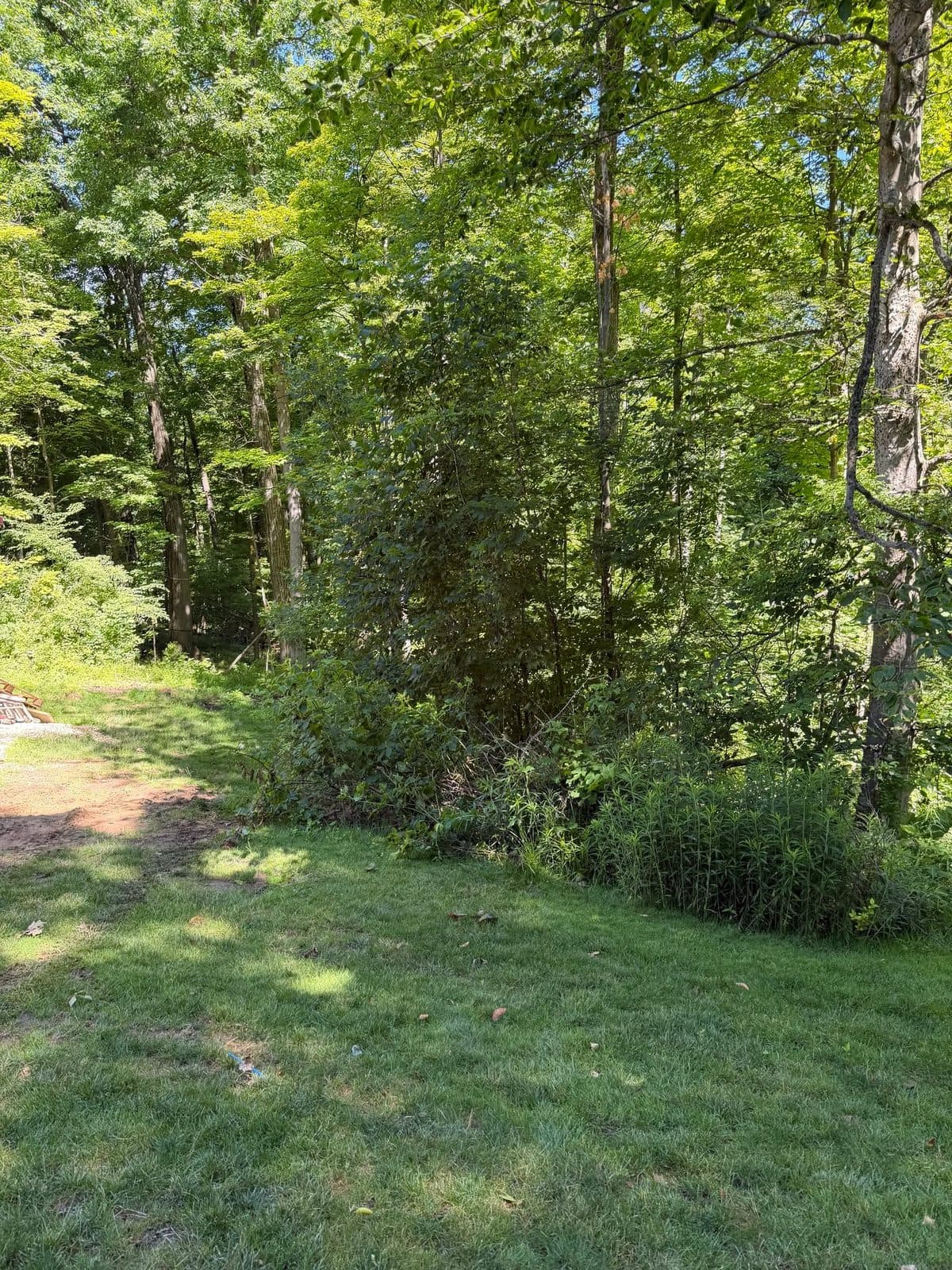
Clear the unwanted growth where your lawn meets the woods, keeping the trees you want.
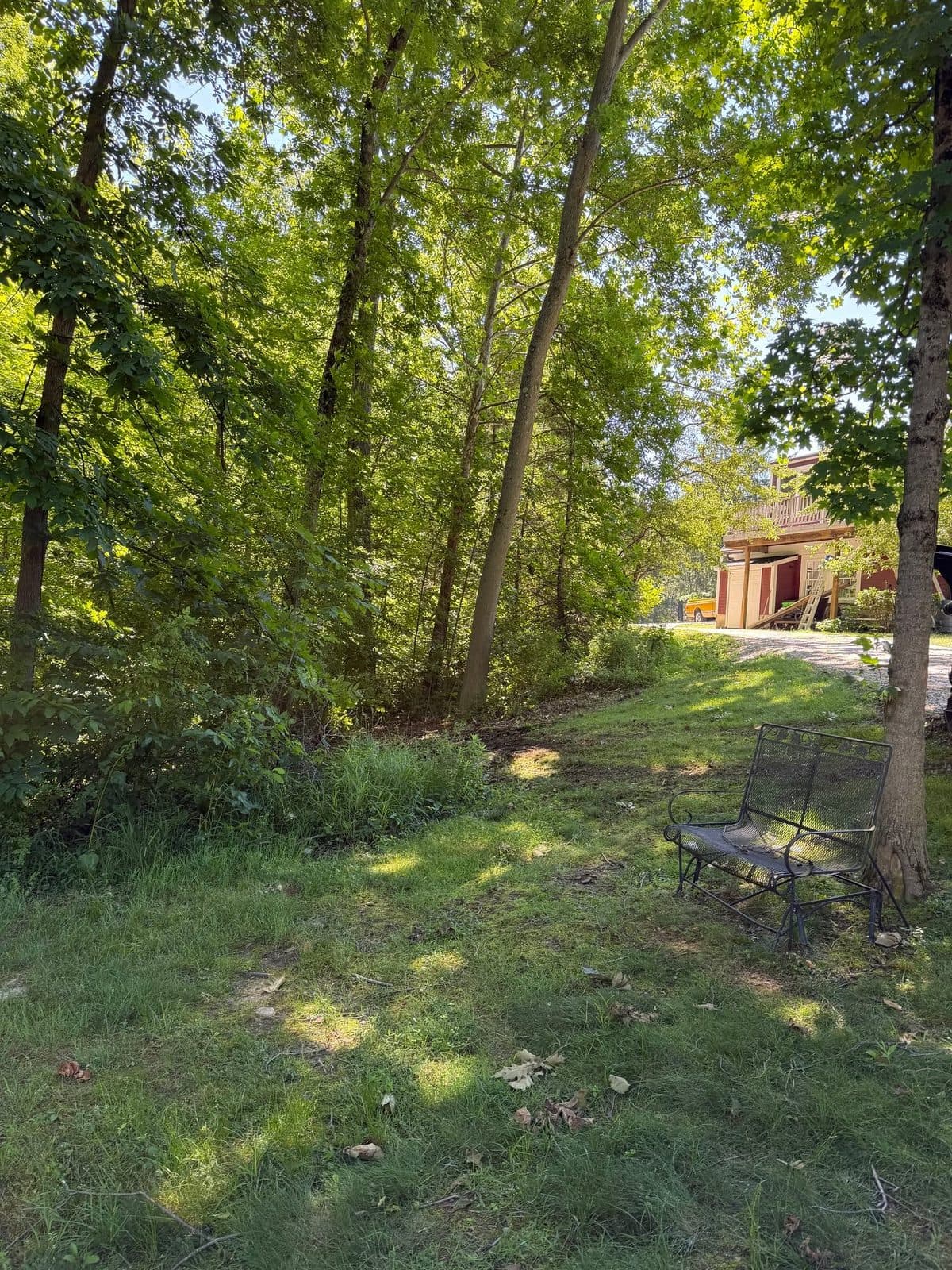
Connect the parts of your property with a walking trail through the woods.
Photographed, not rendered
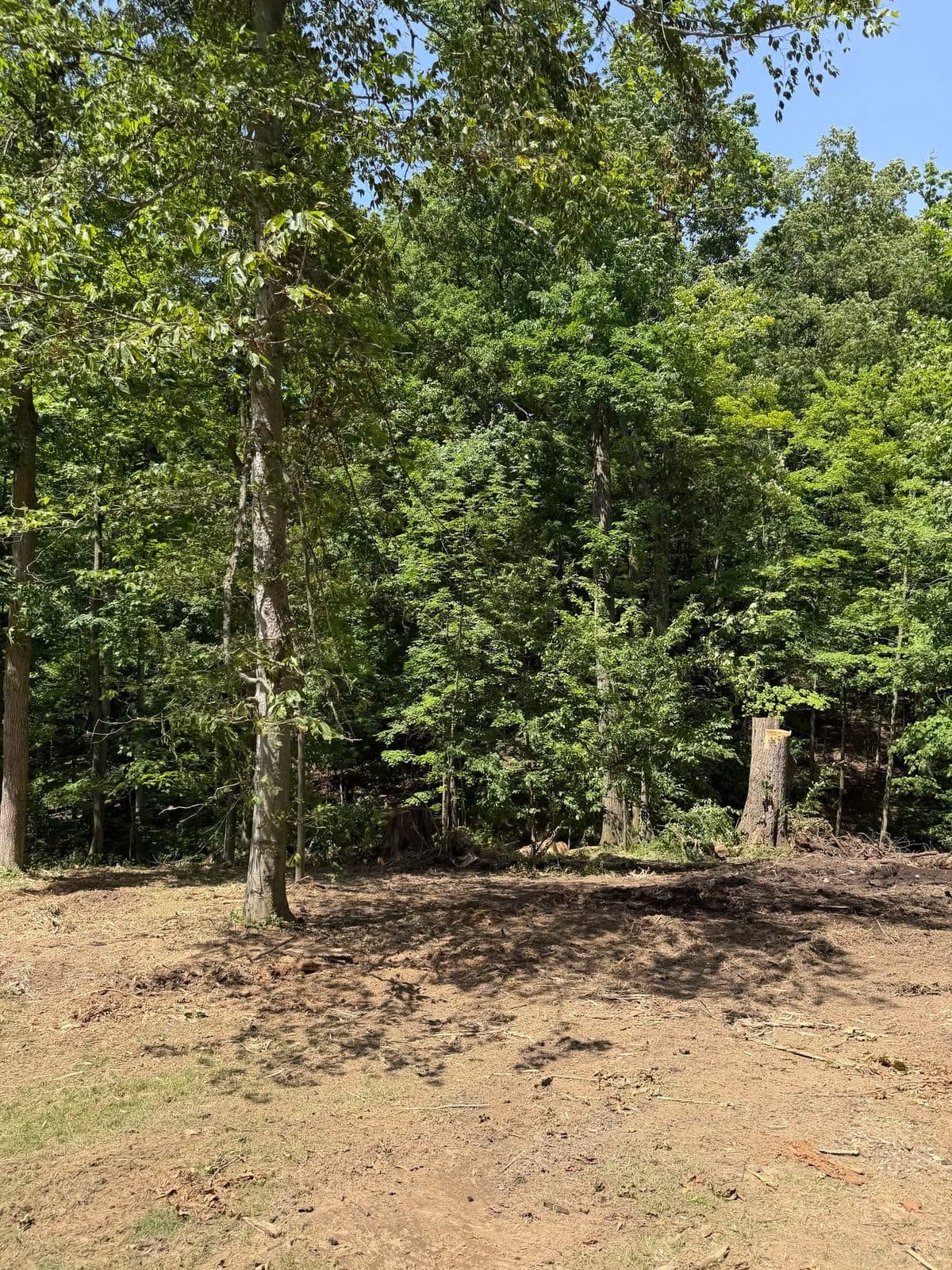
These are original photographs from BrushBoss jobs, including the September campaign. See the equipment working, the freshly mulched ground and the trees left standing. Your clearing scope is agreed for your own property.
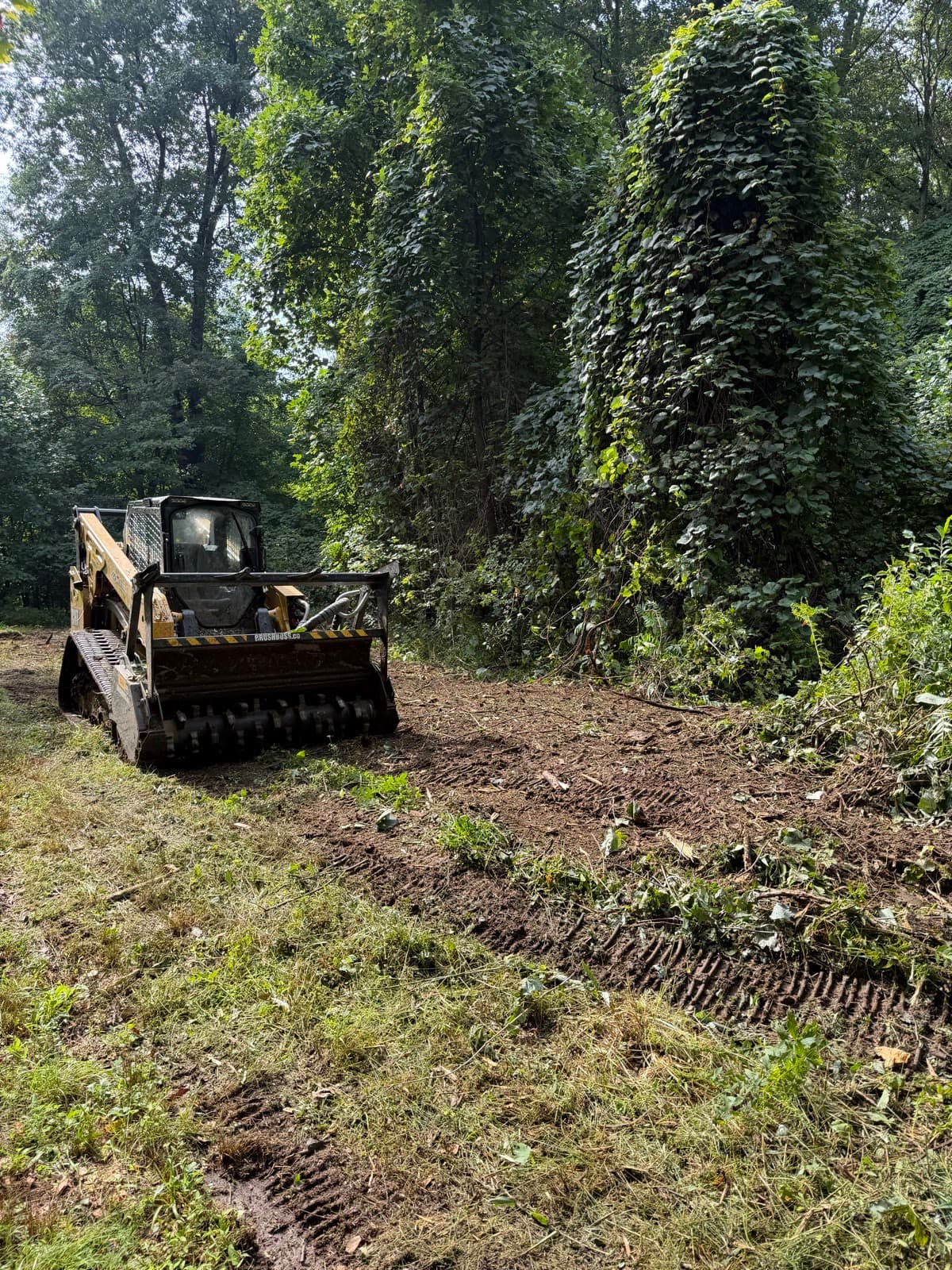
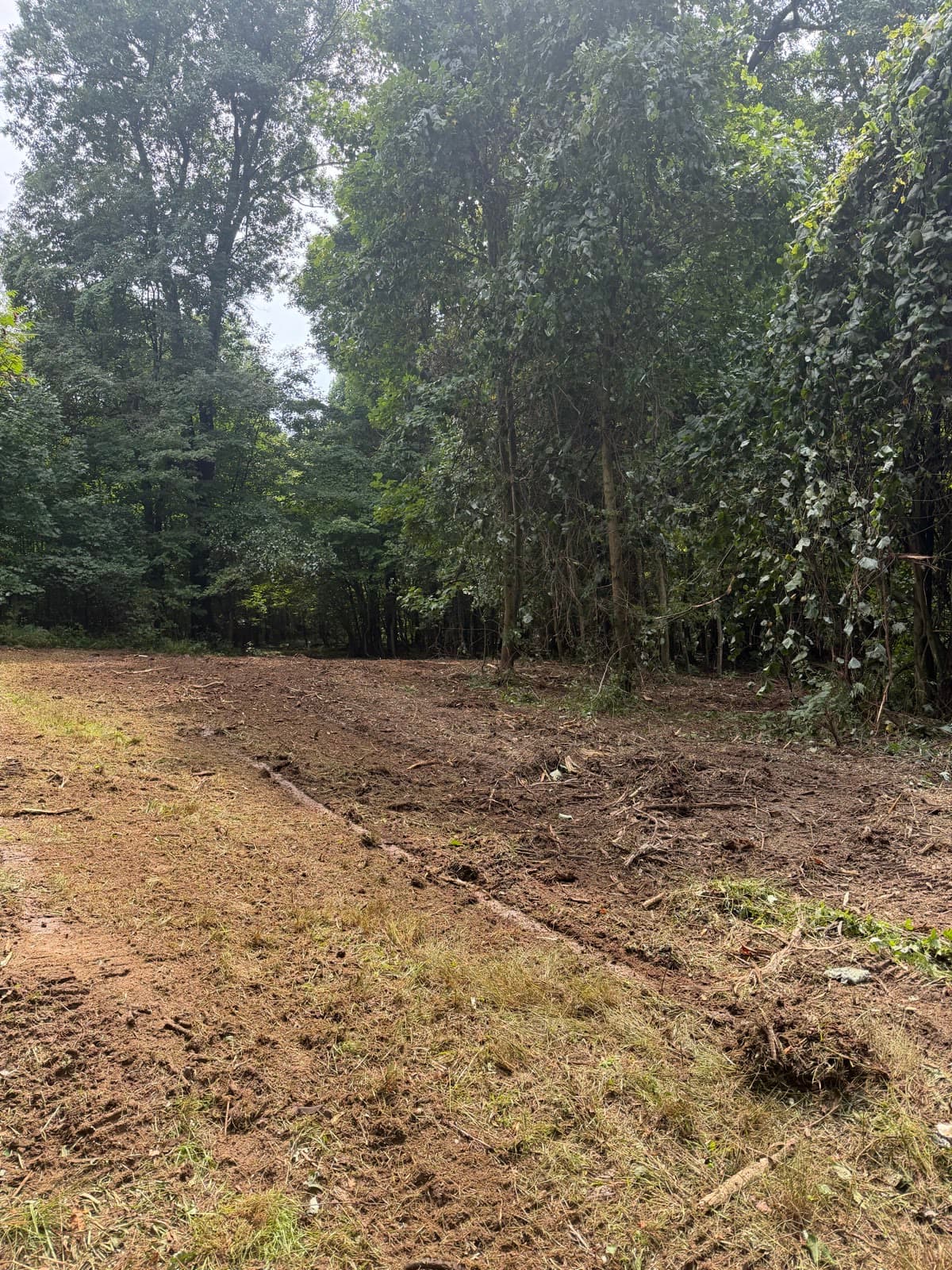
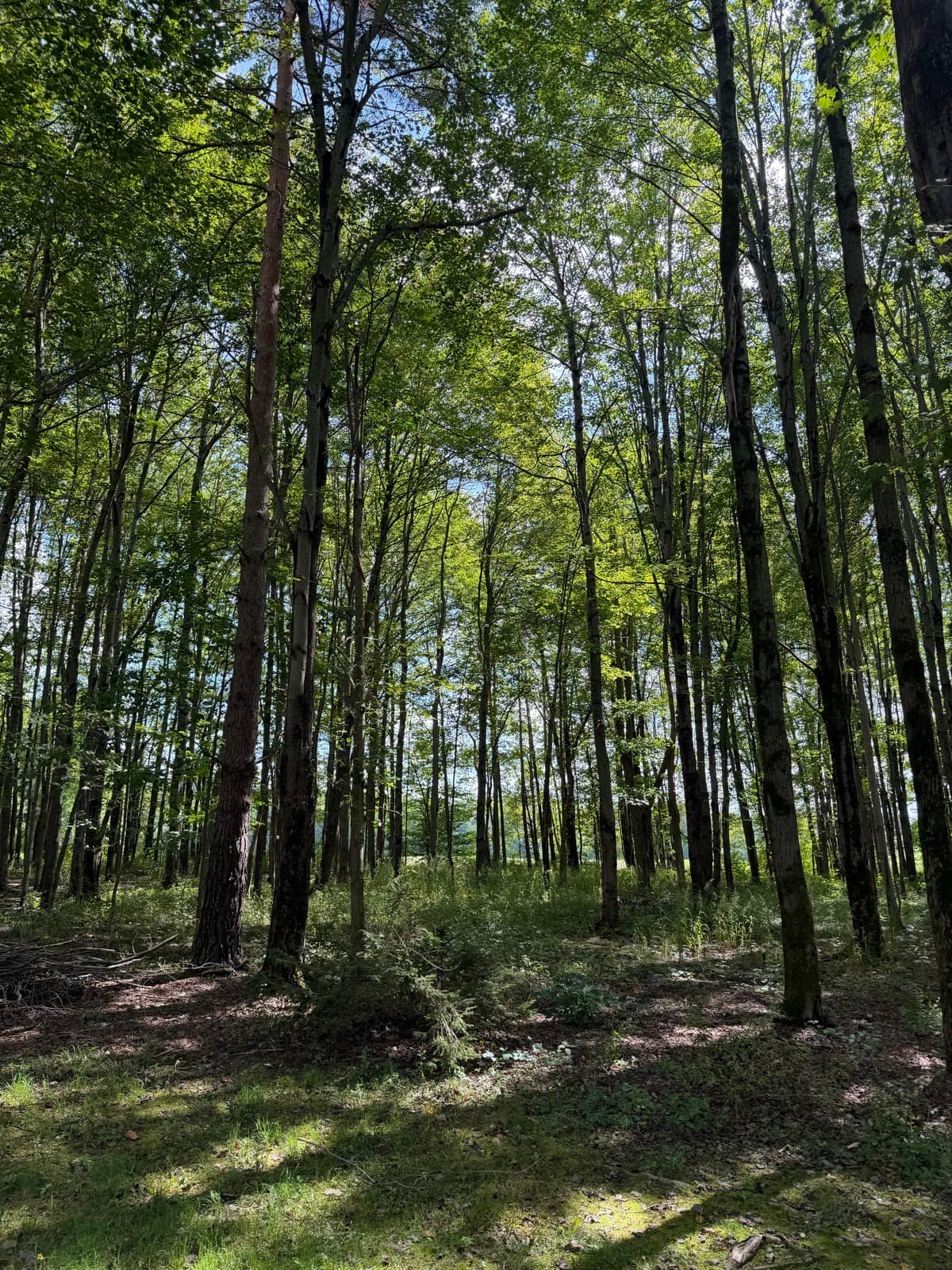
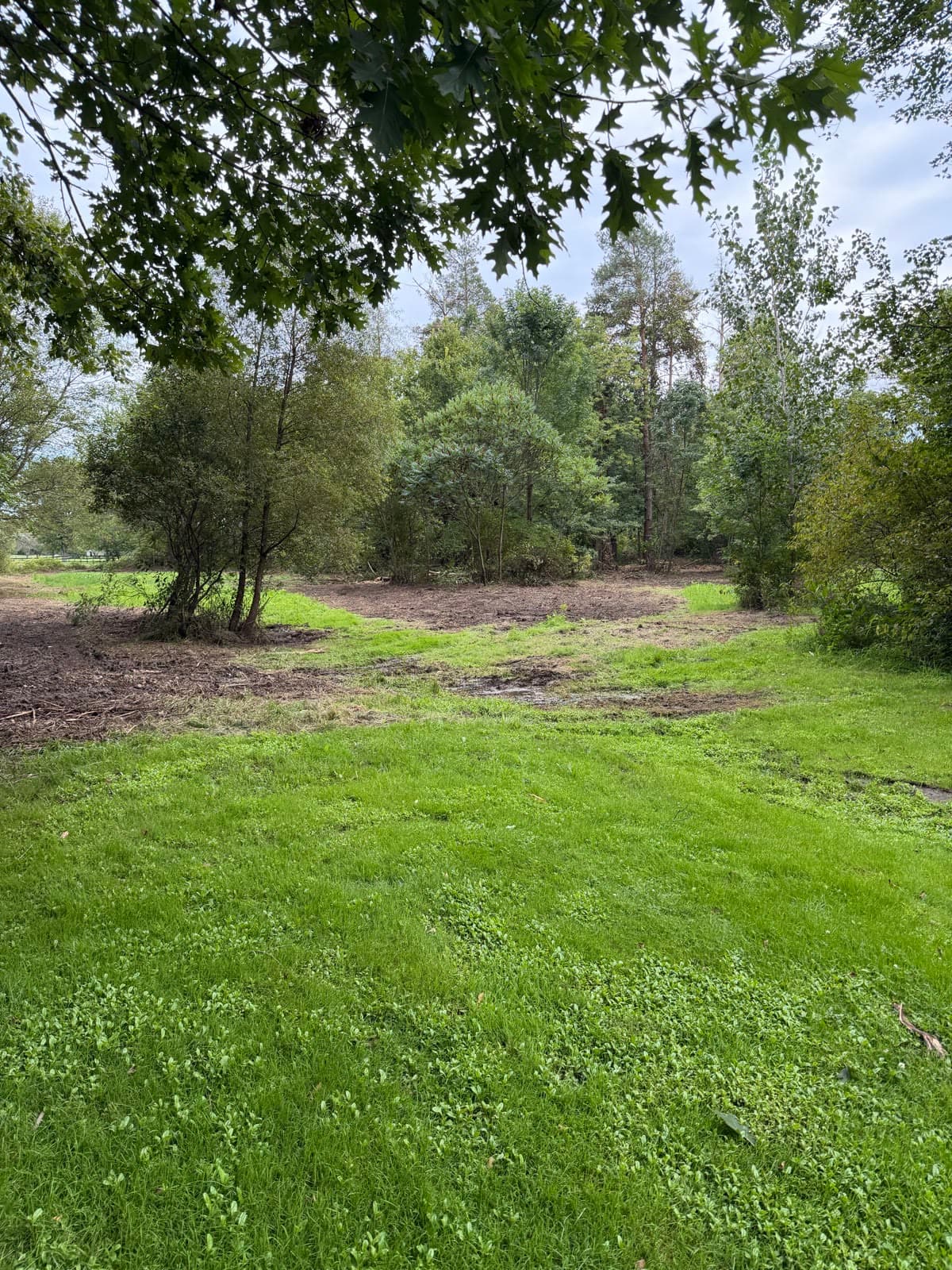
One job, before and after
Another crew had already been through this property before the owners called us. The first crew left brush piles, cut logs and thin dead trees standing in the open. We took all of it out, groomed the ground beneath the canopy, and kept the good trees and the young evergreens.
Real job · Photos by our crew
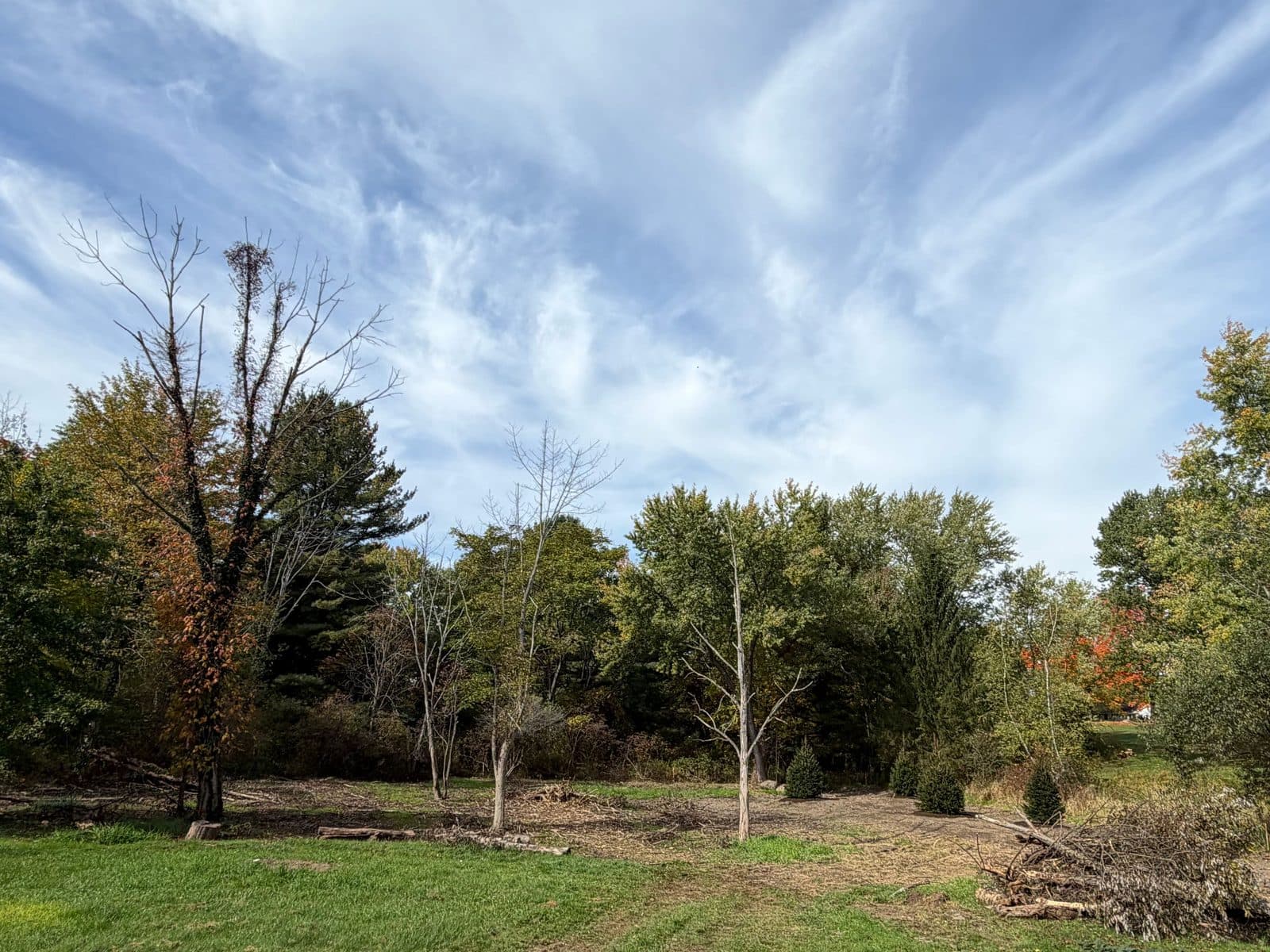 Before
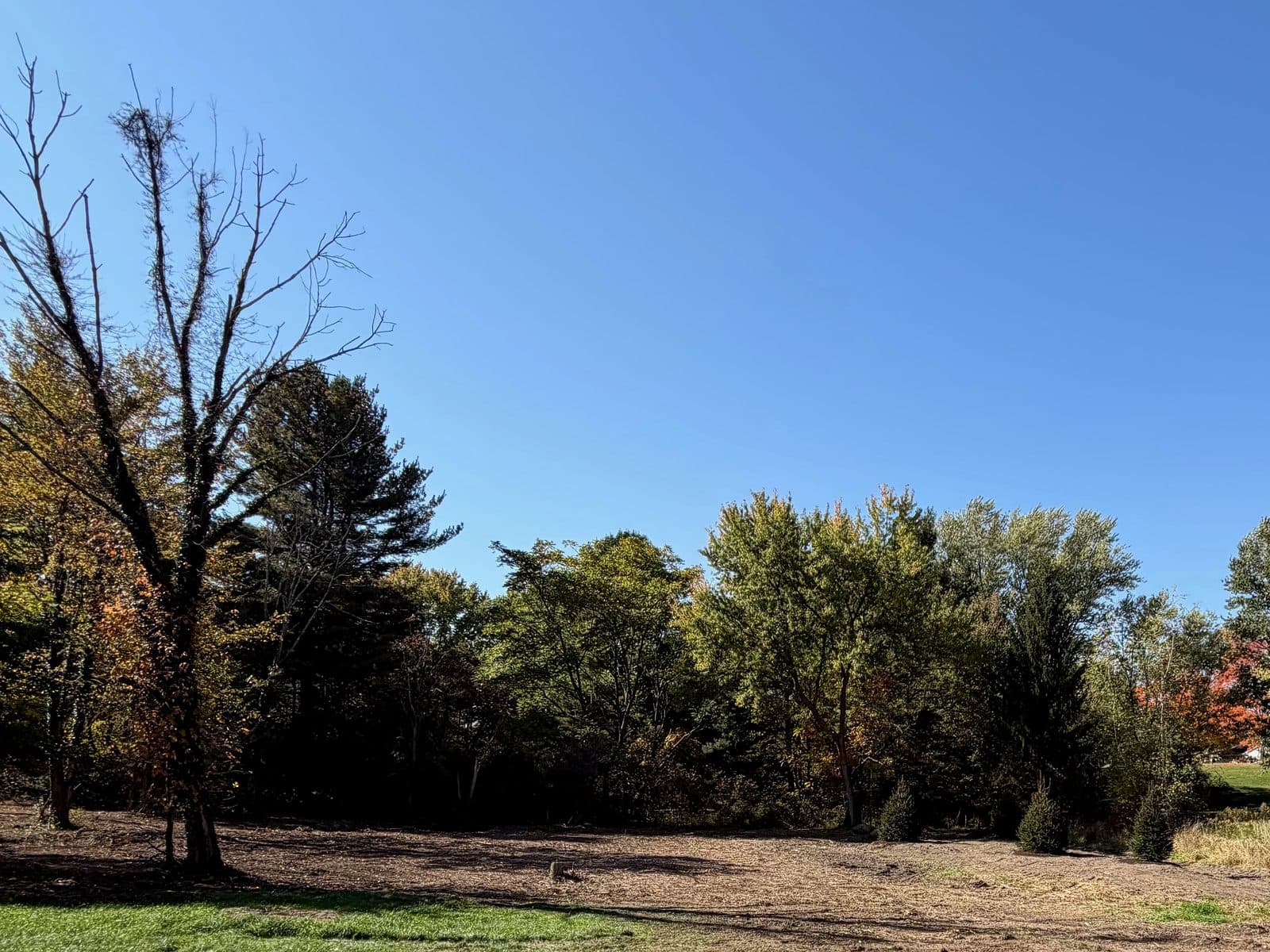 After
After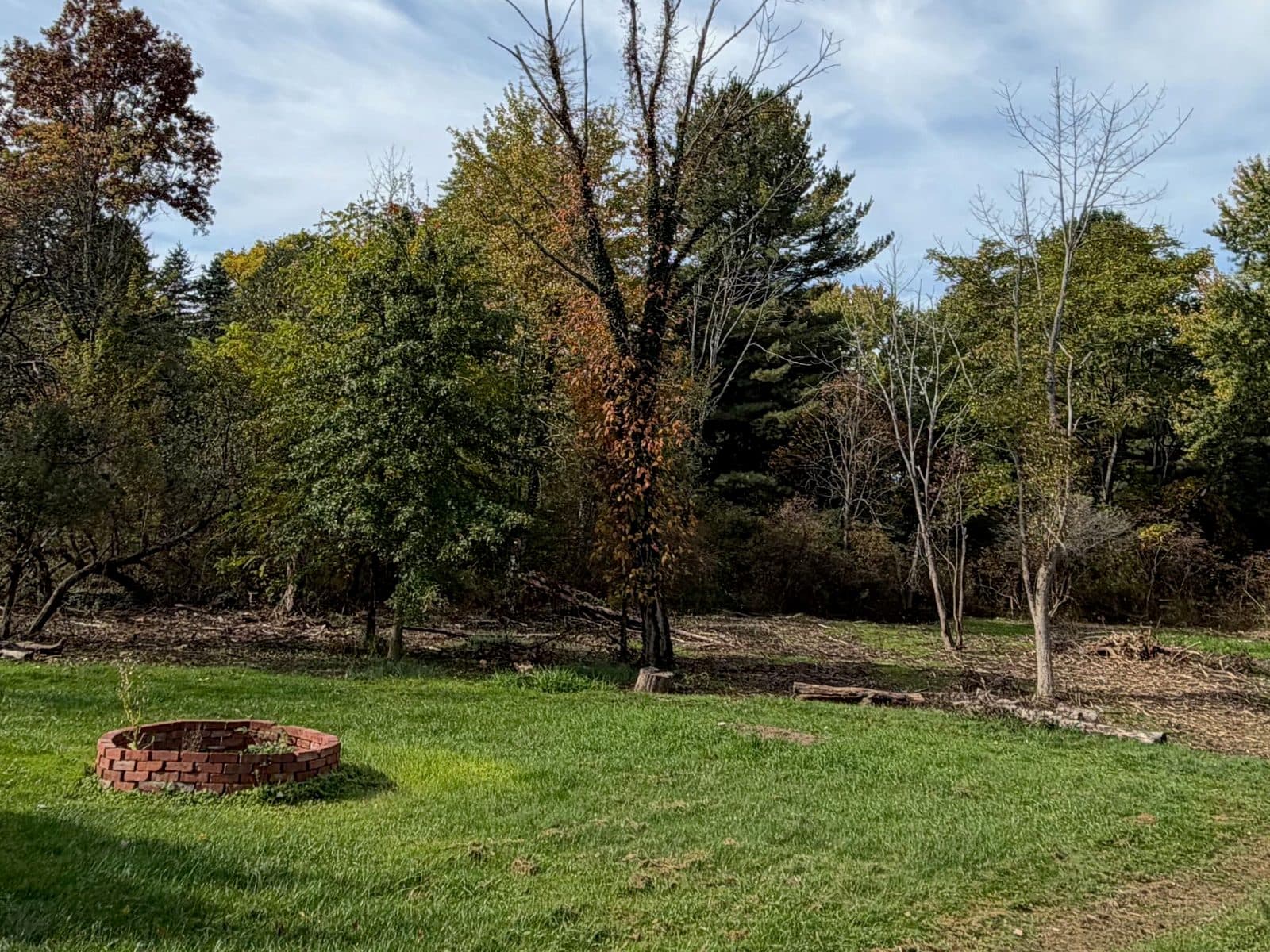 Before
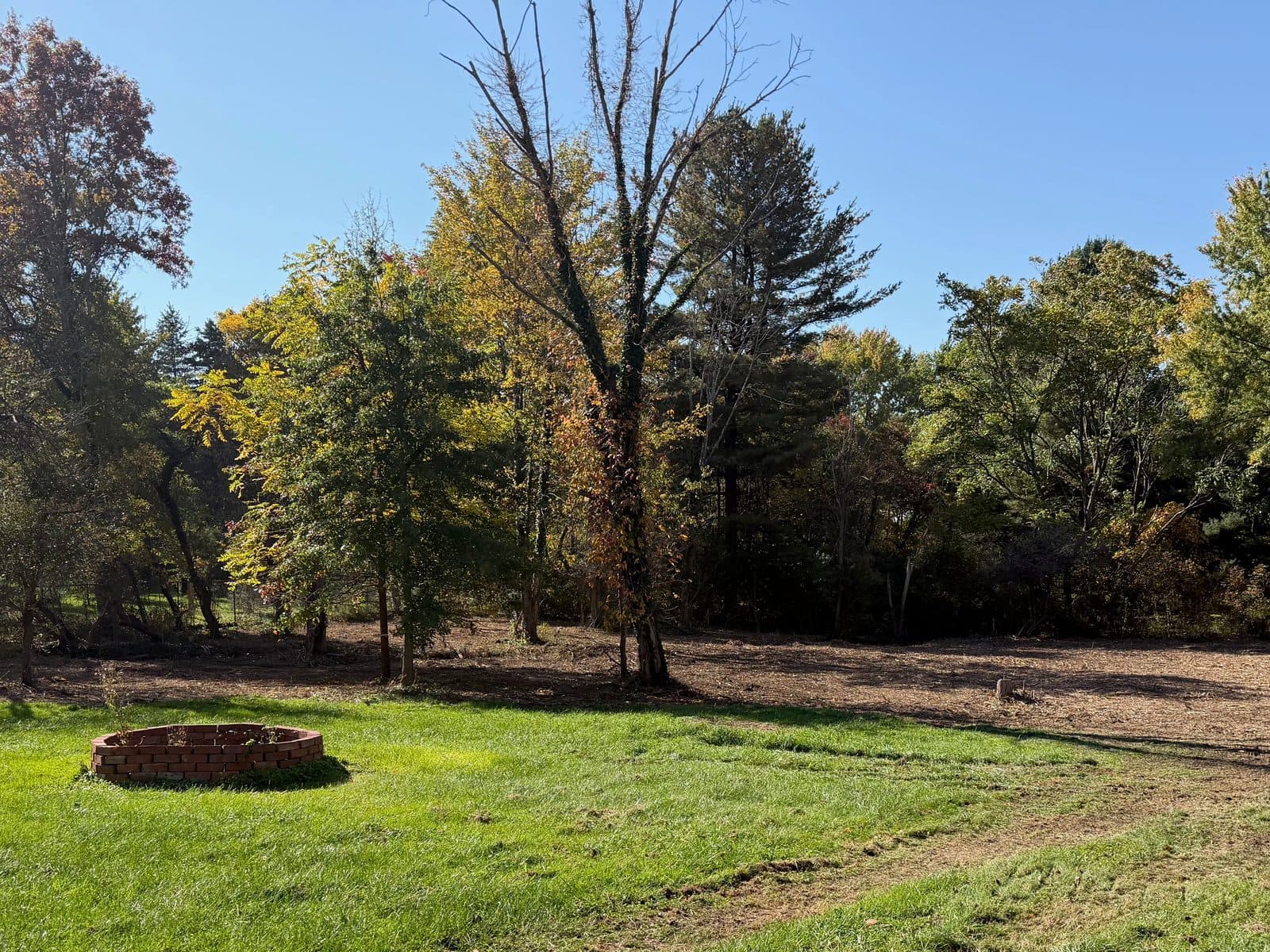 After
AfterPhotographed by our crew in October 2026: before, what the first crew left; after, our finish. The after ground is freshly groomed and bare for now; it greens in spring.
The first question
No. It is the question every owner asks first, and answering it properly is the whole business. Before anything starts we walk the property together and agree on what stays.
The simplest way to picture it is mowing, at the scale of a woods. A mower takes down what is low and leaves the shade trees standing; this takes down the thorn, the scrub and the unwanted stems crowding the good trees, and leaves every tree worth keeping untouched.
It is a different result from brush hogging, which knocks material down and leaves a rough stubble behind it. This grinds it to a fine mulch and spreads it across the floor, so what you walk out onto is groomed rather than merely cut. Nothing is burned, nothing is hauled away, and no roots are pulled — the ground holds, and the ridge does not wash.
We will show you every tree we would keep before anything starts.
The trees you keep
Not when the work respects the root zone, and the root zone is where the care goes. A mature tree is rarely hurt by what is cut around it. It is hurt by what happens to the ground over its roots, and those roots are shallow: Colorado State University Extension puts most of the large woody roots in the top six to twenty-four inches of soil, reaching well past the drip line, the ring beneath the outermost branches. The damage that follows clearing work is well documented and comes from three things — soil compacted over those roots, bark torn from the trunk or the flare at its base, and a trunk buried under a heap of mulch. All three are avoidable. The understory is taken down around a kept tree, not dug out from under it, and the roots of whatever is removed stay in the ground, holding the soil.
Further than the canopy suggests. Purdue Extension’s rule for a tree’s critical root radius is its trunk diameter in inches, measured four and a half feet up, multiplied by one and a half, in feet. A sixteen-inch oak by the pond has roots that matter out to about twenty-four feet. That is why nothing about this work involves grading, scraping or pulling stumps beneath the trees that stay: the ground surface over the root zone is left as it was, with the removed growth lying on it as a mulch.
Compaction is the quiet injury. It squeezes the pore space that carries air and water to fine roots, and extension foresters are blunt that it is far easier to avoid than to correct. Soft, saturated spring ground compacts and ruts; firm or frozen ground carries traffic without it, which Michigan State University Extension notes is exactly why winter is favoured for work in woodland. It is one more reason late autumn through March is the season we recommend for wooded ground in Northeast Ohio.
Thin, and off the trunk. The Ohio Department of Natural Resources recommends mulch two to four inches deep, with nothing placed against the trunk itself, and Ohio State University Extension warns against the “mulch volcano” piled up the bark. The mulch left by the work is spread where it falls as a thin layer across the floor, which is the kind of cover that holds moisture and softens temperature swings over the roots. If any settles against a trunk you value, rake it back from the flare.
Say so on the walk-through and it is marked before anything starts. For a specimen you would never forgive losing — the old white oak, the beech by the drive — a certified arborist can assess its health beforehand; the International Society of Arboriculture lists them at treesaregood.org. That is what the guarantee means in practice: we agree with you what stays before anything starts, without losing a tree worth keeping. And if we miss material inside the agreed clearing zone, we come back and finish — free.
Sources: Colorado State University Extension — Protecting Trees During Construction; Purdue Extension FNR-463-W — Construction and Trees; Michigan State University Extension — winter conditions and soil compaction; ODNR Division of Forestry — Mulching Your Trees Guide; Ohio State University Extension (BYGL) — Mulch Volcanoes.
The season
From now until the snow, the structure is legible. You can stand at the kitchen window and see what is actually back there — which trees are worth keeping, how far the tree line really moved, and where the ground falls away.
It is also when the work is cleanest. The ground is firm, the leaves are down, and nothing is nesting. Booked before the snow, finished before spring.
The per-acre price and the plain list of what comes out are on underbrush clearing. If you would rather open a corner yourself first, the guide to clearing brush from woods by hand covers marking the keepers, the tools and what to leave. Most of what crowds the understory here is bush honeysuckle and buckthorn.
What actually comes out
People say “land clearing” and picture a bulldozer and an empty lot. This is the opposite of that. Here is the actual list of what we take out of a Northeast Ohio property.
The reason nobody has walked back there in ten years. You cannot mow it, you cannot pull it, and every year it takes a few more feet. This is the single thing most people call us about, whatever they end up calling it.
Running along the ground and climbing the trunks, right through the tangle where you cannot see it until you are already in it. Vines are what turn an overgrown edge from untidy into genuinely unusable — and left alone, they strangle the good trees they are climbing.
The damp tangle at knee height is where they live — deep shade, wet leaves that never dry, and thick cover the deer bed down in. It sits between the house and everywhere the family walks. Take the layer out and you take away what they depend on.
The wall of green that leafs out before anything native and holds on after everything else has dropped. It shades out the forest floor, so nothing else grows, and it is the main structure the whole tangle is built on.
Not the trees you want — the volunteers that came up thick in the gaps and are now competing with the trunks worth keeping. Thinning them is what gives the good trees room and lets light back down to the ground.
And what is left standing?
The woods you already own. Northeast Ohio is maple and beech country — sugar maple, American beech, red oak, shagbark hickory, black cherry, birch in the wetter ground. Those trees are already there, full grown, and have been the whole time. They are just behind the tangle.
Nothing here needs planting. It needs uncovering.
Why autumn and winter
We work year round, and this is genuinely better done between autumn and the spring thaw — for the ground, for what lives in it, and for what it costs you.
The ground
Wet spring soil is where the damage happens — tracks sink, the ground compacts, and you are left with ruts that show until the following summer. Frozen or firm ground takes the work with effectively no rutting, and the surface is left the way it was found. If you have ever watched equipment tear up a lawn getting to the back of a property, this is the season that does not do that.
Wet ground
Every wooded property has ground you cannot get a machine onto in July — a seep, a low corner, the wet end of a field, the strip along a creek. Freeze it and it carries weight. Working those areas in the cold is standard practice for a reason: it is the difference between clearing them properly and leaving them for another year. Nothing is dug, so the roots holding that ground stay where they are.
The wildlife
Bird nesting runs from roughly April into August here, and no amount of care from an operator prevents destroying nests in that window — you cannot see them going in. Working from autumn through early spring avoids the season entirely. The desirable plants are dormant too, so they take equipment traffic far better than they would in growing season.
The quote
With the leaves down, the ground and the trees are in plain view. The walk-through marks exactly what stays and what goes, and the quote is measured off what is actually there rather than guessed at under a canopy. The price per acre is the same in every month.
One thing the cold does not do on its own
It does not kill the honeysuckle. Cut it in winter and it will push back in spring, whatever anyone tells you. What the season gives you is the right order of operations. Bush honeysuckle holds its leaves into late October after most native plants have shut down, which is why an autumn follow-up treatment reaches it with very little effect on anything you want to keep. Cut-stump work is not done during spring sap flow for the same reason. We will tell you where a follow-up is needed and where it is not.
Timing follows Ohio State University Extension guidance on controlling non-native invasive plants in Ohio forests (F-68).
Questions
Not when the work respects the root zone. Most of a mature tree's large roots lie in the top six to twenty-four inches of soil and reach well past the drip line, so what injures a kept tree is compacted soil over those roots, torn bark at the trunk or flare, or mulch heaped against the trunk. The understory is taken down around the trees that stay, not dug out from under them; roots of what is removed stay in the ground; the mulch lies as a thin layer; and wooded work is best done on firm or frozen ground, late autumn through March.
Yes. BrushBoss is insured, and a certificate of insurance is available on request before any work starts. Every job is quoted in writing at a fixed price first.
Removing the invasive understory from wooded property — bush honeysuckle, multiflora rose, autumn olive, buckthorn, greenbrier — while leaving every mature hardwood standing. What you are left with is a woods that still has its full canopy but an open, walkable floor, so you can see and walk through the wooded part of your property again.
Once the canopy is down, roughly mid-October through March. The structure is legible, so you can see which trees are worth keeping and how far the tree line has actually moved. The ground is firm rather than soft, the work is cleaner, and nothing is nesting. Autumn is the best window of the year for it and winter is the second best.
No, because nothing is dug or pulled. Root systems stay in the ground holding the soil, which is the difference between this and any method that grubs material out. The removed growth is ground to mulch and left across the floor, where it works as cover and slows runoff while the ground cover re-establishes.
A brush hog knocks material down and leaves a rough stubble behind it, and it is limited to lighter growth in open ground. This grinds the same material to a fine mulch and spreads it, so the floor you walk out onto is groomed rather than merely cut — and it handles stems a brush hog cannot. Brush hogging is the right tool for fields; this is the right tool for woods.
Wooded work is priced per acre, from $2,000 to $2,990 depending on how dense the growth is and how much of it is thorn. Most wooded portions of a residential property in Geauga County run one to three acres and are finished in a day or two. There is no project minimum — smaller work is flat-priced instead, starting at $295 for a driveway or fence line. Full pricing is on the pricing page.
Neither. Everything removed is ground on site and stays on the property as mulch across the woodland floor. There are no burn piles waiting on a permit and a still day, no trucks in and out, and no stump holes or windrows of debris left along the edge when the work is done.
Walk it with us
It costs nothing and commits to no price. We walk the wooded part of your property together, you tell us what you wish it looked like, and we show you every tree we would keep.
You own five acres. You use two.
The mature woods is already there. It only needs uncovering.
Free, no obligation, and we show you every tree we would keep.
Ground you can walk without watching your step — because we take the cover out.
Without losing a tree worth keeping.