Brush Hogging in Cleveland & Northeast Ohio
Brush hogging, also spelled bush hogging, is heavy mowing for open ground that has got away from you: waist-high grass, weeds, briars and young saplings across fields, pastures, meadows and vacant lots, cut low and left to break down where it falls. BrushBoss brush hogs across Northeast Ohio at $624 an acre.
Land recovery and property protection · Northeast Ohio
We give you your land back, and we make it safe to use.
The brush, thorn and poison ivy that grew up under your good trees comes out, and what you get back is ground you can walk without watching your step.
From $295 for an afternoon's work to full estate restoration.
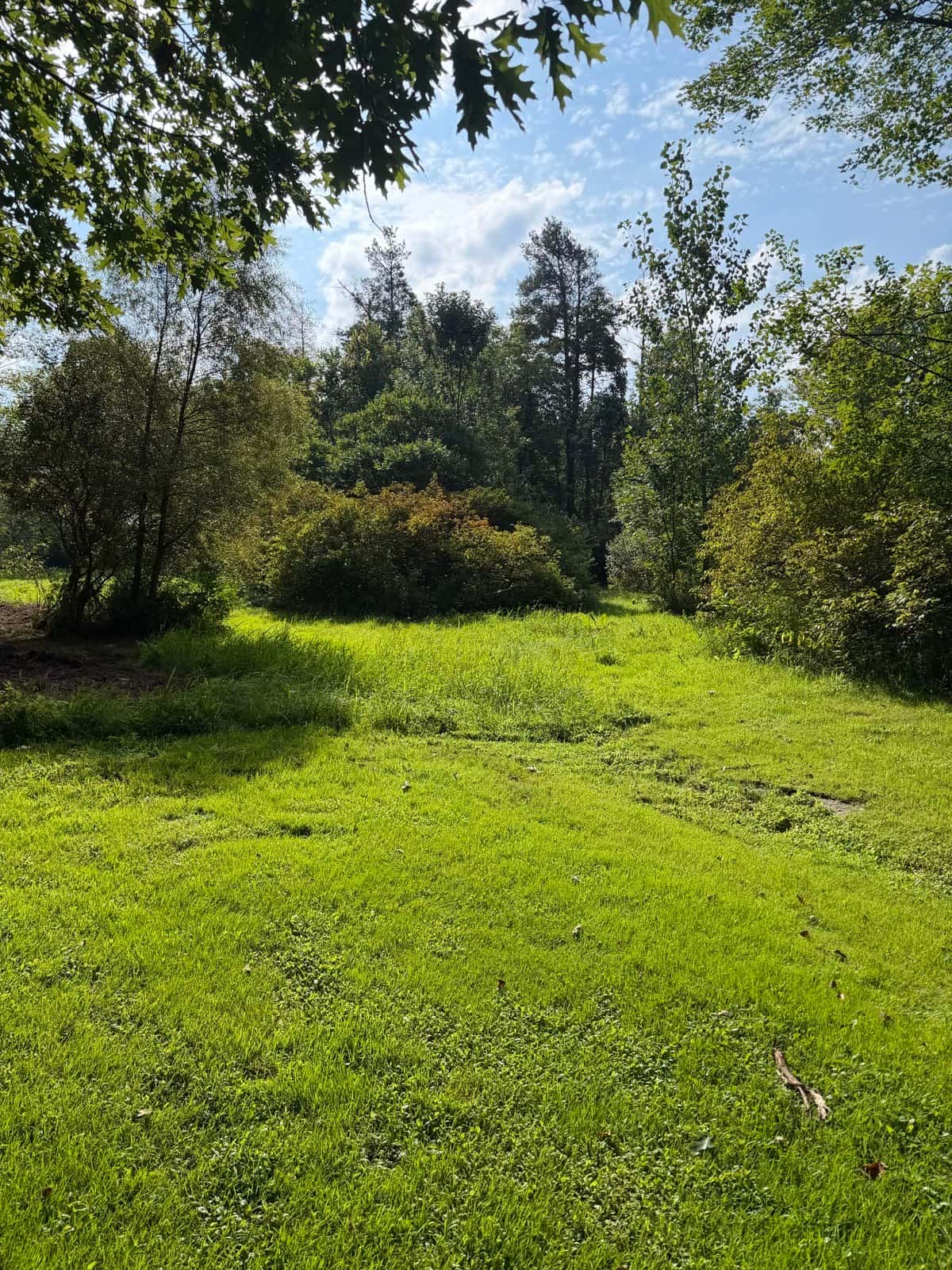 Actual BrushBoss footage · September 2026
Northeast Ohio · Woodland recovery
Real work. Real footage.
See past the tangle.
Brush and vines fill the space beneath your good trees. Start with the ground you want to use again.
Follow the transformation
What Is Brush Hogging?
A lawn mower is built for grass that was cut last week. Brush hogging is for ground that was last cut two or three summers ago, where the grass is past your knees, goldenrod and thistle have moved in, blackberry canes are arching over, and the first young trees have started to come up through it. The growth is cut low across the whole area and the cuttings are left lying, where they dry and settle into the ground.
What it gives you back is open land that reads as cared for: a field you can see across from the house, a pasture the horses can use again, a meadow with a mown edge, a lot that no longer draws a letter from the township. It is maintenance for open ground, and it is the right job far more often than people expect.
What it is not is clearing. Brush hogging cuts what is soft enough to cut and rides over what is not. It does nothing to the brush under trees, it will not take out a thicket of thorn, and it does not touch stumps. That is a different job, described below, and we will tell you plainly which one your ground needs.
Brush Hogging or Bush Hogging?
They are the same job. "Bush hog" began as a manufacturer's trade name for the heavy mower towed behind a tractor, and like a lot of trade names it became the everyday word for the work. "Brush hogging" is the more descriptive spelling, "bush hogging" is the more common one in farm country, and in Ohio people search for both about equally. You will also hear field mowing, pasture mowing and brush mowing. Whatever you call it, it is quoted the same way here.
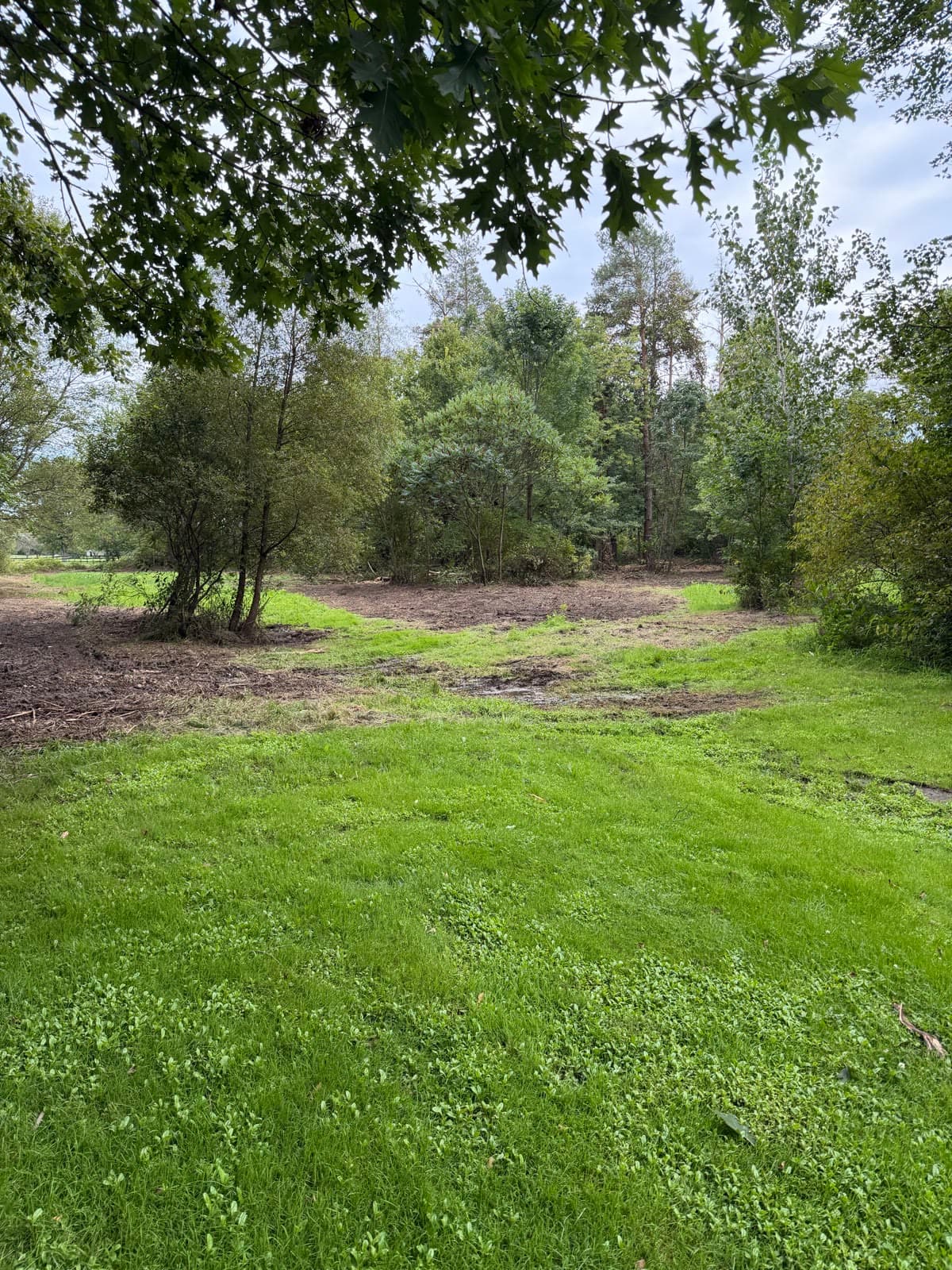
What Brush Hogging Is Right For
When Forestry Mulching Is the Right Job Instead
The quick test is a stem. If most of what is growing is grass and weeds, and the woody stems are no thicker than your thumb, brush hogging is the right job and the cheapest one. If the woody stems are as thick as your wrist, the thorn has knitted into a thicket you cannot walk through, or the growth is under trees you want to keep, a mower will only bounce off it and come back next year to the same problem.
That ground needs forestry mulching, which takes the brush, thorn and crowding saplings out and leaves a clean floor beneath the trees worth keeping. It is priced by the acre from $2,000 because it is a different scale of work. Many properties need both: mulching once to recover the ground, then brush hogging each year to keep it.
If you are not sure, send a few photos or a satellite screenshot with your address. We would rather quote the cheaper job that works than the dearer one you do not need.
What Does Brush Hogging Cost per Acre?
Brush hogging is priced by the acre at $624. The acreage is measured from satellite imagery or your survey, and the rate does not change with how rough the field is or how much it rolls. A tidy hay field and a field that has not been cut in three years cost the same per acre, which makes this the simplest quote we write.
An acre is the smallest brush-hogging job, so any field up to an acre is $624. If what you have is a corner, a strip or an edge well under an acre, and especially if it has gone woody, it is usually priced as one of our small flat-rate clearing jobs instead, starting at $295.
The cuttings stay on the ground, so there is no hauling line on the invoice. The number you see in the instant quote is the number we work to.
| Field | Acres | Price |
|---|---|---|
| A back field or paddock · The smallest brush-hogging job | 1 | $624 |
| A horse pasture or hay field · Priced the same rough or clean | 3 | $1,872 |
| A meadow or idle hay ground · Usually a single visit | 5 | $3,120 |
| Open acreage on a farm or estate · Same rate per acre throughout | 10 | $6,240 |
Compare every service on the pricing page, or put your address into the instant quote for your own field.
When to Brush Hog in Ohio
In Ohio the demand for brush hogging peaks in June and July, when the season's growth is at its tallest and fields start to look neglected from the road. That is a fine time to cut pasture and hay ground that is being kept for use.
A meadow kept for its wildflowers and birds is different. Birds nest in tall grass and field edges here from roughly April into August, so a meadow is better cut late in the season, after nesting is over, or in the fall once growth has stopped. A cut at that time still keeps the trees out, which is the point of it.
Most fields need one cut a year, and two if you want them to look mown rather than merely open. Left alone for more than two or three seasons, open ground in Northeast Ohio starts filling with saplings and thorn, and at that point brush hogging no longer reaches it and the job becomes clearing.
Every Brush Hogging Job Includes
Brush Hogging Services in Northeast Ohio
We brush hog across Geauga, Lake, Cuyahoga and Summit counties. Most of the fields worth cutting sit in the ring around Cleveland rather than in it: the east side out through Chagrin Falls, Solon and Bainbridge, the suburbs south and west where the drive makes sense, and Akron with the large-lot country around the Cuyahoga Valley. If your town is not listed below, ask; at $624 for the first acre, a field on a road we are already working is an easy add.
Brush Hogging Town by Town
Cuyahoga County
Geauga County
Brush Hogging Near You
Brush Hogging across Cleveland and Akron — the east side out through Chagrin Falls, Gates Mills and Hunting Valley, the Cleveland suburbs south and west of the city, and the acreage country around the Cuyahoga Valley. Pick your county for townships, local pricing and scheduling.
More Land Clearing Services
Is BrushBoss insured, and what is guaranteed?
- Insured
- BrushBoss is insured. A certificate of insurance is available on request, before anyone sets foot on the property.
- Reviewed
- 5.0 out of 5 from 8 Google reviews. Read every review
- Quoted in writing
- You have a written, fixed price before any work starts, and the price quoted is the price you pay. Every published rate is on the pricing page.
- Guaranteed
- We agree with you what stays before anything starts — without losing a tree worth keeping. Every BrushBoss clearing project includes a workmanship guarantee: if we miss material within the agreed clearing zone, we come back and finish — free.
- Local
- Based at 14669 Castlewood Dr, Newbury Township, Geauga County. (440) 557-4660, or book a walk-through.
Brush Hogging Questions
What is brush hogging?
Brush hogging, also spelled bush hogging, is heavy mowing for open ground that has got away from you: waist-high grass, weeds, briars and young saplings across fields, pastures, meadows and vacant lots, cut low and left to break down where it falls. BrushBoss brush hogs across Northeast Ohio at $624 an acre.
Is it bush hogging or brush hogging?
Both are correct and they mean the same job. "Bush hog" started as a manufacturer's trade name for the heavy mower used for it, and became the everyday word; "brush hogging" is the more descriptive spelling. Field mowing and pasture mowing describe the same work.
What does a bush hog do?
It cuts overgrown grass, weeds, briars and young saplings low across open ground and leaves the cuttings lying to break down. It keeps fields, pastures and lots open. It does not clear brush under trees, thorn thickets or stumps, which is forestry mulching work.
How much does brush hogging cost per acre?
BrushBoss charges $624 per acre for brush hogging, with no density or terrain surcharge. An acre is the smallest job, so a field up to an acre is $624, three acres is $1,872 and ten acres is $6,240. Small woody corners are priced as flat-rate clearing jobs from $295.
What is the difference between brush hogging and forestry mulching?
Brush hogging mows open ground: grass, weeds and thin saplings, cut and left lying. Forestry mulching takes out woody brush, thorn and saplings, including under trees you keep, and leaves a mulch floor. Hogging is $624 an acre; mulching is priced by the acre from $2,000 because it is a heavier job.
How often should a field be brush hogged?
Once a year keeps a field open, and twice a year keeps it looking mown. Ground left uncut for more than two or three seasons in Northeast Ohio fills with saplings and thorn, and then it needs clearing rather than mowing.
When is the best time to brush hog in Ohio?
June and July for pasture and hay ground in use, when growth is at its tallest. For a meadow kept for wildlife, cut late in the season after nesting, which runs from roughly April into August here, or in the fall once growth has stopped.
Can you brush hog a field that has not been cut in years?
Often, if it is still mostly grass, weeds and thin saplings. Once woody stems are as thick as your wrist the mower rides over them, and we will quote forestry mulching instead rather than charge for a cut that does not hold.
Do you take the cuttings away?
No. The cuttings are left on the ground, where they dry and break down into the soil. That is normal for brush hogging and is part of why it costs a fraction of clearing.
Do you offer brush hogging services near me?
Yes, if your ground is in Geauga, Lake, Cuyahoga and Summit counties: the acreage around Cleveland's east side through Chagrin Falls, Solon and Bainbridge, the suburbs south and west where the drive works, and Akron with the large-lot country around the Cuyahoga Valley. The town pages below list each community.
Are you insured?
Yes — insured; a certificate of insurance is available on request.
Get Your Field Back in Hand
Enter your address for an instant price at $624 an acre. If the ground needs more than a mower, the quote will say so before anyone drives out.
You own the land. You just cannot use it.
That is one layer of brush, and it comes off in a morning.
We'll tell you what it costs. Brush hogging is $624 an acre, with a one-acre minimum.
Ground you can walk without watching your step — because we take the cover out.
Without losing a tree worth keeping.