Land Clearing & Forestry Mulching
Parkman Township, OH
We give you your land back, and we make it safe to use.
Draw Your Clearing Area ↗About this service in your area
The Grand River rises in Parkman Township, and Chickagami Park's 139 wooded acres sit in its headwaters; BrushBoss recovers the private woods, pastures and field edges around them. Parkman is southeast Geauga farm and woodland, and most of what we see is ground that stopped being grazed or mown: rose, hawthorn and autumn olive in the fields, honeysuckle under the trees. We take that growth out, keep what is worth keeping, and hand back land the owner can use, ride or simply look across. Headwater streams and wet flats are worked with a buffer and on firm ground. Pricing starts at $295, and acreage is from $2,000 an acre.
Land clearing · Parkman Township, Geauga County
Who does land clearing in Parkman Township, Ohio?
BrushBoss does. We take overgrown woods, fields and lots in and around Parkman Township back from the brush, thorn and poison ivy, and hand them back as ground you can walk and use again. The Grand River rises in Parkman Township, and Chickagami Park's 139 wooded acres sit in its headwaters; BrushBoss recovers the private woods, pastures and field edges around them.
Clearing woods and fields runs $2,000 to $2,990 an acre on most ground, depending on how thick the growth is. Smaller jobs are flat-priced from $295, and you get the number before anything starts. Open fields that only need cutting back are brush hogged at $624 an acre.
Land recovery and property protection · Northeast Ohio
We give you your land back, and we make it safe to use.
The brush, thorn and poison ivy that grew up under your good trees comes out, and what you get back is ground you can walk without watching your step.
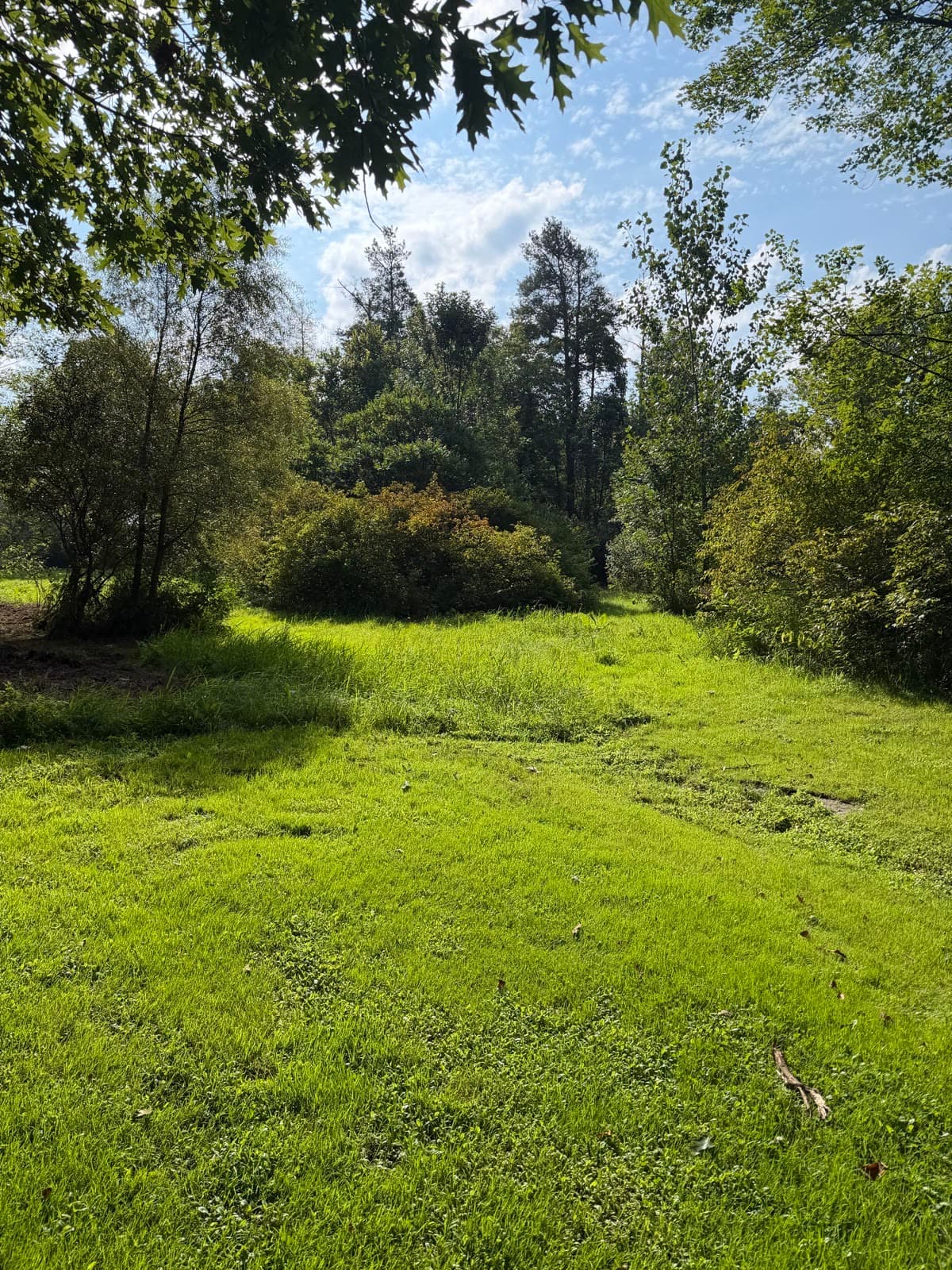 Actual BrushBoss footage · September 2026
Northeast Ohio · Woodland recovery
Real work. Real footage.
See past the tangle.
Brush and vines fill the space beneath your good trees. Start with the ground you want to use again.
Follow the transformation
Forestry Mulching Solutions for Parkman Township's Unique Landscape
Parkman Township's landscape is a mosaic of active farmlands, mature woodlots, and rural residential properties. The terrain, while generally gently rolling, includes numerous low-lying areas and stream corridors that promote lush, rapid vegetation growth. The rich, often heavy clay-loam soils, characteristic of Geauga County, retain moisture, creating ideal conditions for both desirable native trees and aggressive invasive species to flourish, quickly transforming open fields and forest edges into dense, impassable thickets.
Property owners in Parkman frequently battle with a relentless assault from non-native plants. Bush honeysuckle forms dense, shading understories that stifle native wildflowers and tree saplings. Multiflora rose creates thorny, impenetrable barriers along fence lines and field edges, making access and maintenance a constant struggle. Autumn olive rapidly colonizes open pastures and neglected areas, diminishing usable acreage and reducing biodiversity. Effectively managing these pervasive threats is crucial for maintaining property value and ecological health.
From expansive multi-acre farms requiring pasture reclamation or fence line clearing, to secluded residential properties seeking to expand yard space or create new walking trails, the need for intelligent land management is evident throughout Parkman Township. Our forestry mulching services are perfectly suited for preparing building sites for new barns or homes, restoring neglected woodlands, or simply enhancing the aesthetic and functional appeal of your rural Geauga County property by transforming overgrown areas into clean, usable land.
Parkman is the least regulated township in Geauga County for clearing. It is not on the 300-square-foot list, the word riparian does not appear anywhere in its 2025 zoning resolution, and there is no tree-removal or land-clearing article — so the one-acre Geauga SWCD threshold governs and little else does. Its zoning definition of agriculture expressly includes timber.
The Grand River is born here, originating in the upland of north-western Parkman before turning east into Trumbull County. Half a mile south-east of Parkman the river has cut a gorge exposing more than 130 feet of glacial till — a useful illustration of how much material is available to move once vegetation stops holding it. The township sits on the southern arm of the Defiance End Moraine, where relief is pronounced and erosion is a real hazard.
What We Clear in Parkman Township, OH
Forestry Mulching
Overgrown brush and crowding saplings ground into a finished mulch layer beneath the trees you keep. No burning, no hauling, no soil disturbance. Parkman's southeast corner carries shrinking clay soils along the Geauga–Trumbull line, which swell wet and crack dry — mulch cover moderates both.
Brush Clearing
Briars, thickets, and woody growth a mower cannot touch — converted to ground cover that suppresses regrowth while it feeds the soil. Parkman is open Amish farm country, so brush work is field edge and hedgerow rather than woodlot.
Lot Clearing
Building envelopes, driveways, and septic fields cleared to your survey stakes with topsoil intact, before the excavator arrives. Drift thins to around 260 feet here and the Homewood Sandstone surfaces near the Troy line, so rock is a real possibility on a deep cut.
Fence Line Clearing
Buried fence rows reclaimed on both sides — posts and wire exposed, with a clean mulched strip a mower can hold from now on. Long farm fence lines are the standard Parkman job, cleared both sides.
Trail Cutting
Walking loops and ATV routes cut through your own woods with a mulch footing that stays walkable in wet weather. Flat Amish farm country with long field edges; most Parkman routes follow fence lines rather than woods.
Invasive Species Removal
Honeysuckle, multiflora rose, and autumn olive thickets taken to grade — with a written follow-up plan for the regrowth the first season brings. Hedgerows are the reservoir here — treat the hedgerow and the field edge stays clean.
FAQ — Parkman Township, OH
The cost of land clearing in Parkman Township varies based on several factors, including the acreage, the density and type of vegetation (e.g., light brush vs. dense mature trees), and the terrain. Flat areas with moderate brush are generally less expensive per acre than steep, heavily wooded plots. We provide fixed, written quotes after a free on-site assessment, so you'll know the exact cost upfront.
Absolutely. Multiflora rose is a common nuisance in Parkman Township's agricultural and rural properties. Forestry mulching takes these thorny thickets down, along with other aggressive invasives like autumn olive and honeysuckle, right to ground level. We can effectively reclaim old field edges and expose buried fence lines, creating a clear, maintainable strip that helps prevent future encroachment.
Yes, BrushBoss proudly serves all areas of Parkman Township, Geauga County. Whether your property is near Parkman Square, along US-422, State Route 528, or in more remote areas like those closer to Swine Creek Reservation, our team is equipped to handle your land clearing needs. We're familiar with the local roads and property characteristics throughout the township.
Our forestry mulching process grinds autumn olive and other invasives into a fine layer of wood chips that covers the soil. This mulch layer acts as a natural barrier, suppressing the germination of new invasive seeds by blocking sunlight and creating an unfavorable environment. While some follow-up might be needed for persistent species, this initial mulching significantly reduces regrowth pressure, especially effective in Parkman's fertile soils where invasives thrive.
Yes, genuinely. Parkman has no riparian setback article, no tree-removal ordinance and is not on the 300-square-foot soil-disturbance list, so the one-acre Geauga SWCD threshold is the main trigger. Its zoning also treats timber as agriculture, which brings the state agricultural exemption into play. That means the responsibility for doing it properly sits with the landowner and contractor rather than with a permit, and on moraine ground with a 130-foot till gorge nearby, erosion is worth taking seriously anyway.
We plan for it. Roughly 62% of Parkman residents speak Pennsylvania German, the first Amish settler in Geauga County settled here in 1886, and the US 422 corridor has a documented safety problem — 89 crashes in five years including two fatalities, and a fatal buggy crash in October 2025. Township trustees have formally asked ODOT for buggy lanes and sightline clearing. We move equipment on that corridor deliberately, not casually.
Yes. Most of the Parkman ground we see is pasture or field edge that stopped being grazed or mown, and brush hogging is how that land stays open once it is back in use. Each acre is $624, with one acre the minimum. Fields where rose, hawthorn and autumn olive have already moved in need clearing before regular cutting takes over. Streams near where the Grand River rises keep a buffer, and wet flats wait for firm ground.
Yes. Under the trees in Parkman the usual problem is honeysuckle, with multiflora rose pushing in from the fence lines and field edges. Clearing that undergrowth opens the woodlot to light and to walking, and the trees worth keeping stay. Because the hedgerows are where this growth spreads from here, taking the field edge back alongside the woodlot helps it stay clean. Expect between $2,000 and $2,990 per acre, with thicker growth at the upper end.
Price Your Clearing In Two Minutes
Pull up your address on a satellite image, click around the area you want cleared, answer a few questions about the growth, and get a per-acre estimate on screen — no site visit, no phone tag. Overgrown acreage, invasive brush, fence lines and trails, mulched in place with no burn piles and no haul-off.
Per acre on flat terrain, by brush density. Fixed written quotes after a free property walk — no hourly meters.
Draw Your Clearing Area ↗