Forestry Mulching & Land Clearing in Geauga County, Ohio
BrushBoss is based in Geauga County — the rural county east of Cleveland, past the last of the suburbs — and works every township and village in it. Forestry mulching, land clearing, brush hogging, trail cutting, and invasive brush removal — all priced per acre and fixed in writing before the equipment leaves the yard.
Land recovery and property protection · Northeast Ohio
We give you your land back, and we make it safe to use.
The brush, thorn and poison ivy that grew up under your good trees comes out, and what you get back is ground you can walk without watching your step.
From $295 for an afternoon's work to full estate restoration.
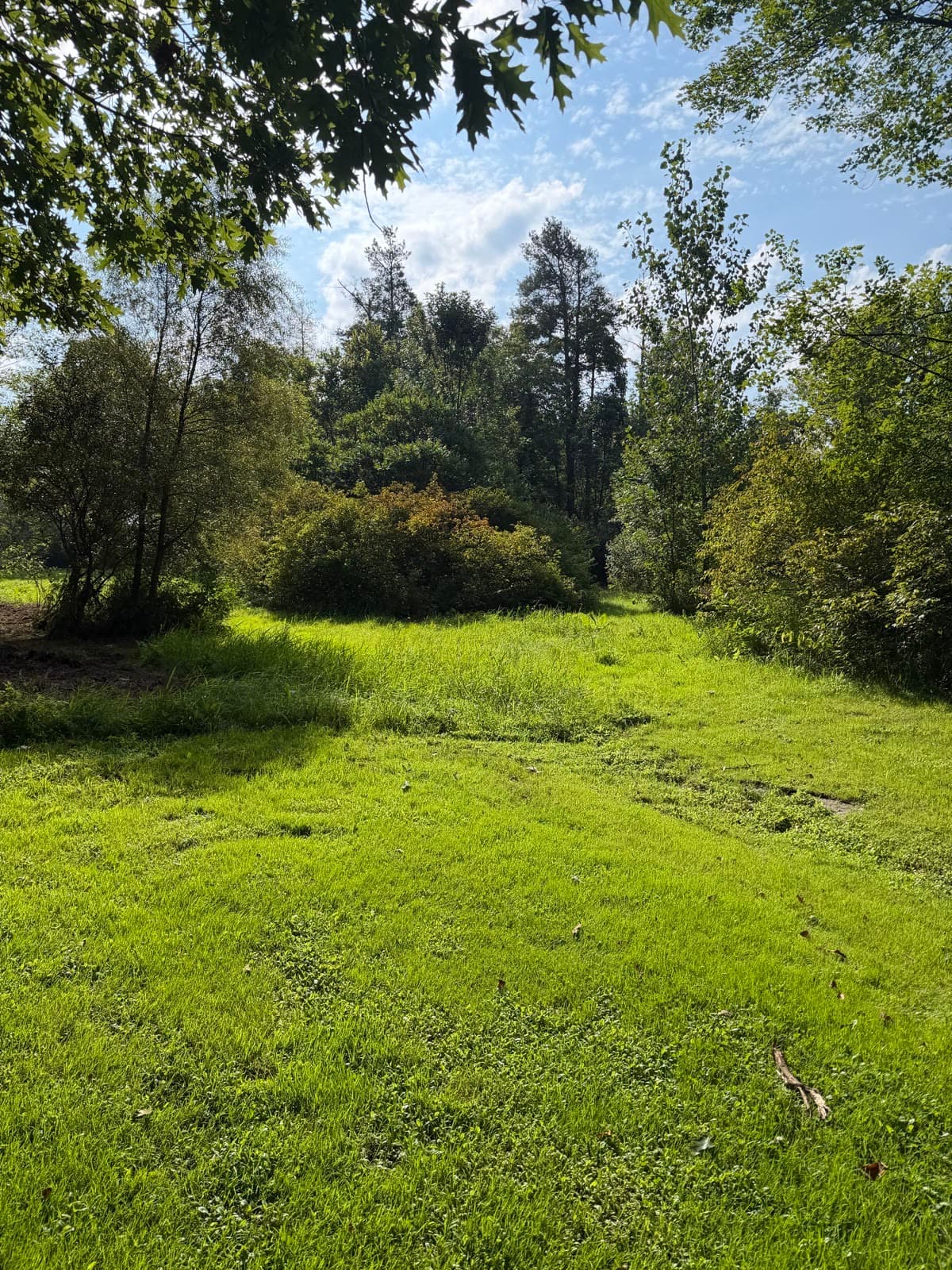 Actual BrushBoss footage · September 2026
Northeast Ohio · Woodland recovery
Real work. Real footage.
See past the tangle.
Brush and vines fill the space beneath your good trees. Start with the ground you want to use again.
Follow the transformation
Geauga is the home county. The machines are stored here, which is why a Geauga job usually gets scheduled sooner and why there is no long-haul surcharge buried anywhere in the quote.
The land is rural and the parcels are large. Five, ten, and twenty acre properties are ordinary, and most of them contain some mix of pasture, second-growth woods, and a brushy margin between the two that has been quietly expanding for years.
Clay soil and snow belt winters set the working calendar. Frozen ground and dry late-summer stretches are the clean windows; saturated spring clay is when we tell an owner to wait rather than book the earlier date.
Invasive brush is the county's standing problem. Honeysuckle, multiflora rose, and autumn olive have taken most of the unmanaged understory, so nearly every reclamation job here is partly an invasive job whether it started out as one or not.
What We Do Across Geauga County
Forestry Mulching
Brush, thorn, and crowding saplings ground into a mulch layer beneath the trees you keep. $2,000 to $2,990 per acre by density.
Mulching in Geauga County →Land Clearing
Whole-parcel work for build sites, pasture recovery, and septic corridors — with the topsoil left in place instead of piled with the brush.
Clearing in Geauga County →Brush Hogging
A flat per-acre rate for fields, pastures, and food plots that still cut. The cheapest way to keep ground from becoming a clearing project.
Hogging in Geauga County →Invasive Removal
Honeysuckle, multiflora rose, autumn olive, and Bradford pear taken out at scale, with a written regrowth plan attached to every job.
Invasive species →Trail Cutting
Ten-foot lanes through wooded acreage for access, riding, or hunting. $2,000 to $2,600 per acre with a mulched, walkable surface.
Trail cutting →Slopes and Creek Bank Work
Steep ground cleared with nobody on the hill, leaving a cover layer that holds the slope while it revegetates.
Slope Work →Geauga County Communities We Serve
Every community below has a page of its own. The one-liners are what tends to be true of the work there.
Auburn Township
Large residential parcels and horse property with woods filling the gaps between them. Edge work and pasture recovery are the usual asks.
Bainbridge Township
The county's most suburban corner. Lots run smaller and neighbors closer, so the work skews to rear wood lines and understory rather than acreage.
Burton
Farm country with a village at the middle of it. Field margins, fence rows, and sugarbush understory account for most of the jobs.
Chardon
The county seat, and the deepest part of the snow belt. Work runs from village-lot brush to full woodlot reclamation on the acreage outside town.
Chesterland
A busy corridor with wooded residential parcels set behind it. Access is generally easy and the jobs lean toward understory and boundary clearing.
Claridon Township
Open agricultural ground with wooded blocks between the farms. Hogging and field-margin reclamation carry most of the volume here.
Hambden Township
Wooded and lightly built, with large tracts held for hunting or simply left alone. Trail cutting and woodlot thinning are common.
Huntsburg Township
Working farmland toward the county's eastern edge. Fence rows, hayfield corners, and pasture that needs putting back into service.
Middlefield
Farm and village both, in the middle of one of Ohio's largest Amish farming communities. Work here is production-oriented — ground going back to use rather than being tidied up.
Montville Township
Rural, wooded, and thinly developed at the north end of the county. Most calls concern acreage nobody has managed in a decade or more.
Munson Township
Wooded residential acreage between Chardon and Chesterland. Understory clearing plus driveway and trail corridors through it.
Newbury
Rolling ground with farm and residential acreage mixed through it. Field recovery and wood-line work in roughly equal measure.
Parkman Township
The southeast farming corner. Large open fields, long fence rows, and woodlots that back directly onto pasture.
Russell & South Russell
Heavily wooded by choice, with mature trees treated as the property's main asset. Clearing here is selective almost without exception.
Thompson
Remote and wooded in the far northeast. Access and haul distance shape a scope here more than the density of the brush does.
Troy Township
Quiet farm ground in the south of the county. Pasture, hayfield, and field-margin work make up nearly all of it.
Working in Geauga County — Questions We Get
Do you really cover all of Geauga County?
Yes. The whole county is our home territory and the equipment is based inside it. Each community listed above has its own page describing what the work typically looks like there and what it costs.
What does a Geauga County job cost?
Forestry mulching runs $2,000 to $2,990 per acre by density. Brush hogging is a separate mowing service at its own flat rate. Trail cutting is $2,000 to $2,600 per acre and power raking is $800 per acre. There is no job minimum — smaller areas are flat-priced from $295 — and volume discounts start at 2.25 acres.
Can I get a price without a site visit?
Usually. We read acreage and brush density from satellite imagery and quote roughly nine out of ten residential jobs remotely. Enter your address in the instant quote tool and a number comes back in minutes rather than days.
What is the best season to schedule here?
Frozen winter ground and a dry stretch in late summer are the two cleanest windows. Spring on saturated clay is the one to avoid, and we will move a date rather than leave ruts across a field you have to live with.
Do you burn or haul anything off the property?
Neither. Standing material is ground into a mulch layer on the ground it grew on. No burn permits to chase, no dump trailers going past the neighbors, and no tipping fees hidden in the line items.
Do you deal with honeysuckle and multiflora rose?
Constantly — between them they are most of what fills a Geauga understory. Removal always comes with a written regrowth plan, because grinding an invasive stand once and walking away simply resets the clock on it.
More From BrushBoss
You own the land. You just cannot use it.
That is one layer of brush, and it comes off in a morning.
We'll tell you what it costs. From $295, no project minimum.
Ground you can walk without watching your step — because we take the cover out.
Without losing a tree worth keeping.