Lot Clearing — Ready for What's Next
Lot clearing costs from $2,000 an acre in Northeast Ohio: the brush, saplings and overgrowth on a building lot or vacant parcel are ground to mulch in place, cleared to your stakes, with the topsoil left intact and nothing hauled away. Every good tree outside the lines stays standing. Price your own lot now in the Land Clearing Cost Calculator.
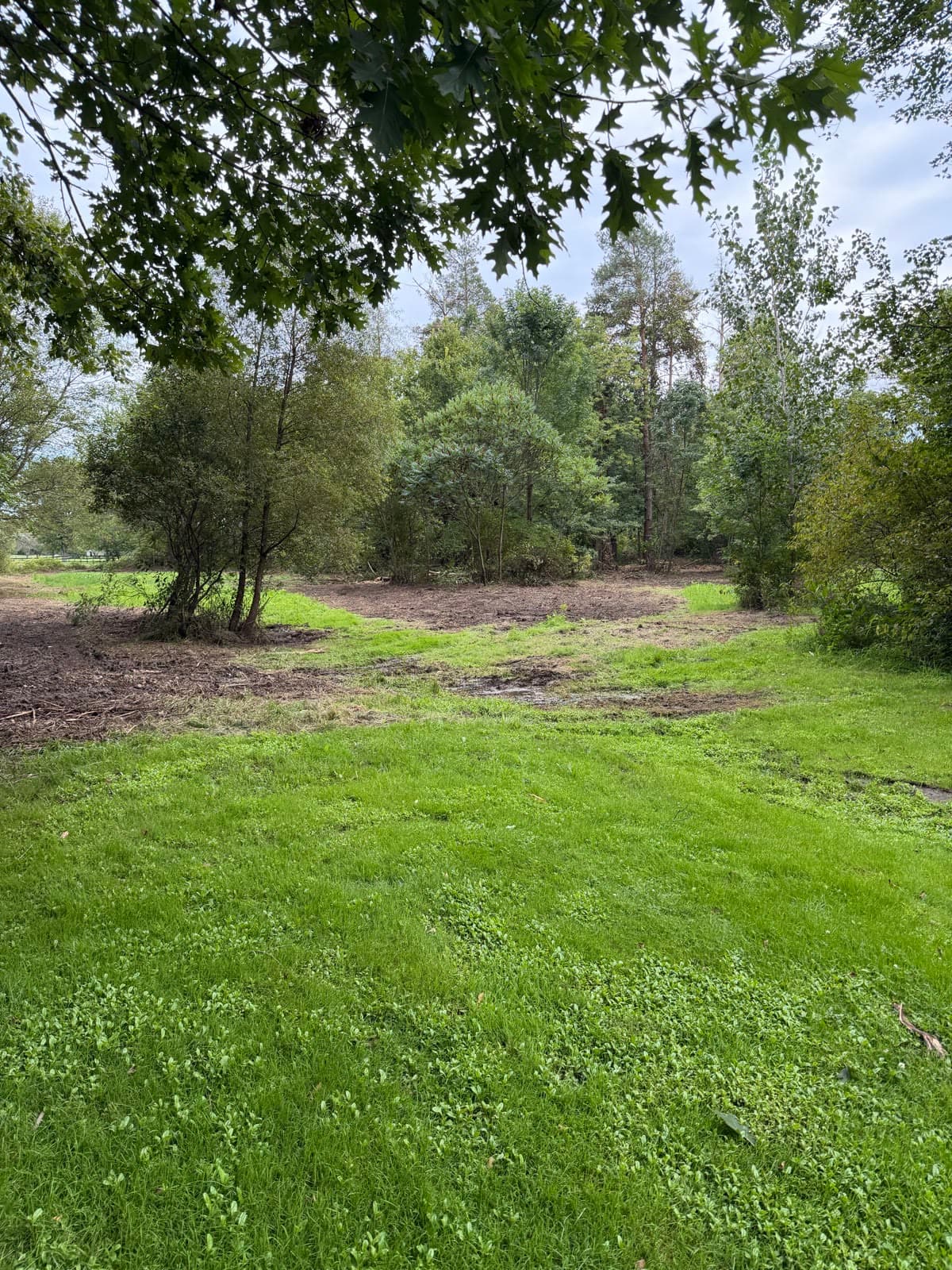
Land recovery and property protection · Northeast Ohio
We give you your land back, and we make it safe to use.
The brush, thorn and poison ivy that grew up under your good trees comes out, and what you get back is ground you can walk without watching your step.
From $295 for an afternoon's work to full estate restoration.
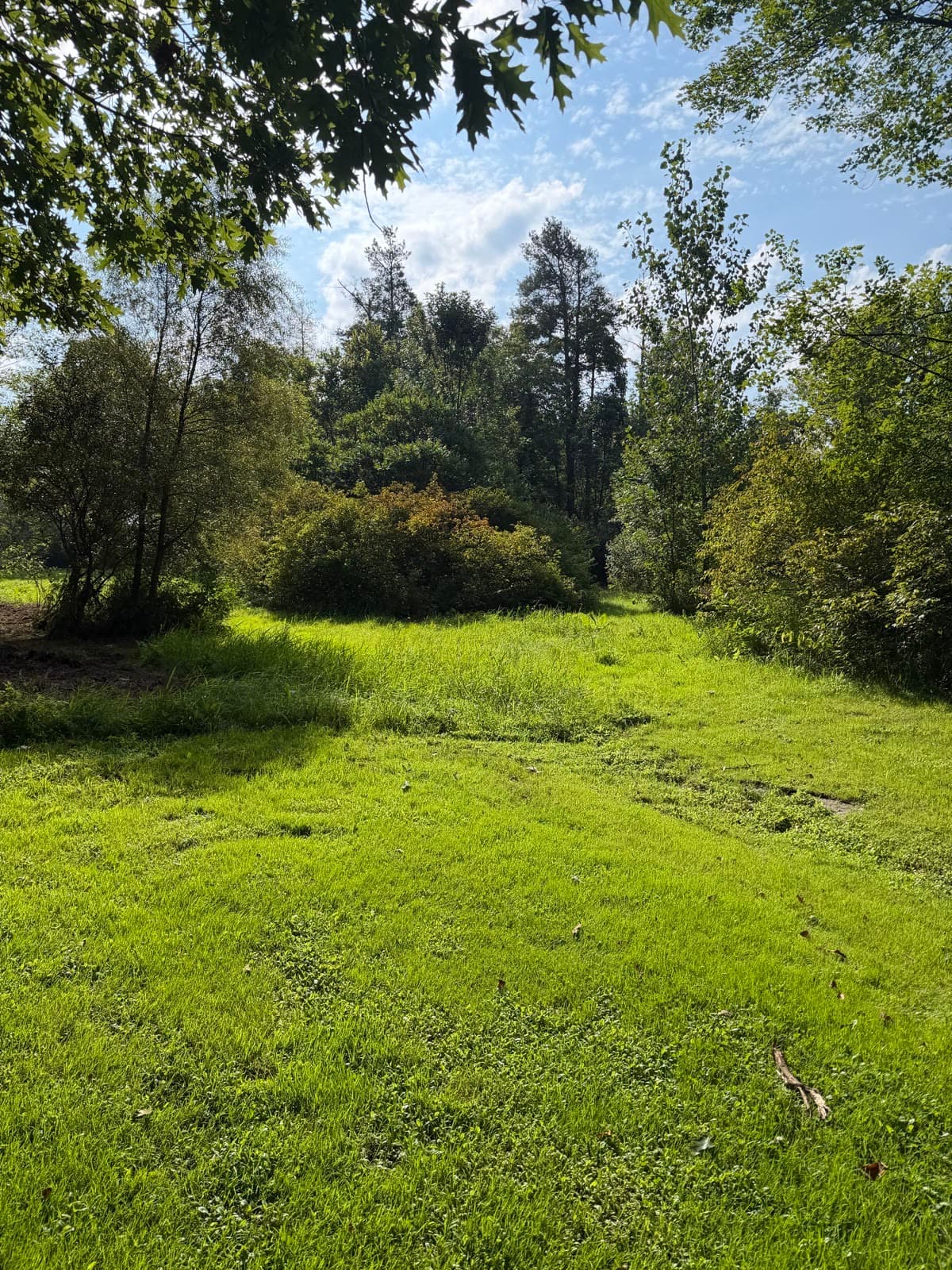 Actual BrushBoss footage · September 2026
Northeast Ohio · Woodland recovery
Real work. Real footage.
See past the tangle.
Brush and vines fill the space beneath your good trees. Start with the ground you want to use again.
Follow the transformation
The First Trade on Site — At the Right Price
Excavation contractors are priced for moving earth, not grinding brush. When they clear your lot, you pay earthmoving rates for mulching work — or they sub it out and mark it up. Separating the vegetation clearing from the site work, and doing it first, is one of the few free lunches in a construction budget: same work, right machine, its own price.
Precision matters: good lot clearing is surgical. The machine works to your stakes — envelope, drive, septic, trench routes — and leaves the mature trees outside the lines doing your landscaping for free. Owners who clear-cut first and plan second spend years replacing shade they paid to remove.
Lot Clearing Is Right For
Every Lot Clearing Job Includes
Clear First. Everything Else Gets Cheaper.
Site-work contractors bid tighter on lots they can walk. Concrete trucks and deliveries move on a cleared corridor without tearing up the schedule. Utility trenches through open ground cost less per foot. Every trade that follows us inherits the savings — which is why the machine with the shortest lead time on your build belongs first on the calendar.
More Site & Land Services
Is BrushBoss insured, and what is guaranteed?
- Insured
- BrushBoss is insured. A certificate of insurance is available on request, before anyone sets foot on the property.
- Quoted in writing
- You have a written, fixed price before any work starts, and the price quoted is the price you pay. Every published rate is on the pricing page.
- Guaranteed
- We agree with you what stays before anything starts — without losing a tree worth keeping. Every BrushBoss clearing project includes a workmanship guarantee: if we miss material within the agreed clearing zone, we come back and finish — free.
- Local
- Based at 14669 Castlewood Dr, Newbury Township, Geauga County. (440) 557-4660, or book a walk-through.
Lot Clearing Questions
How much does lot clearing cost?
Lot clearing in Northeast Ohio is priced by the acre from $2,000, set by how dense the growth is, the slope and the access. The price is fixed before work starts, with no hourly billing and no separate charge for debris, because nothing is hauled away. No project minimum. Small jobs are flat-priced, larger work is priced by the acre, and you get the number before anything starts. The Land Clearing Cost Calculator prices your own lot from a drawing on the satellite map.
What does a lot clearing contractor do?
A lot clearing contractor takes a building lot, vacant parcel or overgrown property from brush to usable ground before the next trade arrives. We work to your site plan or stakes: building pad, driveway corridor, septic field and utility routes cleared, every tree worth keeping outside the lines left standing, the cleared growth ground to mulch in place, and before-and-after photos for your builder, lender or code office.
What areas do you clear lots in — Cleveland and Akron included?
Both, and the ground between them. Cleveland east through Chagrin Falls, Solon, Bainbridge and the rest of the Chagrin corridor is the densest part of the work; it runs west and south through the Cleveland suburbs where the drive makes sense, and Akron with the large-lot communities around the Cuyahoga Valley is the southern end. Cuyahoga, Geauga, Lake and Summit counties, township by township.
Should the lot be cleared before or by the excavation contractor?
Before, as its own line item. Excavation crews are priced for moving earth, not grinding brush, so when they clear your lot you pay earthmoving rates for mulching work — or they sub it out and mark it up. Separating the vegetation clearing and doing it first is one of the few free lunches in a construction budget.
Can you clear exactly to my site plan?
That is how we work it. Give us the plan or the stakes and the machine clears to the lines — building pad, driveway corridor, septic field, utility trench routes. Everything outside the lines stays standing and becomes the mature landscaping your finished project keeps instead of the shade you spend years replacing.
Does lot clearing scrape off my topsoil?
No. Mulching removes the vegetation without disturbing the soil underneath, so your finish grade, your future lawn, and your drainage all keep the soil structure a dozer would have pushed into a pile at the property line.
Do I need a permit to clear a lot in Ohio?
Usually not for the clearing itself. Vegetation work on your own upland ground is typically outside permit scope, and clearing usually does not have to wait on the building permit. The exceptions are wetlands, stream and riparian setbacks, and recorded easements. We flag anything we see on the walk, but the permit itself remains the property owner's responsibility; our Ohio land clearing permits guide sets out when one applies.
Can you document the work for a code enforcement office?
Yes. Every job comes with before-and-after photos, which is what a township violation file, a lender, or a listing agent actually needs. Overgrown-lot notices escalate into fines and forced abatement while you wait, so acting on the first letter is dramatically cheaper than acting on the third.
When should I clear if I am building next year?
Winter. Frozen ground takes the work with almost no disturbance, our schedule is at its thinnest, and winter-cleared lots are the ones that break ground first in spring. Every trade that follows us onto a lot they can walk bids it tighter.
Lot Clearing Near You
Lot Clearing across Cleveland and Akron — the east side out through Chagrin Falls, Gates Mills and Hunting Valley, the Cleveland suburbs south and west of the city, and the acreage country around the Cuyahoga Valley. Pick your county for townships, local pricing and scheduling.
What actually comes out
Five things go. Everything worth keeping stays.
People say “land clearing” and picture a bulldozer and an empty lot. This is the opposite of that. Here is the actual list of what we take out of a Northeast Ohio property.
- 01
Prickly bushes thorn, briar, multiflora rose
The reason nobody has walked back there in ten years. You cannot mow it, you cannot pull it, and every year it takes a few more feet. This is the single thing most people call us about, whatever they end up calling it.
- 02
Poison ivy and the rest of the vines
Running along the ground and climbing the trunks, right through the tangle where you cannot see it until you are already in it. Vines are what turn an overgrown edge from untidy into genuinely unusable — and left alone, they strangle the good trees they are climbing.
- 03
Ticks and what holds them
The damp tangle at knee height is where they live — deep shade, wet leaves that never dry, and thick cover the deer bed down in. It sits between the house and everywhere the family walks. Take the layer out and you take away what they depend on.
- 04
Invasive brush mostly bush honeysuckle
The wall of green that leafs out before anything native and holds on after everything else has dropped. It shades out the forest floor, so nothing else grows, and it is the main structure the whole tangle is built on.
- 05
Crowding saplings the volunteers between the good trees
Not the trees you want — the volunteers that came up thick in the gaps and are now competing with the trunks worth keeping. Thinning them is what gives the good trees room and lets light back down to the ground.
And what is left standing?
The woods you already own. Northeast Ohio is maple and beech country — sugar maple, American beech, red oak, shagbark hickory, black cherry, birch in the wetter ground. Those trees are already there, full grown, and have been the whole time. They are just behind the tangle.
Nothing here needs planting. It needs uncovering.
Get the Lot Build-Ready
Price the lot now in the Land Clearing Cost Calculator, fixed written quote after a free walk, cleared lot in days. Your builder will notice the difference — mostly in their bid.
You own the land. You just cannot use it.
That is one layer of brush, and it comes off in a morning.
We'll tell you what it costs. From $295, no project minimum.
Ground you can walk without watching your step — because we take the cover out.
Without losing a tree worth keeping.