Trail Cutting — Clean Paths Through Any Brush
Trail cutting opens walking, riding and access trails through woods and brush nobody can get into today, leaving a mulched surface that drains and stays walkable. It is how the back acres come back into daily use — the loop to the pond, the path along the ridge. Trails are priced by the ground they cover, from $2,000 per acre, in the Land Clearing Cost Calculator.
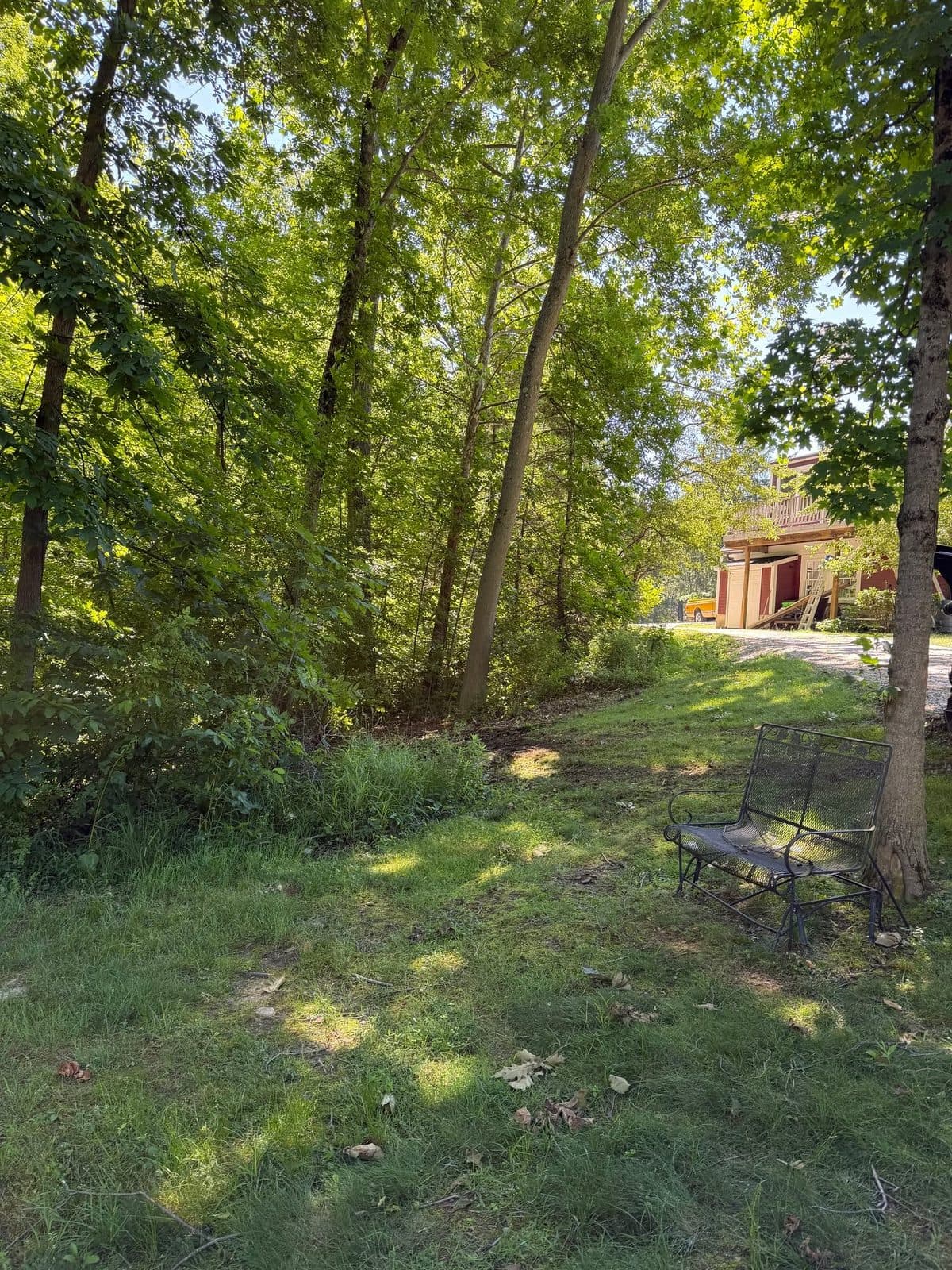
Land recovery and property protection · Northeast Ohio
We give you your land back, and we make it safe to use.
The brush, thorn and poison ivy that grew up under your good trees comes out, and what you get back is ground you can walk without watching your step.
From $295 for an afternoon's work to full estate restoration.
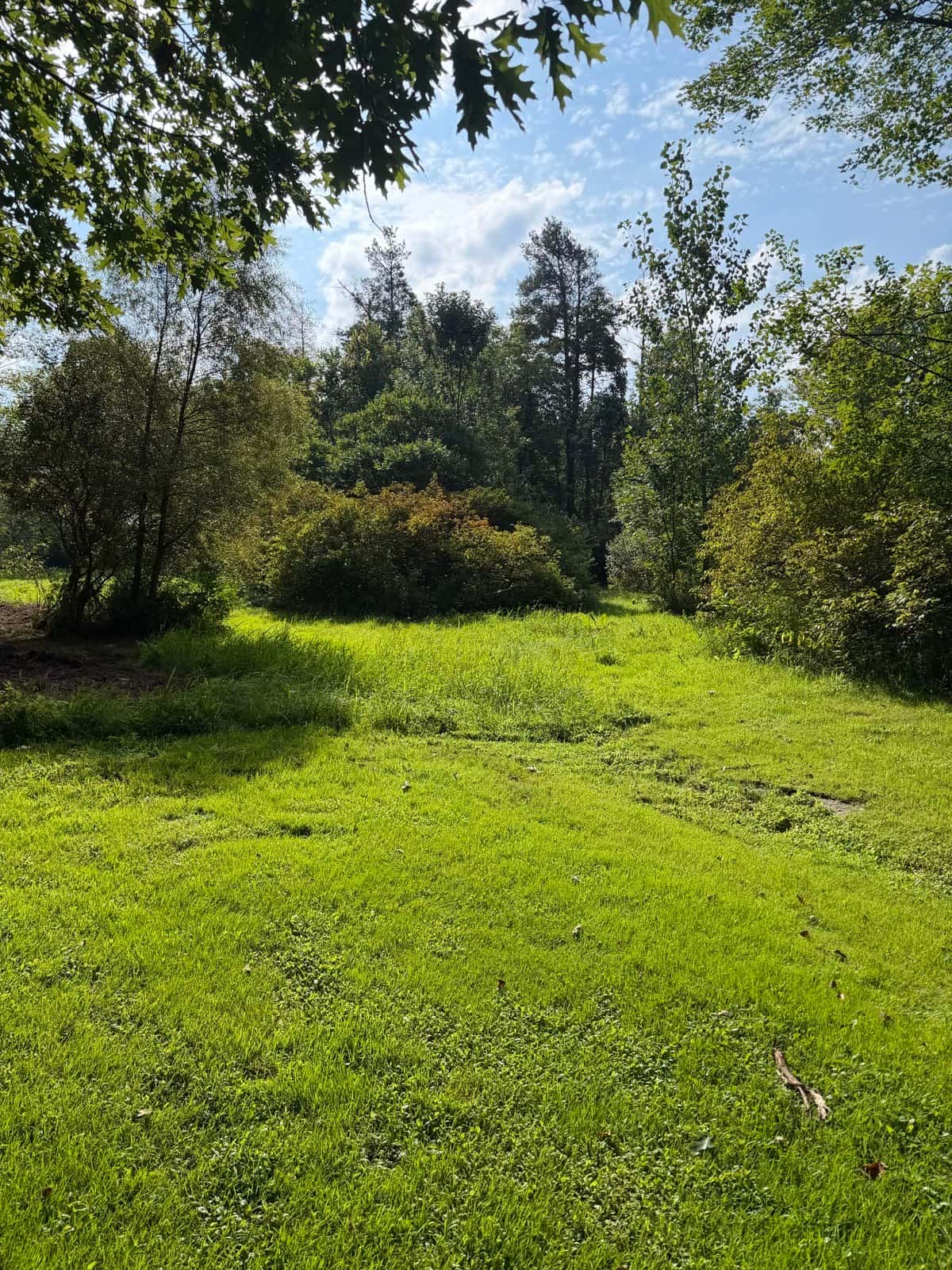 Actual BrushBoss footage · September 2026
Northeast Ohio · Woodland recovery
Real work. Real footage.
See past the tangle.
Brush and vines fill the space beneath your good trees. Start with the ground you want to use again.
Follow the transformation
A Usable Trail, Walkable the Same Day
Trail cutting is forestry mulching applied to a defined corridor rather than an entire area. We cut a clean path through standing trees, brush, and stumps, grinding everything into fine mulch that becomes the trail surface itself.
The result is a walkable, rideable trail that exists the same day we arrive. No stump removal needed because stumps are ground below grade. No brush piles to burn because everything is mulched on-site. The mulch surface provides traction, drains naturally, and slows regrowth through the following season.
Trail Cutting Is Perfect For
Fixed Per-Acre Pricing
No job minimum — short runs are flat-priced from $295. Steep or difficult access adds to the rate. Price your own route in the Land Clearing Cost Calculator.
Every published rate, from small flat-priced jobs to slopes, is on the pricing page.
Every Trail Includes
More Land Clearing Services
Is BrushBoss insured, and what is guaranteed?
- Insured
- BrushBoss is insured. A certificate of insurance is available on request, before anyone sets foot on the property.
- Reviewed
- 5.0 out of 5 from 8 Google reviews. Read every review
- Quoted in writing
- You have a written, fixed price before any work starts, and the price quoted is the price you pay. Every published rate is on the pricing page.
- Guaranteed
- We agree with you what stays before anything starts — without losing a tree worth keeping. Every BrushBoss clearing project includes a workmanship guarantee: if we miss material within the agreed clearing zone, we come back and finish — free.
- Local
- Based at 14669 Castlewood Dr, Newbury Township, Geauga County. (440) 557-4660, or book a walk-through.
Common Questions
How wide is a standard trail?
Wide enough for a side-by-side, an ATV, a tractor, or two people walking abreast, which is also what keeps the corridor from closing back in from both edges. Where a route needs to be narrower or wider, we cut it to suit.
How do you turn trail length into a price?
A trail is priced by the ground it covers, which comes straight out of its length. Draw the route on the satellite map in the Land Clearing Cost Calculator, or tell us the approximate length, and we can price it without walking it first.
What does trail cutting cost?
Fixed per acre by brush density, from $2,000 where the growth is light to $2,600 where it is densest. There is no job minimum: a short run is flat-priced from $295. Steep ground or difficult access adds to the rate, and that is in the quote before you approve it rather than added after the work.
Are there stumps left in the trail?
No. Trees, brush, and stumps inside the corridor are ground below grade as the trail is cut, so there is nothing at ankle height to trip on or catch a machine, and no separate stump-removal trade to schedule afterward.
Can I use the trail right away, and does it hold up in rain?
The trail exists the day we arrive. The mulch left behind is the trail surface: it gives traction, drains naturally instead of turning to mud, and slows regrowth through the following season. It is also quieter underfoot than leaf litter, which matters on a hunting approach.
Can you cut a trail through mature woods without clearing the woods?
Yes — that is the difference between trail cutting and area clearing. We work a defined corridor rather than a whole area, which is how you connect existing clearings, fields, and structures across dense brush without giving up the woods between them.
Are you insured?
Yes — insured; a certificate of insurance is available on request.
What actually comes out
Five things go. Everything worth keeping stays.
People say “land clearing” and picture a bulldozer and an empty lot. This is the opposite of that. Here is the actual list of what we take out of a Northeast Ohio property.
- 01
Prickly bushes thorn, briar, multiflora rose
The reason nobody has walked back there in ten years. You cannot mow it, you cannot pull it, and every year it takes a few more feet. This is the single thing most people call us about, whatever they end up calling it.
- 02
Poison ivy and the rest of the vines
Running along the ground and climbing the trunks, right through the tangle where you cannot see it until you are already in it. Vines are what turn an overgrown edge from untidy into genuinely unusable — and left alone, they strangle the good trees they are climbing.
- 03
Ticks and what holds them
The damp tangle at knee height is where they live — deep shade, wet leaves that never dry, and thick cover the deer bed down in. It sits between the house and everywhere the family walks. Take the layer out and you take away what they depend on.
- 04
Invasive brush mostly bush honeysuckle
The wall of green that leafs out before anything native and holds on after everything else has dropped. It shades out the forest floor, so nothing else grows, and it is the main structure the whole tangle is built on.
- 05
Crowding saplings the volunteers between the good trees
Not the trees you want — the volunteers that came up thick in the gaps and are now competing with the trunks worth keeping. Thinning them is what gives the good trees room and lets light back down to the ground.
And what is left standing?
The woods you already own. Northeast Ohio is maple and beech country — sugar maple, American beech, red oak, shagbark hickory, black cherry, birch in the wetter ground. Those trees are already there, full grown, and have been the whole time. They are just behind the tangle.
Nothing here needs planting. It needs uncovering.
Ready for a New Trail?
Get a satellite-based estimate for your trail project. Tell us the approximate length and we calculate the acreage and price. Most trail jobs are completed in a single day.
You own five acres. You use two.
The mature woods is already there. It only needs uncovering.
Free, no obligation, and we show you every tree we would keep.
Ground you can walk without watching your step — because we take the cover out.
Without losing a tree worth keeping.