Why Woodland Trails
Close In
“You bought the land for the trails. The brush between you and those trails is a one-day problem.”
Land recovery and property protection · Northeast Ohio
We give you your land back, and we make it safe to use.
The brush, thorn and poison ivy that grew up under your good trees comes out, and what you get back is ground you can walk without watching your step.
From $295 for an afternoon's work to full estate restoration.
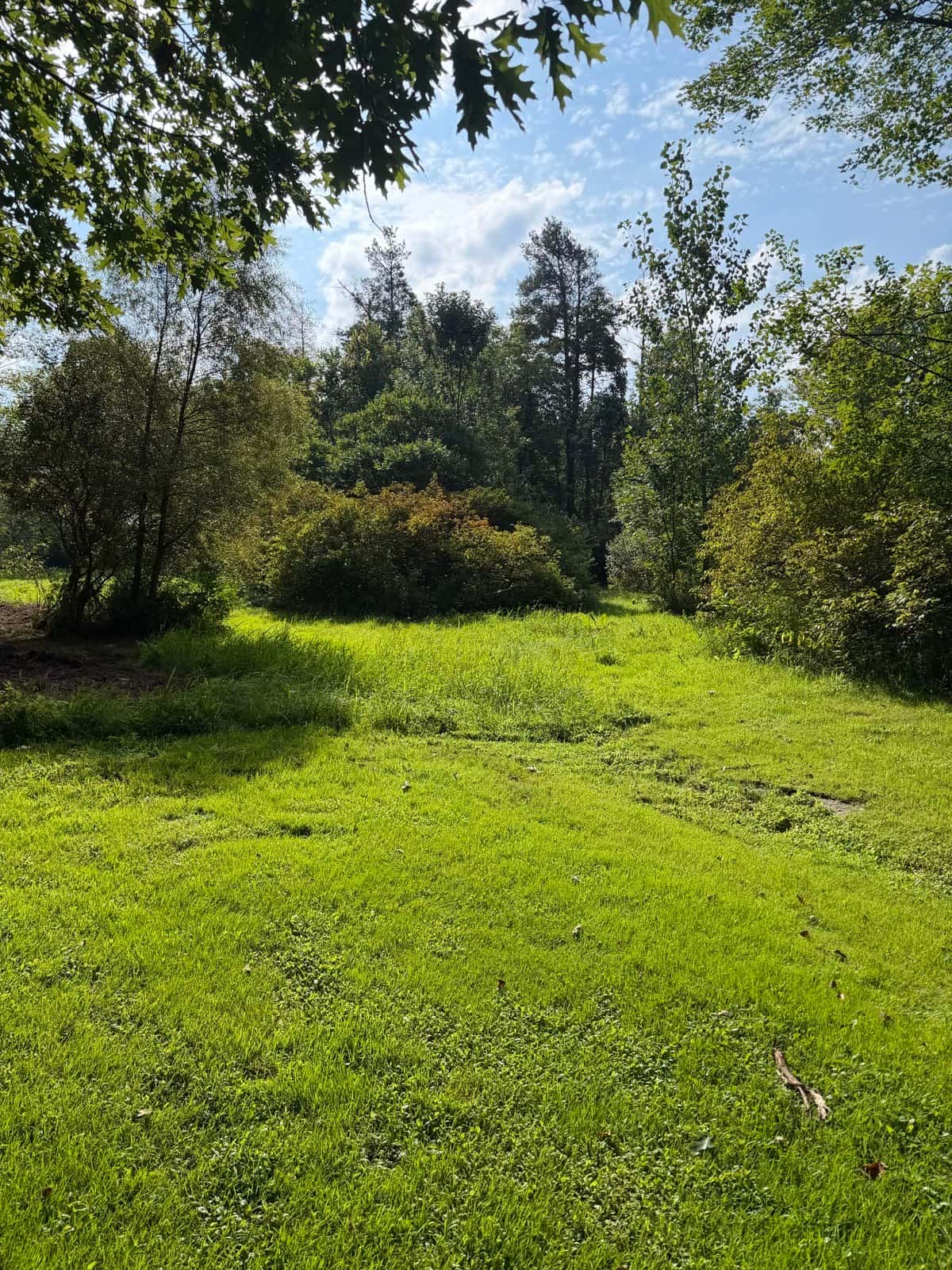 Actual BrushBoss footage · September 2026
Northeast Ohio · Woodland recovery
Real work. Real footage.
See past the tangle.
Brush and vines fill the space beneath your good trees. Start with the ground you want to use again.
Follow the transformation
What Does Blocked Trail Access Look Like?
You own wooded acreage with great terrain for walking, hunting, or riding — but you can't get to any of it. The undergrowth between the road and the back of the property is too dense to walk through comfortably. You've tried beating a path, but within a few months the brush closes back in.
Maybe you need ATV access to a back field, or a walking path from the house to a pond or creek. Maybe you want a loop trail through the woods for exercise or just to enjoy the property. The terrain is right, the trees are beautiful — but the head-high wall of undergrowth between you and that experience makes it inaccessible for most of the year.
What Blocks Trail Access on Wooded Land?
Trail access gets blocked when undergrowth fills natural corridors, fallen trees force detours, and narrow hand-cut paths close back in from both sides. Without a maintained route, the best parts of a wooded property can become unreachable for walking, riding, hunting, or maintenance.
- 1Dense undergrowth blocking natural corridors. Even properties with established tree canopy develop thick undergrowth in gaps where light reaches the forest floor. Drainage corridors, old logging roads, and open ridges — the natural places for trails — are often the first to fill with brush because they get the most sunlight.
- 2Fallen trees across paths. Windthrown trees and large broken limbs block existing trails and deer paths. Each one forces a detour, and the detour through untouched brush is often harder to navigate than the original obstacle. Over a few seasons, a once-walkable deer trail becomes completely impassable.
- 3No cleared route from road to back acreage. Many rural properties have road frontage at one end and the most desirable land (hilltops, creek banks, viewpoints) at the other. Without a maintained access route, the back half of the property goes unused — even though it may be the most valuable part of the land.
Why a Hand-Cut Path Closes Back In
Most owners have already tried to beat a path, and watched it disappear. The reason is light and roots. Cutting a corridor lets sun reach the floor, which is exactly what the brush on either side was waiting for, and a stem cut at knee height answers with a ring of new shoots from the root that is still in the ground.
Width matters too. A narrow path feels like a tunnel and closes from both edges within a single growing season; a route wide enough for an ATV or two people walking abreast is far wider than anyone cuts by hand, and staying ahead of it by hand means cutting both edges several times a year. The narrower the cut, the faster it closes.
A short footpath to a tree stand or a fishing spot can be kept open with a saw and a few weekends a year. A loop through the woods, a riding trail or a lane to the back field is a different job.
Getting It Back
Opening a route that lasts — planned around wet ground and the trees worth keeping, wide enough for the way you will use it, with a mulched surface you can walk the same day — is our trail cutting service, priced by the ground the route covers.
Trail Cutting — walking trails, riding paths and access lanes, priced before anything starts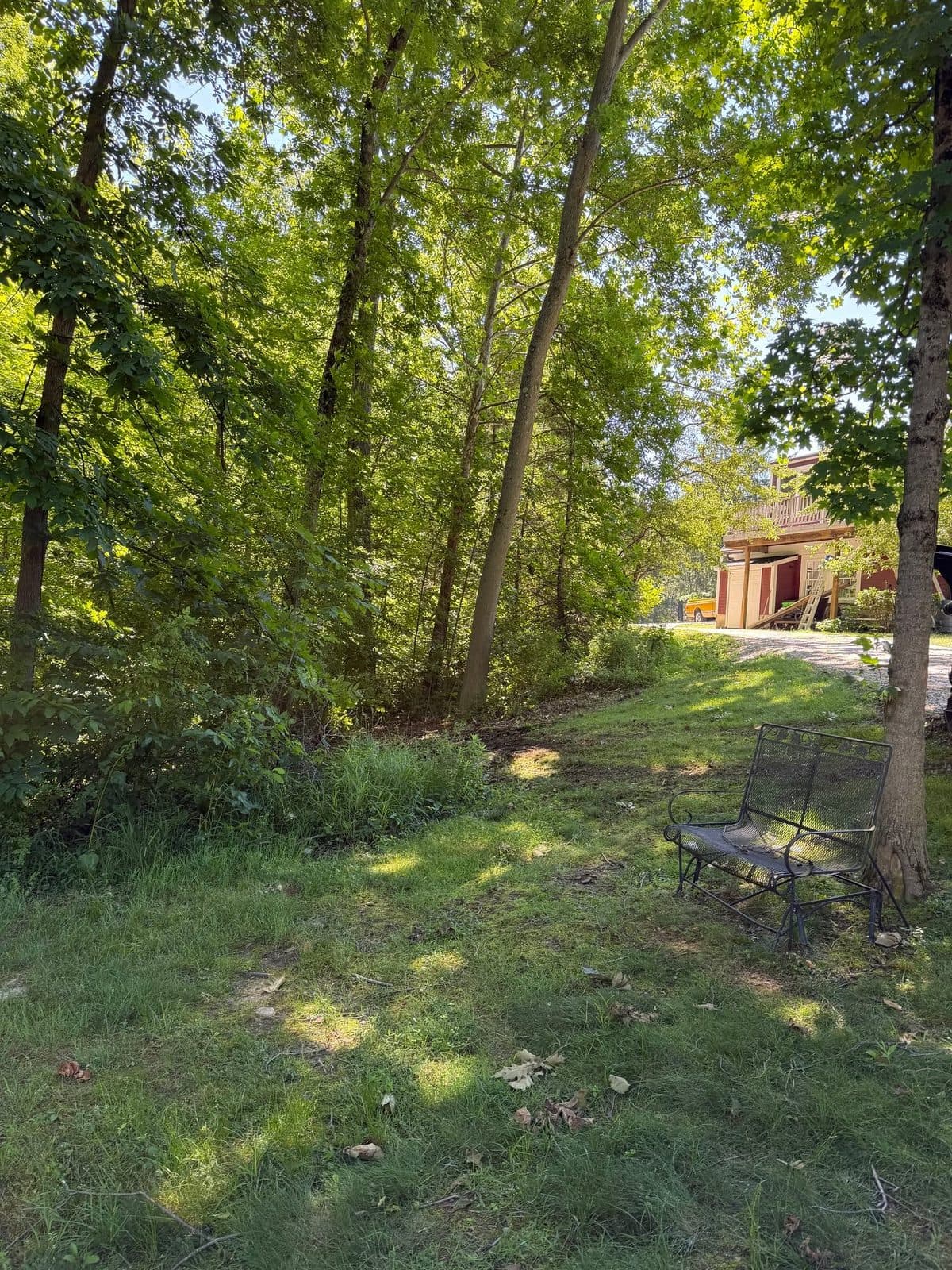
What actually comes out
Five things go. Everything worth keeping stays.
People say “land clearing” and picture a bulldozer and an empty lot. This is the opposite of that. Here is the actual list of what we take out of a Northeast Ohio property.
- 01
Prickly bushes thorn, briar, multiflora rose
The reason nobody has walked back there in ten years. You cannot mow it, you cannot pull it, and every year it takes a few more feet. This is the single thing most people call us about, whatever they end up calling it.
- 02
Poison ivy and the rest of the vines
Running along the ground and climbing the trunks, right through the tangle where you cannot see it until you are already in it. Vines are what turn an overgrown edge from untidy into genuinely unusable — and left alone, they strangle the good trees they are climbing.
- 03
Ticks and what holds them
The damp tangle at knee height is where they live — deep shade, wet leaves that never dry, and thick cover the deer bed down in. It sits between the house and everywhere the family walks. Take the layer out and you take away what they depend on.
- 04
Invasive brush mostly bush honeysuckle
The wall of green that leafs out before anything native and holds on after everything else has dropped. It shades out the forest floor, so nothing else grows, and it is the main structure the whole tangle is built on.
- 05
Crowding saplings the volunteers between the good trees
Not the trees you want — the volunteers that came up thick in the gaps and are now competing with the trunks worth keeping. Thinning them is what gives the good trees room and lets light back down to the ground.
And what is left standing?
The woods you already own. Northeast Ohio is maple and beech country — sugar maple, American beech, red oak, shagbark hickory, black cherry, birch in the wetter ground. Those trees are already there, full grown, and have been the whole time. They are just behind the tangle.
Nothing here needs planting. It needs uncovering.
Ready to Open Up
Your Property?
Get an instant estimate for trail cutting by sharing the route length, access point, terrain, and intended use. BrushBoss uses those details to scope a clean path that opens the property without cutting through wet spots or valuable trees unnecessarily.
You own five acres. You use two.
The mature woods is already there. It only needs uncovering.
Free, no obligation, and we show you every tree we would keep.
Ground you can walk without watching your step — because we take the cover out.
Without losing a tree worth keeping.