Reducing Fire Risk
on Your Property
“Dense brush close to the house is a fire ladder waiting for a spark.”
Land recovery and property protection · Northeast Ohio
We give you your land back, and we make it safe to use.
The brush, thorn and poison ivy that grew up under your good trees comes out, and what you get back is ground you can walk without watching your step.
From $295 for an afternoon's work to full estate restoration.
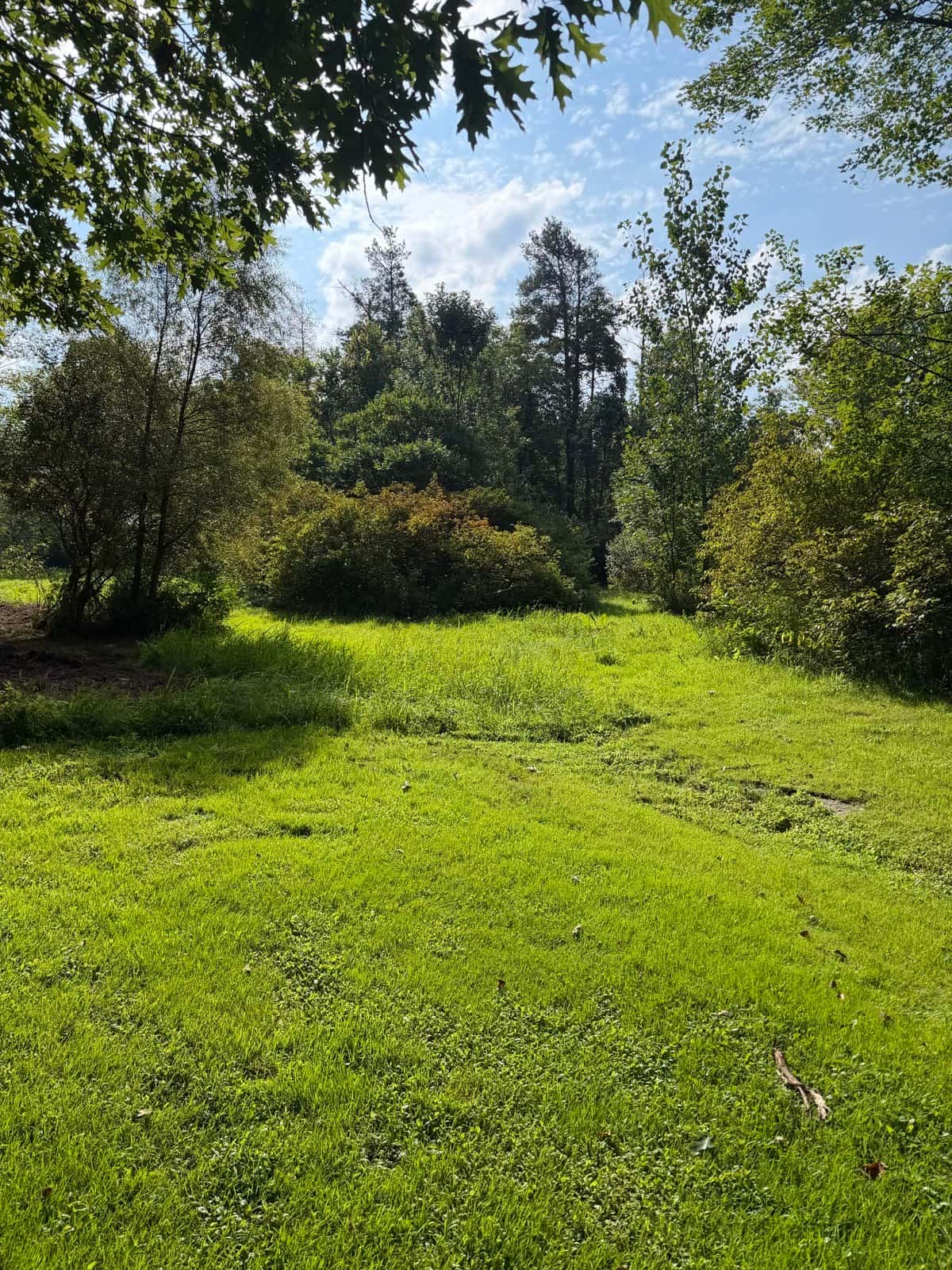 Actual BrushBoss footage · September 2026
Northeast Ohio · Woodland recovery
Real work. Real footage.
See past the tangle.
Brush and vines fill the space beneath your good trees. Start with the ground you want to use again.
Follow the transformation
What Does Fire Risk Look Like?
Dead brush piled against the back of your garage. Dense undergrowth connecting the tree line to your house with an unbroken carpet of fuel. Propane tanks surrounded by dried weeds and fallen branches. Outbuildings and sheds with brush growing right up to the walls, sometimes through gaps in the siding.
The risk isn't always obvious because it accumulates gradually. Each year adds another layer of dead vegetation on top of last year's. After a dry summer, that accumulated material becomes tinder — and the brush connecting it to larger fuel sources (woodpiles, tree canopies, structures) creates a continuous path for fire to follow.
What Creates Fire Risk Around Structures?
Fire risk rises when dead brush, low limbs, tall weeds, and dense undergrowth create a continuous fuel path to a home, garage, barn, or propane tank. The more connected the fuel is, the faster a small spark can move from ground vegetation toward structures.
- 1Years of brush accumulation. Every growing season deposits more dead material on the ground while new growth adds height. After five years without clearing, you may have a thick, compacted layer of dead vegetation underneath living brush — a fuel bed that dries out completely during summer drought.
- 2Dead vegetation left standing. Dead trees, hanging broken limbs, and standing dead brush act as ladder fuels — they carry fire from the ground level up into the canopy. A ground fire that reaches a dead snag or standing dead brush can climb into the canopy in seconds.
- 3No defensible space maintained. Fire safety guidelines call for three zones: Zone 1 (0–30 feet from structures) should be cleared of all brush. Zone 2 (30–100 feet) should be thinned so fire can't travel continuously. Zone 3 (100+ feet) should have dead material removed. Most rural properties maintain none of these zones.
Can You Reduce Fire Risk Yourself?
Clearing the first 5 feet around structures is absolutely doable by hand and should be done immediately if it hasn't been. Pull brush away from walls, clear dead vegetation from under decks and porches, move firewood piles at least 30 feet from the house. This is the highest-priority work and requires no equipment.
Beyond that 5-foot buffer, clearing Zone 1 (out to 30 feet) with hand tools is a significant undertaking on a wooded lot. You're cutting brush, dragging it away from structures, and dealing with disposal — which usually means burn piles, creating a temporary fire risk to reduce the long-term one. For Zone 2 (30–100 feet), the scale makes hand clearing impractical for most property owners.
How Does BrushBoss Create Defensible Space?
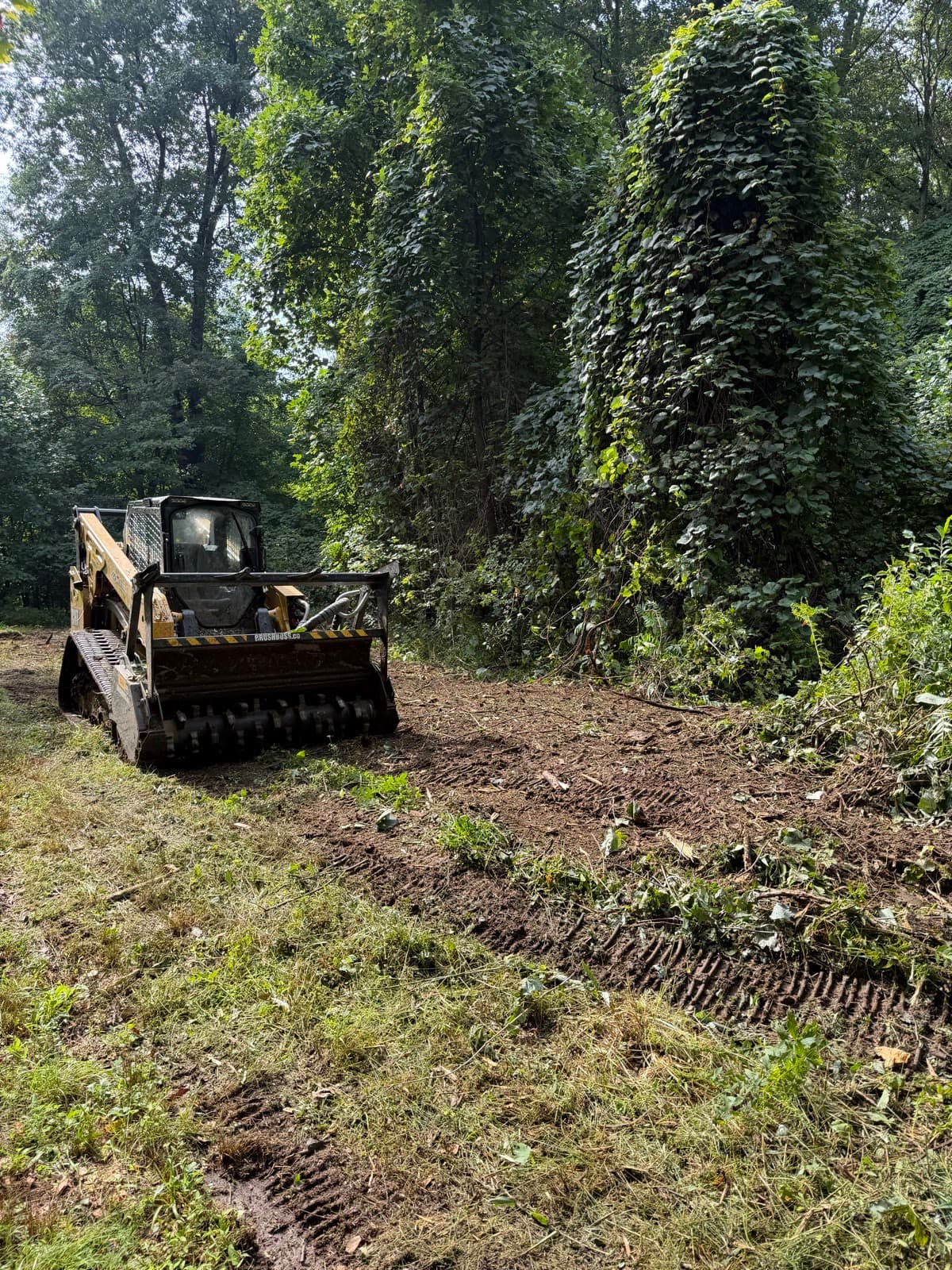
BrushBoss creates defensible space by clearing the fuel closest to structures first, then thinning outward to break the path fire would follow. We remove brush, dead material, low limbs, and dense undergrowth so flames have fewer connected fuel sources between the woods and the buildings.
Forestry mulching is specifically suited for this work because it processes material in place. Instead of creating burn piles (which are themselves a fire risk), it grinds brush into a thin layer of fine mulch that decomposes over one to two seasons. That mulch layer retains moisture, making it less flammable than the standing brush it replaced — and far less dangerous than a head-high pile of slash waiting to be burned.
For properties with structures, outbuildings, and propane tanks spread across the lot, we create connected defensible space corridors — not just isolated clearings. Fire follows the path of least resistance, so the goal is to eliminate that path between any fuel source and any structure on the property.
Brush Piling Up
Around Your Structures?
Get an instant estimate for defensible space clearing around homes, barns, garages, sheds, and utility areas. BrushBoss uses your property details to identify the likely clearing zone, access needs, and amount of fuel reduction required before a proposal is finalized.
You own the land. You just cannot use it.
That is one layer of brush, and it comes off in a morning.
We'll tell you what it costs. From $295, no project minimum.
Ground you can walk without watching your step — because we take the cover out.
Without losing a tree worth keeping.