Why Land Gets
Overgrown
“Overgrown land isn't just an eyesore — it's lost property value, lost usable space, and a growing liability.”
Land recovery and property protection · Northeast Ohio
We give you your land back, and we make it safe to use.
The brush, thorn and poison ivy that grew up under your good trees comes out, and what you get back is ground you can walk without watching your step.
From $295 for an afternoon's work to full estate restoration.
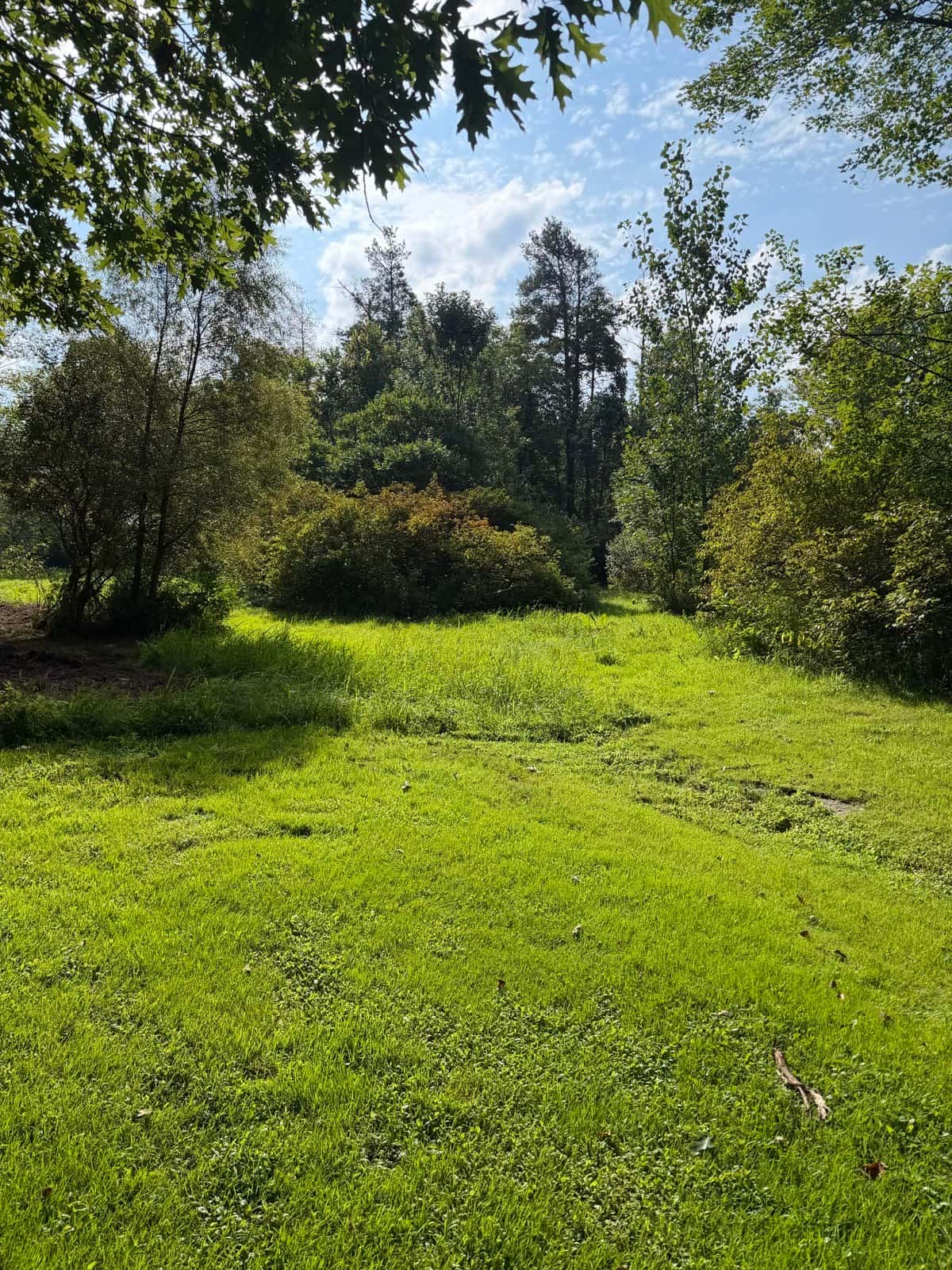 Actual BrushBoss footage · September 2026
Northeast Ohio · Woodland recovery
Real work. Real footage.
See past the tangle.
Brush and vines fill the space beneath your good trees. Start with the ground you want to use again.
Follow the transformation
What Does Overgrown Land Look Like?
You can't walk your own property. Brush has grown waist-high between the trees, saplings that were pencil-thin three years ago are now as thick as your wrist, and you haven't been able to see your back fence line since you moved in. What used to be open ground under a tree canopy is now an impenetrable wall of thorn, vines and brush — with poison ivy through it and the deep damp cover ticks live in underneath.
The usable portion of your lot shrinks every year. You bought five acres but you can only use two. Kids can't play back there. You can't mow it because the stems are too thick for a bush hog. Equipment can't get through. The land is technically yours, but functionally it belongs to the brush.
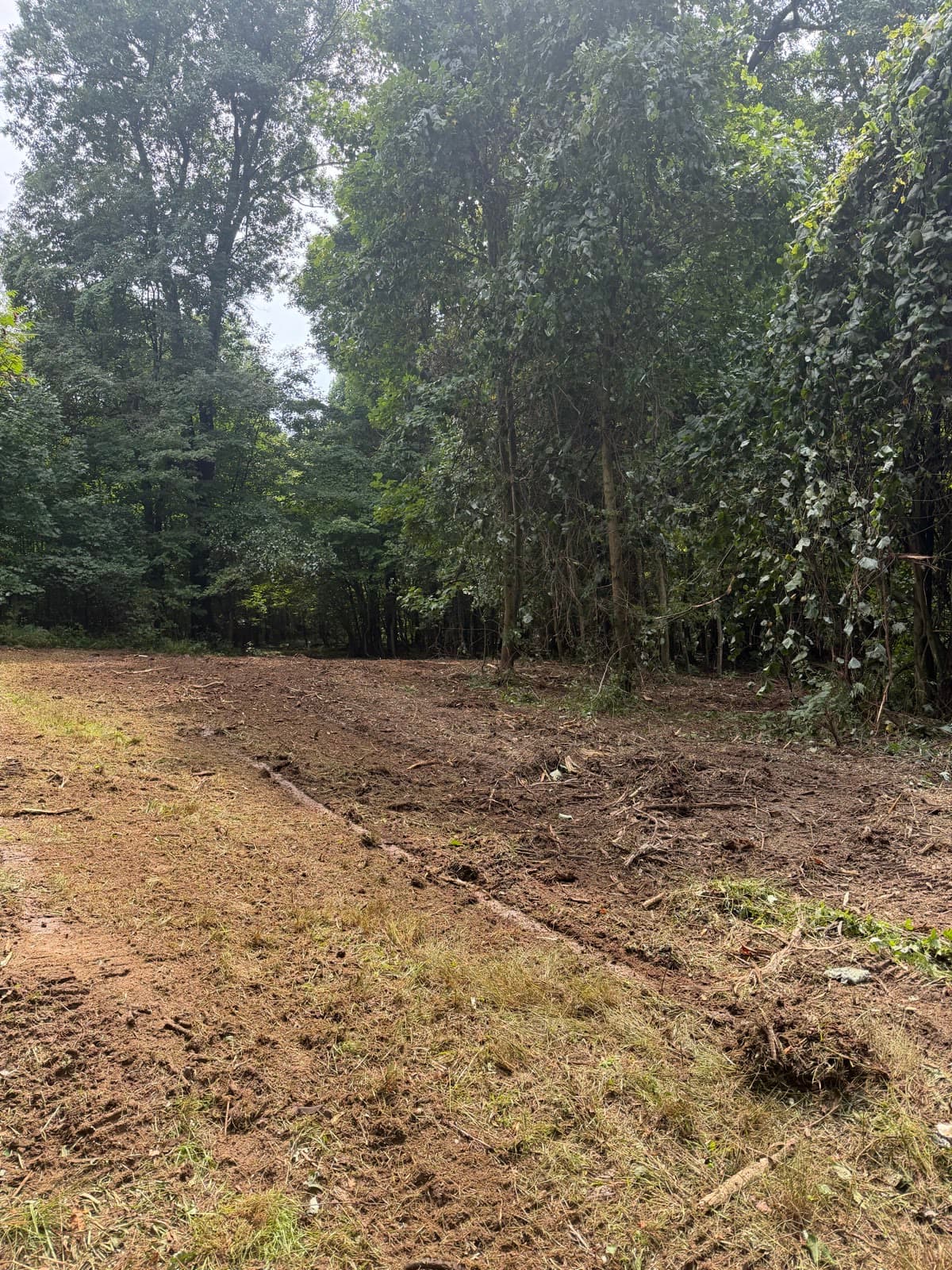
Actual BrushBoss job photograph. Results depend on your property.
What Causes Overgrown Land?
Overgrown land usually comes from missed maintenance, aggressive invasive species, or previous clearing that cut stems without solving regrowth. Once brush reaches woody size, each season adds more shade, thicker roots, and more seed pressure, making the property harder and more expensive to reclaim.
- 1No maintenance for 3+ years. In Ohio's climate, brush grows 2–3 feet per year. Skip three mowing seasons and ankle-high seedlings become chest-high saplings with woody stems that resist a standard mower. By year five, you need equipment — not a lawn mower.
- 2Invasive species took hold. Bush honeysuckle, autumn olive, multiflora rose and buckthorn spread aggressively through bird-dropped seeds. Once established, they grow faster than native plants and shade out everything else. A few plants become a thicket within two seasons.
- 3Previous clearing wasn't thorough. If someone cleared the brush but left the root systems intact, everything regrows from the stumps. Cut honeysuckle resprouts with multiple stems, coming back thicker than before. The roots are the problem — not the stems above ground.
Why It Gets Worse Every Year
Overgrowth does not hold still. Each season the shade deepens, so the grass and wildflowers underneath give up and the woody stems take their place; the roots get thicker, so cutting gets harder and the regrowth after a cut gets stronger; and every fruiting shrub adds to the seed already in the ground.
That is why a patch you could have cut back by hand in its first year is a much bigger job by its fifth, and why the price of getting it back follows the thickness of the growth rather than the size of the lot. It is also why cutting the stems alone so often disappoints: the roots were the problem, and they are still there.
Getting It Back
Getting the ground back — the overgrowth taken down and left as mulch, every tree worth keeping left standing — is our overgrown property cleanup. If you would rather do a small patch yourself, the step-by-step guide covers tools, season and what to do with the cut brush.
Overgrown Property Cleanup — have it cleared for youHow to Clear Overgrown Land — the do-it-yourself guideWhat actually comes out
Five things go. Everything worth keeping stays.
People say “land clearing” and picture a bulldozer and an empty lot. This is the opposite of that. Here is the actual list of what we take out of a Northeast Ohio property.
- 01
Prickly bushes thorn, briar, multiflora rose
The reason nobody has walked back there in ten years. You cannot mow it, you cannot pull it, and every year it takes a few more feet. This is the single thing most people call us about, whatever they end up calling it.
- 02
Poison ivy and the rest of the vines
Running along the ground and climbing the trunks, right through the tangle where you cannot see it until you are already in it. Vines are what turn an overgrown edge from untidy into genuinely unusable — and left alone, they strangle the good trees they are climbing.
- 03
Ticks and what holds them
The damp tangle at knee height is where they live — deep shade, wet leaves that never dry, and thick cover the deer bed down in. It sits between the house and everywhere the family walks. Take the layer out and you take away what they depend on.
- 04
Invasive brush mostly bush honeysuckle
The wall of green that leafs out before anything native and holds on after everything else has dropped. It shades out the forest floor, so nothing else grows, and it is the main structure the whole tangle is built on.
- 05
Crowding saplings the volunteers between the good trees
Not the trees you want — the volunteers that came up thick in the gaps and are now competing with the trunks worth keeping. Thinning them is what gives the good trees room and lets light back down to the ground.
And what is left standing?
The woods you already own. Northeast Ohio is maple and beech country — sugar maple, American beech, red oak, shagbark hickory, black cherry, birch in the wetter ground. Those trees are already there, full grown, and have been the whole time. They are just behind the tangle.
Nothing here needs planting. It needs uncovering.
Ready to Reclaim
Your Property?
Get an instant estimate based on your property, brush density, access, and the amount of land you want back. BrushBoss uses those details to turn an overwhelming overgrowth problem into a scoped clearing plan with a realistic starting price for reclaiming usable space.
You own the land. You just cannot use it.
That is one layer of brush, and it comes off in a morning.
We'll tell you what it costs. From $295, no project minimum.
Ground you can walk without watching your step — because we take the cover out.
Without losing a tree worth keeping.