How to Clear Brush From Woods
Without Losing the Good Trees
The trees are the reason the woods is worth clearing. Here is how to take the brush, thorn and vines out from under them yourself, and how to tell when it is a job for a crew.
Land recovery and property protection · Northeast Ohio
We give you your land back, and we make it safe to use.
The brush, thorn and poison ivy that grew up under your good trees comes out, and what you get back is ground you can walk without watching your step.
From $295 for an afternoon's work to full estate restoration.
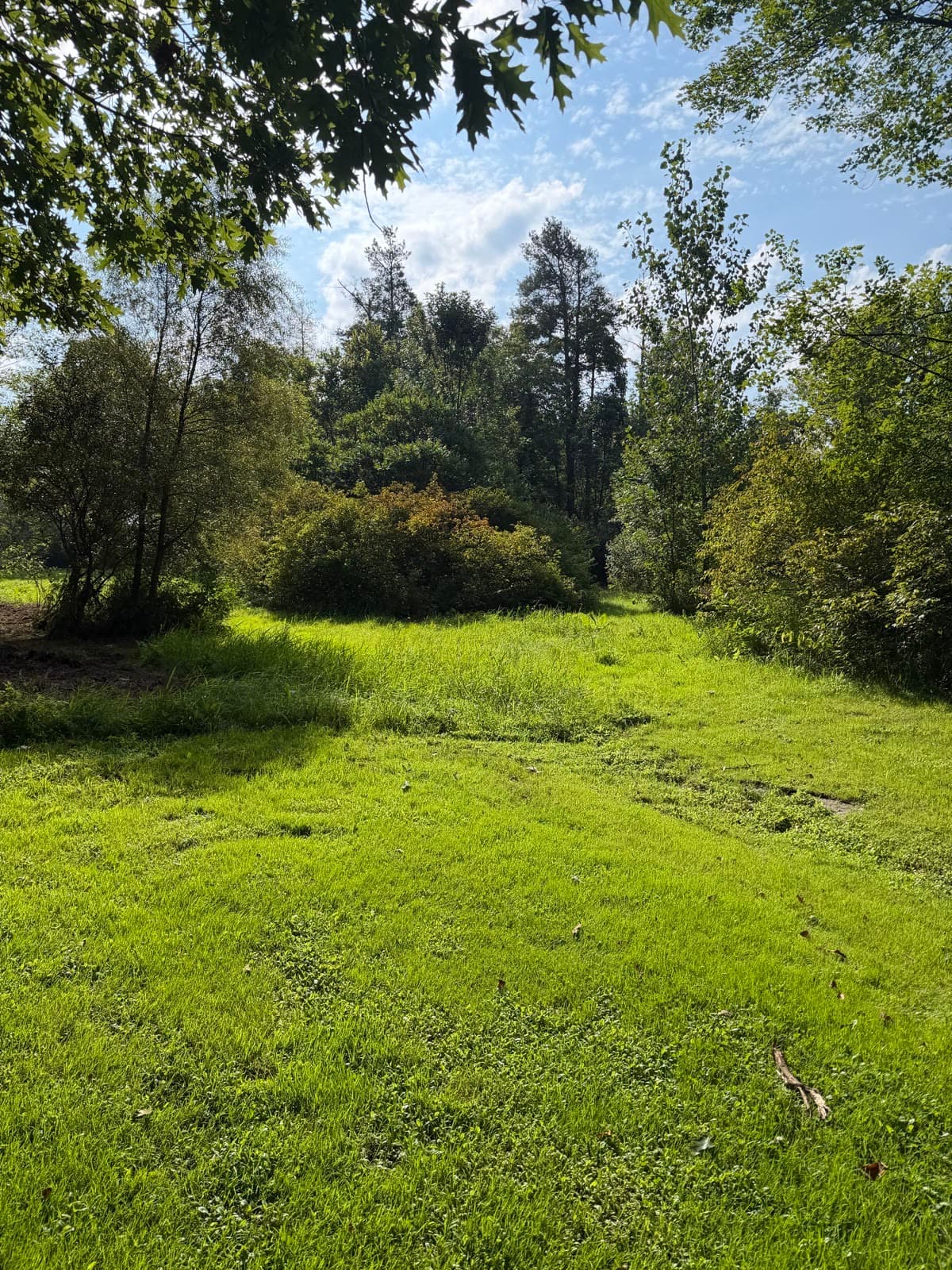 Actual BrushBoss footage · September 2026
Northeast Ohio · Woodland recovery
Real work. Real footage.
See past the tangle.
Brush and vines fill the space beneath your good trees. Start with the ground you want to use again.
Follow the transformation
Mark the Keepers, Then Cut
To clear brush from woods without killing the trees, decide and mark every tree that stays before you cut anything, work in the dormant season from late October to March, cut the brush low and clean from the edge inward, keep machines and piles off the root zones of the trees you are keeping, and plan to cut the resprouts again for the next two seasons. By hand, a small patch is a few weekends; past a quarter acre it is usually a job for a crew.
This guide is about standing woods — brush under a canopy you want to keep. If the ground is open land that has gone wild, the guide to clearing overgrown land is the better fit.
How to Clear Underbrush the Right Way
1. Walk it first and mark what stays
Every good result starts here, and most bad ones skip it. Walk the woods with a roll of bright flagging tape and tie a band on every tree you want to keep: the mature oaks, maples, hickories, beech and black cherry, the young ones of the same kinds that will replace them, and any tree you simply like. Mark native shrubs worth keeping too.
Then look at what is left. Anything not marked is a candidate to come out. It is much easier to make good decisions standing still with tape in your hand than with a saw running.
2. Pick the season: late October through March
With the leaves down you can see the structure of the woods — which trees are worth keeping, where the ground falls away, how far the brush has spread. The ground is firm or frozen, so it does not compact or rut under your feet and wheels, and nothing is nesting. Much of the invasive brush in Northeast Ohio holds its leaves into late autumn after the native trees have dropped theirs, which makes it easy to spot.
Avoid saturated spring ground. Working on wet clay under a tree compacts the soil its roots breathe through, and that damage shows up years later.
3. Get the safety basics right
Heavy gloves, long sleeves, eye protection and hearing protection for anything with an engine. If you use a chainsaw, add leg protection and a helmet, keep both hands on it, and never run one alone in the woods — tell someone where you are and when you will be back.
Learn to recognise poison ivy without its leaves: hairy, rope-like vines climbing the trunks. The oil is on the bare stems all winter, so treat every vine as live, wash tools and gloves afterwards, and never burn it — the oil travels in the smoke.
Look up before you cut. Dead limbs and hung-up branches held in the canopy by vines can come down when the vine is cut.
4. Match the tool to the stem
Loppers and a pruning saw handle most stems up to the thickness of a thumb or two, and they are the safest place to start. A brush cutter with a blade takes dense, thin growth faster. Anything thicker than your wrist is chainsaw work, and so is anything you cannot cut comfortably at ground level with hand tools.
Thorny canes are easier if you cut them at the base and pull them out backwards with a rake or a gloved hand, rather than wading in.
5. Work from the edge inward, and cut low
Start where the woods meets the lawn or the trail and open a lane, then widen it. You always have somewhere clear to stand and somewhere to put what you cut.
Cut as close to the ground as you safely can. A field of sharp stubs at ankle height is a trip hazard, punctures tires and is harder to keep down next year.
6. Cut vines twice, then leave them
For vines climbing your keeper trees, cut each one near the ground and again at about waist height, and remove the short piece between. Leave the upper part where it is; it dies and falls away over a season or two. Pulling it down drags deadwood and bark with it.
7. Deal with the cut brush without hurting the trees
Chip it and spread the chips thinly, or stack it in a loose pile well away from any tree you are keeping, at the back of the woods where it becomes cover for birds and small animals. Never heap brush or chips against a trunk or across a root zone.
Burning is regulated in Ohio and usually needs permission outside towns; the open-burning rules are summarised in our guide to clearing overgrown land. In woods you are keeping, a fire is close to roots and lower limbs anyway.
8. Protect the root zones
Most of a tree's roots are in the top layer of soil and spread well past the branch tips. Do not drive across them when the ground is soft, do not dig or grade inside them, do not pile soil or brush on them, and do not cut roots to make a path. A tree damaged this way can look fine for several years before it declines — which is why it is the mistake people do not connect to the cause.
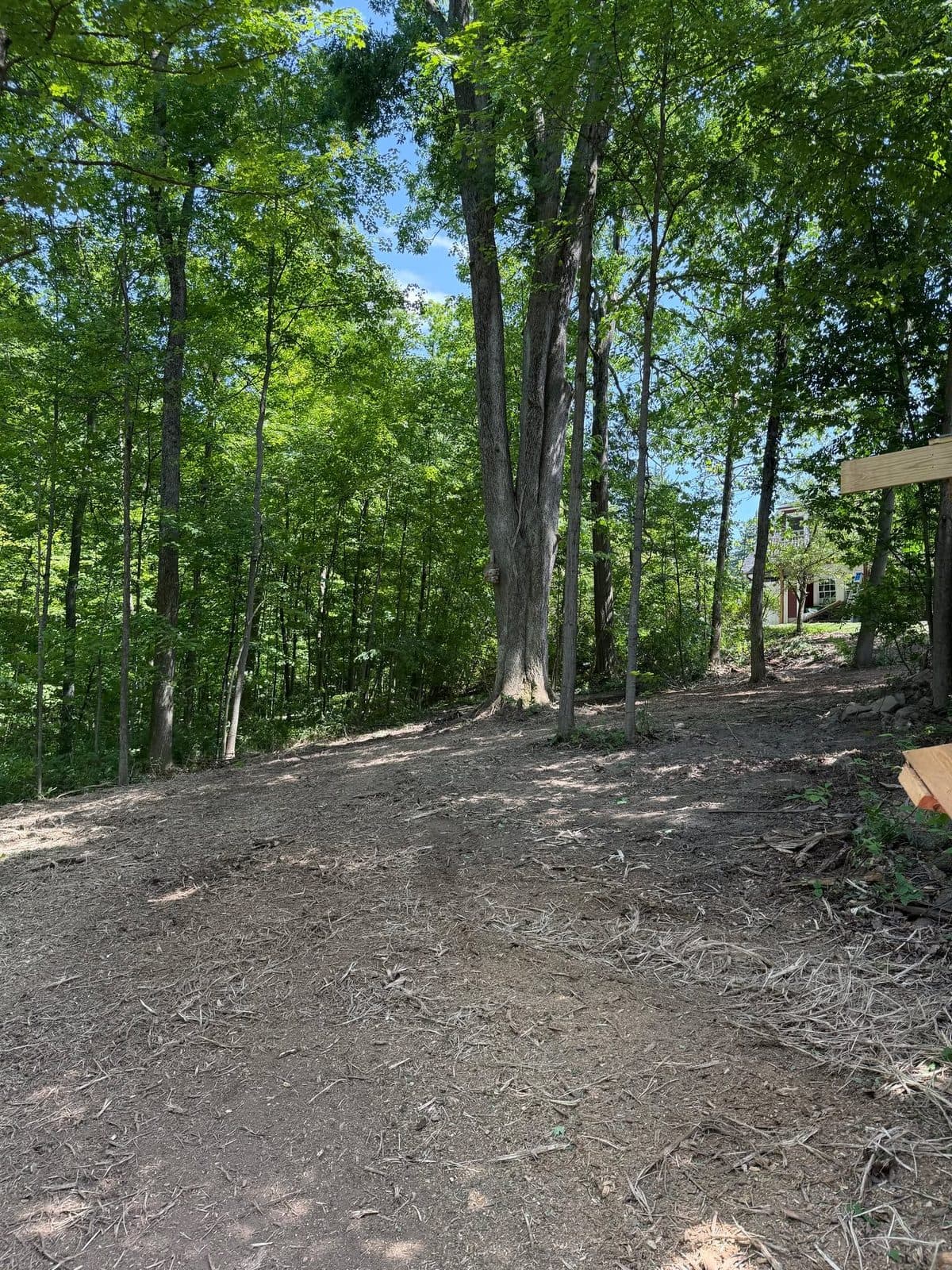
Six Mistakes That Cost Trees
- Cutting before marking the keepers — the young oak looks like brush once it is on the ground
- Clearing in wet spring weather and compacting the soil under the trees
- Pulling climbing vines down out of the canopy
- Piling brush or chips against trunks
- Taking the woods down to bare dirt — leave the leaf layer and a few native shrubs
- Clearing once and walking away; the first two seasons of regrowth decide the result
Keeping the Brush From Coming Back
Expect regrowth. Cutting brush does not kill its roots, and the seed already in the soil sprouts once light reaches the floor. The stumps of the worst invasive shrubs send up a ring of new shoots the following spring.
The answer is persistence while it is small. Go back through in early summer and again in the dormant season for the next two years, cutting new shoots at ankle height. Each cut weakens the root a little more, and as the native trees fill the light gaps the shade does part of the work. Walking the woods regularly — a mown path, a loop you use — keeps it open better than a once-a- decade clearing ever will. The longer-term options are in stopping brush regrowth after clearing.
Signs It Is a Job for a Crew
- More than about a quarter acre to clear
- Thorn and brush thick enough that you cannot walk into it
- Steep banks, ravines or creek edges
- Poison ivy through most of the area
- Lots of stems thicker than your wrist
- You want it finished this winter, not over three
A crew does the same job differently. The brush is ground into mulch where it stands and left as an even layer on the floor, so there is no dragging, no pile and no fire, and the marked trees are worked around. Most residential woods are a day or two.
BrushBoss prices underbrush clearing at $2,000 to $2,990 an acre for ordinary growth on level ground in Northeast Ohio, and a flat $750 for anything up to a quarter acre. Run your own ground through the land clearing cost calculator for a number in a couple of minutes.
Common Questions
How do I clear a wooded area without killing the trees?
Mark every tree you are keeping before you cut anything, work in the dormant season when the ground is firm, cut brush low and leave the roots of the keepers alone, and keep vehicles, piles and fires off their root zones. Most damage to kept trees is to the soil and roots under them, not to the trunks.
What is the best way to clear brush from woods?
For a small area, hand tools and a brush cutter in late autumn or winter, working from the edge inward and cutting low. For anything past a quarter acre, or brush too thick to walk into, the most practical way is to have it mulched in place: the brush is ground up where it stands and left as cover, nothing is hauled or burned, and the trees you mark are left standing.
When is the best time to clear brush in Ohio?
Late October through March. The leaves are down so you can see what you are keeping, the ground is firm or frozen, nothing is nesting, and the brush has no growing season left to respond with. Avoid saturated spring ground.
How long does it take to clear brush by hand?
Longer than most people expect. Light brush goes quickly, but a dense thicket of thorn and saplings can take a full weekend for a patch the size of a large room once you count cutting, dragging and dealing with the pile. Plan in weekends per quarter acre, not hours.
Should I burn the brush I clear?
Usually not in woods you are keeping. Fires near trees damage roots and lower limbs, open burning is regulated in Ohio and generally needs permission outside towns, and poison ivy must never be burned. Chipping, a loose wildlife pile at the back of the woods, or mulching in place are all better options.
Will the brush grow back after I clear it?
Some of it will. Cutting does not kill the roots or the seed already in the soil, so stumps resprout and seedlings come up where the light now reaches. Cut the regrowth again while it is small for the next two seasons; it gets weaker each time.
How much does it cost to have someone clear brush from woods?
BrushBoss clears underbrush in Northeast Ohio at $2,000 to $2,990 an acre for ordinary growth on level ground, more where it is dense or steep. Areas up to a quarter acre are a flat $750, and smaller edges and fence lines less than that. The price is fixed in writing before work starts, and every tree you want kept stays.
You own five acres. You use two.
The mature woods is already there. It only needs uncovering.
Free, no obligation, and we show you every tree we would keep.
Ground you can walk without watching your step — because we take the cover out.
Without losing a tree worth keeping.