How to Stop Brush From Growing Back After Land Clearing
By Kyle Abbey · ·
You stop brush from growing back after clearing by treating the first two or three growing seasons as part of the job: cut or mow the resprouts while they are ankle-high, put something you want into the opened ground, and — where extension guidance calls for it — have the most persistent stems treated, by you on your own land or by a licensed applicator. Clearing takes the growth down; it does not kill the roots or empty the seed bank. Bush honeysuckle, buckthorn, autumn olive and multiflora rose come back from the cut base, tree of heaven from its roots, and birds bring in fresh seed every year.
Instant QuoteLand recovery and property protection · Northeast Ohio
We give you your land back, and we make it safe to use.
The brush, thorn and poison ivy that grew up under your good trees comes out, and what you get back is ground you can walk without watching your step.
From $295 for an afternoon's work to full estate restoration.
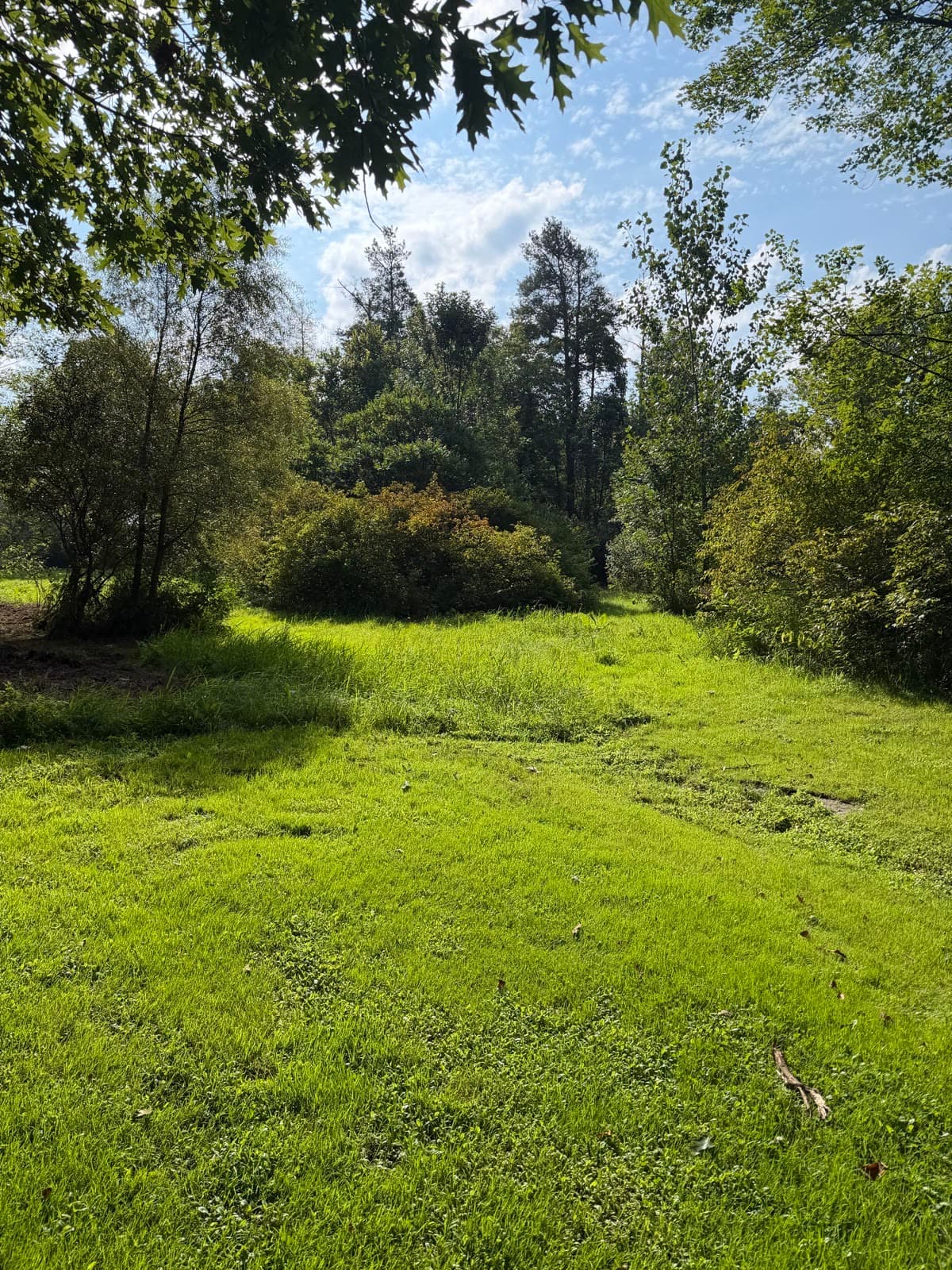 Actual BrushBoss footage · September 2026
Northeast Ohio · Woodland recovery
Real work. Real footage.
See past the tangle.
Brush and vines fill the space beneath your good trees. Start with the ground you want to use again.
Follow the transformation
Why does brush grow back after clearing?
Because clearing removes what is above the ground, and most of what made the thicket is still below it or on its way in. Three things bring it back: cut stumps and crowns that resprout, roots that send up new stems some distance away, and a seed bank that birds keep topping up. A fourth — light — decides how quickly all three happen.
Cut shrubs come back from the stump
The brush that fills most Northeast Ohio woods — bush honeysuckle, buckthorn, autumn olive — answers a cut by sprouting from the crown at the base. OSU Extension is plain about honeysuckle: simply cutting the shrub off at the base will cause prolific sprouting and increase the number of stems. Its autumn olive factsheet says the same thing in the same words, and the Ohio Invasive Plants Council records that cutting or mowing invigorates both buckthorn species to resprout.
So the first summer after clearing, each old shrub tends to reappear as a cluster of soft shoots — expected, and the cheapest point at which to deal with it.
Some come back from the roots
A few species do not stay where they were cut. OSU Extension describes tree of heaven as a persistent stump and root sprouter, and cutting it sends up new stems across a wider footprint than the tree ever covered — our tree of heaven guide covers why it needs a different plan. Multiflora rose spreads two ways at once: OSU Extension notes that stems in contact with the ground can root and become new plants, and that the roots themselves produce new plants.
The seed bank, and the birds that refill it
Then there are the berries. Honeysuckle seed is disseminated primarily by birds, according to OSU Extension. A single multiflora rose can produce up to 500,000 seeds a year, and OSU notes those seeds can remain viable in the soil for up to twenty years. Clearing does not empty that store; it gives it the light it was waiting for.
And the store is refilled from outside. Penn State Extension notes that new plants will continually invade a site as birds and other wildlife carry in seed, and that invasive shrubs are kept under control only through a continued maintenance programme.
Light sets the pace
A cleared floor is suddenly sunlit, and these shrubs are built for it. OSU Extension notes that bush honeysuckle leafs out earlier in spring and holds its leaves later into autumn than most natives, and that autumn olive’s nitrogen-fixing roots let it thrive on poor soils in full sun. Bare, bright ground suits all of them — which is why what goes into that ground matters as much as what came out.
How the common ones come back
| Plant | How it returns after cutting | Source |
|---|---|---|
| Bush honeysuckle | Prolific sprouting from the cut base; bird-spread seed | OSU F-68-10 |
| Buckthorn | Resprouts vigorously after cutting or mowing | OIPC fact sheet 2 |
| Autumn olive | Prolific sprouting from the cut base; thrives in full sun | OSU F-69-11 |
| Multiflora rose (the thorny one) | Canes root where they touch the ground; roots send up new plants; long-lived seed | OSU Extension |
| Tree of heaven | Stump sprouts and root suckers, spreading outward | OSU F-65 |
How fast does brush grow back in Ohio?
Faster than most owners expect in the first summer, and far more slowly than the original thicket took to form. The first flush of resprouts appears within the growing season that follows clearing. How tall it gets depends on the species: OSU Extension records tree of heaven sprouts reaching six to twelve feet in their first year, while Penn State Extension notes that cut shrubs which resprout can take several seasons to regain their previous size.
Left alone, cleared ground in Northeast Ohio does not stay open for long: resprouts thicken each season and the seed bank adds new plants each spring. Dealt with in the first two or three seasons, while each cut still costs the roots more than it gives back, the same regrowth is soft, thin and quick to cut.
What does the follow-up calendar look like?
A realistic plan runs three growing seasons, most of the effort in the first. None of it is heavy work done on time; all of it becomes heavy work left a year.
OSU Extension notes that cutting is most effective when started in early summer, when root reserves are at their lowest, and that small honeysuckle cut repeatedly can ultimately be eliminated once those reserves run out — the key, in its word, is to be vigilant. Penn State Extension adds that dense infestations may need several rounds over multiple years.
| When | What to do | Why then |
|---|---|---|
| Year one, early summer | Walk the cleared ground and cut or mow every resprout while it is ankle-high | Root reserves are at their lowest |
| Year one, late summer | A second walk; cut again, and mark any tree of heaven | Resprouts are still soft |
| Year one, autumn | If herbicide is in the plan, the window extension guidance favours — owner or licensed applicator | Shrubs move resources into their roots |
| Year two | Repeat the early-summer and late-summer walks; plant or seed the gaps | Fewer, thinner stems |
| Year three | One or two walks; cut what remains; let the plantings fill in | Plantings are taking hold |
| After that | An annual walk; edges, trails and drive lines kept every season | Birds keep bringing seed; sunny edges return fastest |
How often should cleared ground be mowed or brush hogged?
On open ground — meadow, field, the strip between lawn and tree line — once or twice a season is usually enough once it has been cleared, and it is the cadence we recommend on our brush hogging page, with the first pass in early summer. Cut before it hardens, regrowth stays soft enough for ordinary mowing.
Beneath the trees you kept, a mower cannot work between trunks, so resprouts are cut individually while ankle-high — a modest job with a hand tool. Why each suits its ground is set out in brush hogging vs forestry mulching.
What should go into the cleared ground?
Bare, sunlit soil is the invitation every species here is waiting for. The long-term control is to give that light to something you chose.
Leave the chip layer where it is
After forestry mulching, the ground is covered in wood chips from what was taken down. The layer covers the soil the clearing opened and holds moisture, and it breaks down into the soil as it goes. Do not rake it off for a tidier look.
Seed the open ground
Where the cleared ground is meant to be open — a meadow, a paddock, the view down to the pond — get a cover established as early as the season allows. A sward mown once or twice a year gives woody seedlings a hard start.
Release and plant natives beneath the trees
In the woods, the first natives to encourage are often already there, suppressed under the thicket. Penn State Extension advises distinguishing the invasives from native look-alikes such as viburnums and dogwoods you wish to release — so learn those before the follow-up cutting begins, and cut around them. Where gaps remain, native shrubs and young trees planted into the opening start closing the canopy again, and shade is the cheapest brush control there is.
Should herbicide be part of the plan?
For large, established woody invasives, the extension services say it usually should. OSU Extension writes that an effective strategy for mature bush honeysuckle deadens both the top and the root system, and that this is achieved most effectively with herbicides. Penn State Extension says mowing is not a standalone treatment, and that to be effective it must be followed with a fall or next-growing-season herbicide application to eliminate resprouts.
That is guidance for whoever does the treating — the owner of the land, or a licensed applicator the owner hires. BrushBoss does the mechanical side: the clearing and the follow-up cutting. We do not apply herbicide.
What the extension guidance recommends
In outline — product names and rates belong to the label and the linked factsheets:
- Treat cut stumps at the time of cutting. OSU Extension calls cut-stump treatment a very effective method for many woody shrubs, and notes late summer, early fall and the dormant season have all proven effective — but to avoid spring, during sap flow.
- Treat resprouts while they are small. Penn State Extension notes that knee-to-waist-high resprouts are quick to treat selectively, and that foliar treatment is an option for most invasive shrubs from June into October.
- Favour the autumn for root kill. Penn State Extension points to September and October, before a killing frost, when shrubs are moving resources into their roots for winter.
- Plan on more than one round. OSU advises monitoring treated plants for at least a year, and Penn State that dense infestations may need several treatments over multiple years.
The label is the law. OSU Extension’s advice is to read the label and safety data sheet before any use; using a product inconsistently with its label is illegal, whoever applies it.
What may I do myself on my own land?
Ohio’s commercial licence is triggered by the situation, not the product. The Ohio Department of Agriculture lists who needs one, beginning with anyone hired to apply any pesticide to someone else’s property. An owner treating plants on their own land with a general-use product, exactly as its label directs, is not in that position. Restricted-use products carry licensing requirements of their own.
When do I need a licensed applicator?
The moment you pay someone else to do it. OSU Extension’s licensing factsheet is explicit that applying pesticides to the property of another for hire requires a commercial applicator licence, even with an ordinary retail garden-centre product. Anyone offering to “spray the regrowth while we’re here” needs that licence, in a category that covers the work.
It is entirely reasonable to ask to see it. The state’s Pesticide Applicator Search lets you look up any Ohio licensee by name and see the categories they hold.
How BrushBoss fits around a treatment plan
If you or your applicator are treating, tell us the plan when you ask for a quote. The clearing and the follow-up cutting can be timed around the treatment rather than against it.
What does it cost to keep cleared land clear?
Much less than clearing it. The first pass takes out years of growth; a season of regrowth is a fraction of that work, and much of it an owner can do with a hand tool.
Where you would rather it was done for you, BrushBoss publishes one price per unit of work. Follow-up on smaller pieces of ground is flat-priced:
| Work | Price |
|---|---|
| Driveway or fence line, up to 500 sq ft | $295 |
| A strip, up to 1,000 sq ft | $495 |
| A corner or back edge, up to a quarter acre | $750 |
| Woodland restoration, per acre by density | $2,000 – $2,990 |
No project minimum. Small jobs are flat-priced, larger work is priced by the acre, and you get the number before anything starts. Open-field mowing has its own flat rate, on the brush hogging page; everything else is on the pricing page.
What are the common mistakes after clearing?
- Waiting to see what comes back. By the time it is obvious, it can be waist-high and woody. Walk the ground in early summer of the first year, whatever it looks like.
- Cutting once and walking away. A single cut on honeysuckle, buckthorn or autumn olive produces more stems, not fewer. The follow-up is the part that works.
- Cutting tree of heaven without a plan. It answers with root suckers across a wider area — read the tree of heaven guide before anything is cut.
- Hiring an unlicensed sprayer. Paid application on your property requires an Ohio commercial licence, whatever the product.
Where should I start?
If the ground is not yet cleared, start with our pages on honeysuckle removal and invasive species, which cover the brush most Northeast Ohio properties are dealing with. If the regrowth is ahead of you, a follow-up visit is priced on the same flat ladder. Either way, tell us about the property and we will give you the number before anything starts.
The Plan in Five Steps
- 01
Leave the chip layer where it is: It covers the soil the clearing opened. Raking it off only hands bare ground back to the seed bank.
- 02
Walk the ground in early summer: OSU Extension notes cutting is most effective started in early summer, when a shrub’s food reserves are at their lowest.
- 03
Cut the resprouts while they are ankle-high: By hand beneath the trees you kept; by mowing or brush hogging on open ground.
- 04
Decide about herbicide deliberately: Extension services recommend it for persistent woody invasives. You may apply it on your own land by the label; anyone paid to apply it on your property needs an Ohio commercial licence.
- 05
Fill the opening: Seed the open ground, and release and plant natives beneath the trees. Bare, sunlit soil is the invitation.
Frequently Asked Questions
How fast does brush grow back in Ohio?
Resprouts appear in the first growing season after clearing. How tall they get depends on the species: OSU Extension records tree of heaven sprouts reaching six to twelve feet in their first year, while Penn State Extension notes that cut shrubs can take several seasons to regain their previous size. Dealt with early, it stays soft and quick to cut.
Does forestry mulching kill the roots?
No. Forestry mulching takes everything down to the ground, but the root systems of woody invasives such as bush honeysuckle, buckthorn and autumn olive are still alive and resprout from the crown. The difference is scale: what comes back is thin, soft regrowth that can be cut while it is ankle-high, not the wall of brush you started with.
Can I stop regrowth without herbicide?
You can hold it, and small plants can be worn out. OSU Extension notes that repeated cutting of small honeysuckle, especially from early summer, can ultimately eliminate it once the root reserves are exhausted. For large, established crowns, Penn State Extension says mowing alone will suppress but often not kill them. Without herbicide, plan on cutting every season for longer.
Does BrushBoss spray the regrowth?
No. BrushBoss does the mechanical work — the clearing and the follow-up cutting. We do not apply herbicide. On your own land you may treat your own plants, following the product label; otherwise hire a licensed applicator, and we will time our work around theirs.
Will cleared land ever stop needing attention?
It gets much easier, but it is never finished in the way a building is finished. Birds keep carrying in seed, as Penn State Extension notes, and edges in full sun come back every year. After the first two or three seasons, cleared ground should need little more than an annual walk and a few cuts, with the edges and trails kept each season.