Winter · December - February

Winter Land Clearing in Ohio: The Frozen Ground Advantage

Frozen ground, dormant brush, and clear sightlines make winter the best-kept secret in land clearing. The Cat 275 XE was built for exactly this.

Land recovery and property protection · Northeast Ohio

We give you your land back, and we make it safe to use.

The brush, thorn and poison ivy that grew up under your good trees comes out, and what you get back is ground you can walk without watching your step.

From $295 for an afternoon's work to full estate restoration.

Five Reasons to Clear in Winter

Frozen Ground = Minimal Disturbance
The Cat 275 XE already exerts just 4.5 PSI of ground pressure, less than a person walking. On frozen ground, that drops to virtually zero impact. The machine glides over the surface without leaving ruts, compacting soil, or damaging root systems of keeper trees. This is why utility companies and municipalities schedule right-of-way clearing for winter.
Dormant Vegetation Is Easier to Process
Trees and brush are dormant in winter. There is no sap running, no heavy leaf canopy adding bulk, and no active growth resisting the mulcher. The Cat HM418 processes dormant hardwood faster and cleaner than the same material in full summer leaf. Less material per pass means faster clearing and lower cost per acre.
Leaf-Off Visibility
With leaves down from late October through April, you can see exactly what you are cutting. Trunk structure, dead trees, hidden fence lines, property markers, and ground obstacles are all visible. This is especially valuable for selective clearing where you want to keep certain trees. In summer, the canopy hides everything below shoulder height.
Faster Scheduling and Availability
Winter is our lowest-demand period. Most property owners assume land clearing is a summer activity, so they wait. That means winter projects typically get scheduled 1 to 2 weeks faster than peak-season bookings. If you need land cleared for a spring construction project, booking in January or February is the smartest move.
No Dust, No Allergies
Frozen and damp ground eliminates dust entirely. There is no pollen in the air, no seed dispersal from invasive species, and no dust clouds drifting toward your house or neighbors. Winter mulching is the cleanest operation of the year.

Winter Clearing Considerations

The Cat 275 XE operates in any temperature. The enclosed cab with climate control keeps the operator comfortable in sub-zero conditions, and the hydraulic system is designed for cold-weather performance. Equipment cold starts are handled before we arrive at your property.

Frozen stumps are harder than thawed stumps, but this is not a limitation for the Cat HM418. The 38 carbide teeth and 40 GPM of hydraulic flow at 4,496 PSI process frozen hardwood without hesitation. The mulch layer left behind protects the soil through spring thaw and is ready for seeding as soon as ground temperatures warm up.

Snow depth is the main variable. Light snow cover (under 6 inches) does not affect operations. Deeper snow may need to be plowed or pushed aside before mulching begins. We check conditions before every winter job and will reschedule if deep snow makes the work impractical rather than forcing a subpar result.

Best for: Construction site prep for spring building, pasture reclamation before spring seeding, property line clearing for winter surveys, and any project where minimizing ground disturbance is a priority.
Explore Other Seasons

Clear It This Winter. Price It Now.

Frozen ground carries equipment and the schedule is at its thinnest. Pull up the address and get your number right now.

Why autumn and winter

The cold months are the right months.

We work year round, and this is genuinely better done between autumn and the spring thaw — for the ground, for what lives in it, and for what it costs you.

The ground

Firm ground does not rut.

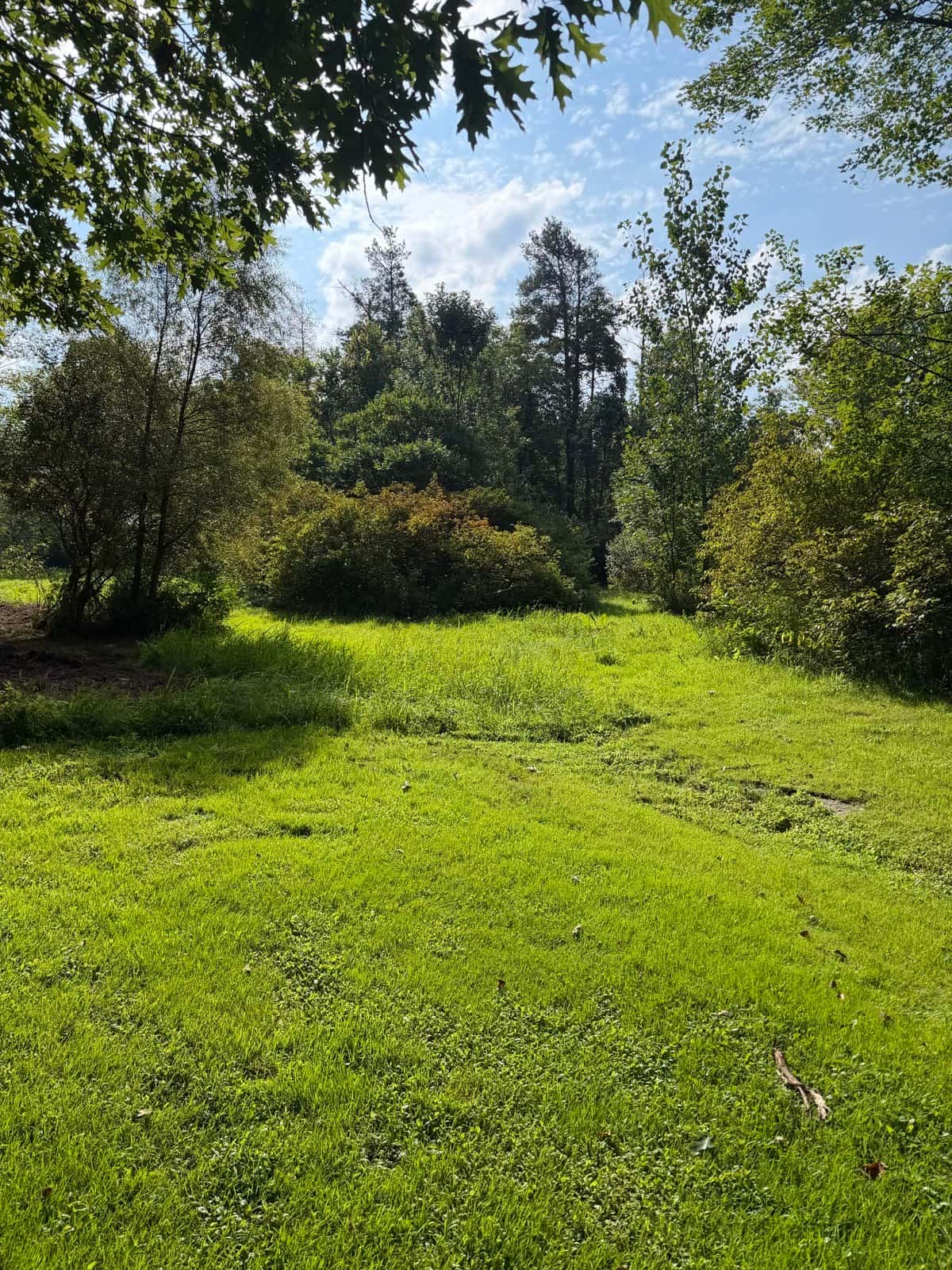
Wet spring soil is where the damage happens — tracks sink, the ground compacts, and you are left with ruts that show until the following summer. Frozen or firm ground carries a tracked machine with effectively no rutting, and the surface is left the way it was found. If you have ever watched equipment tear up a lawn getting to the back of a property, this is the season that does not do that.

Wet ground

Frozen is the only way into the low spots.

Every wooded property has ground you cannot get a machine onto in July — a seep, a low corner, the wet end of a field, the strip along a creek. Freeze it and it carries weight. Working those areas in the cold is standard practice for a reason: it is the difference between clearing them properly and leaving them for another year. Nothing is dug, so the roots holding that ground stay where they are.

The wildlife

Nothing is nesting.

Bird nesting runs from roughly April into August here, and no amount of care from an operator prevents destroying nests in that window — you cannot see them going in. Working from autumn through early spring avoids the season entirely. The desirable plants are dormant too, so they take equipment traffic far better than they would in growing season.

The money

You get more ground for the same number.

Three things stack up. Dormant brush processes faster than green growth and traction is better, so the machine covers more in a day. With the leaves down the operator can actually see what to keep, so selective work is genuinely selective. And a quote measured off visible structure is not padded against what might be under the canopy — you are not paying for the unknown.

One thing the cold does not do on its own

It does not kill the honeysuckle. Cut it in winter and it will push back in spring, whatever anyone tells you. What the season gives you is the right order of operations. Bush honeysuckle holds its leaves into late October after most native plants have shut down, which is why an autumn follow-up treatment reaches it with very little effect on anything you want to keep. Cut-stump work is not done during spring sap flow for the same reason. We will tell you where a follow-up is needed and where it is not.

Timing follows Ohio State University Extension guidance on controlling non-native invasive plants in Ohio forests (F-68).

You own the land. You just cannot use it.

That is one layer of brush, and it comes off in a morning.

We'll tell you what it costs. From $295, no project minimum.

Ground you can walk without watching your step — because we take the cover out.

Without losing a tree worth keeping.