The Brush Behind Your House Is Where the Ticks Live
By Kyle Abbey · ·
Ticks live in cover — the CDC says they live in grassy, brushy or wooded areas — and on most Northeast Ohio properties the densest cover is the tangle of brush at the back of the yard. The CDC's advice for reducing tick encounters in a yard starts with clearing brush and leaf litter. That is the entire job. Most people think about ticks in terms of repellent and long socks, and almost nobody thinks about the prickly, thorny stuff, the vines and the poison ivy they stopped walking into years ago. That tangle is the cover ticks live in, it sits right at the edge of the lawn, and it is the one part of this you can actually change.
Instant QuoteLand recovery and property protection · Northeast Ohio
We give you your land back, and we make it safe to use.
The brush, thorn and poison ivy that grew up under your good trees comes out, and what you get back is ground you can walk without watching your step.
From $295 for an afternoon's work to full estate restoration.
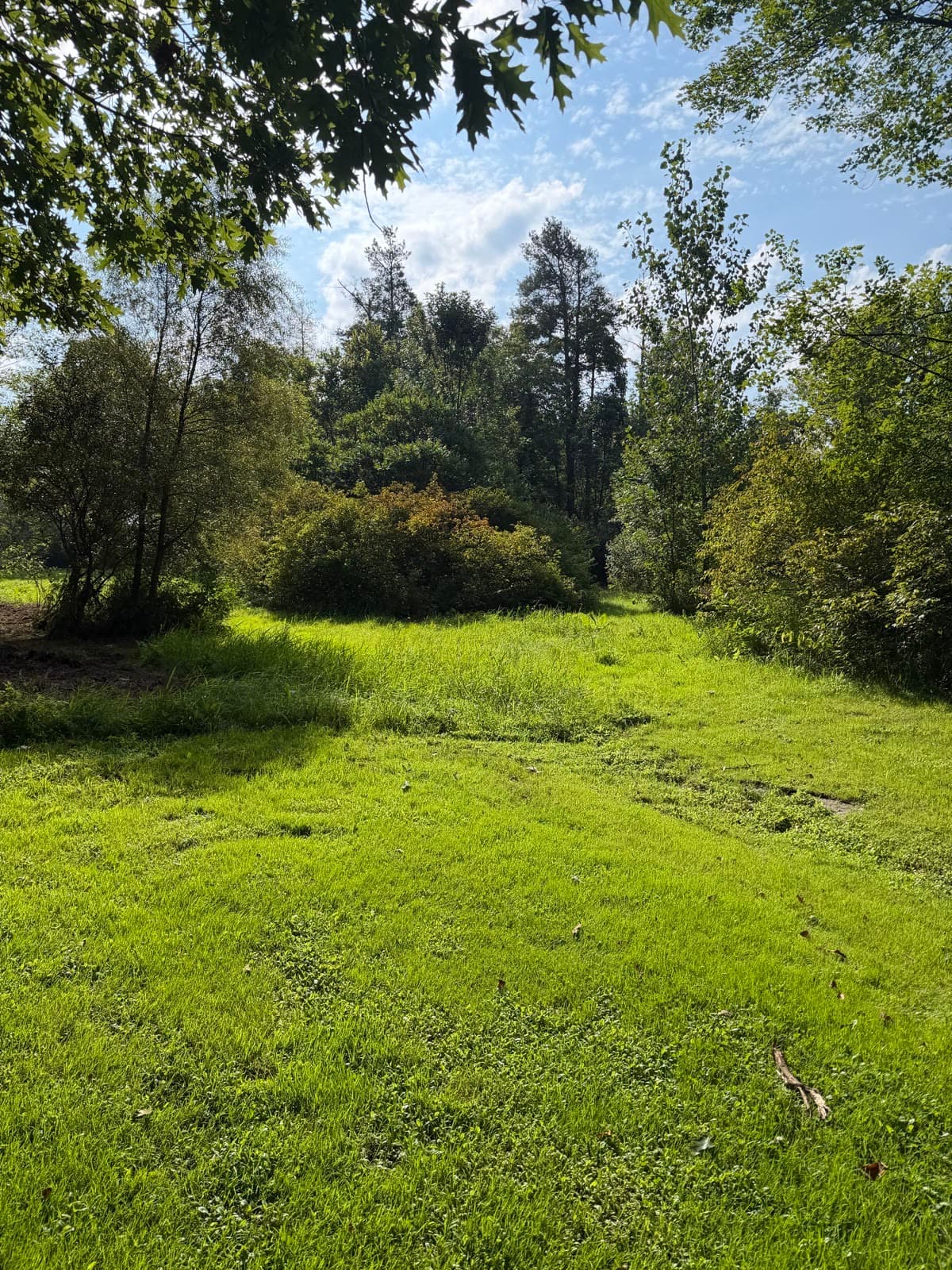 Actual BrushBoss footage · September 2026
Northeast Ohio · Woodland recovery
Real work. Real footage.
See past the tangle.
Brush and vines fill the space beneath your good trees. Start with the ground you want to use again.
Follow the transformation
What is tick habitat, physically?
Cover. The CDC puts it in one line: “Ticks live in grassy, brushy, or wooded areas, or even on animals.” On a Northeast Ohio property that means three things you can point to — the leaf litter on the ground, the shrub layer standing over it, and the strip where the lawn gives way to the woods. The Connecticut Agricultural Experiment Station, whose handbook the CDC points homeowners to, says the woods are where ticks find “the high humidity levels necessary for survival.” Shade and damp are the habitat. Brush is what holds them.
Why does leaf litter matter?
Leaf litter is the damp layer at ground level. Under open canopy it dries between rains; under a tangle of shrubs it never quite does. Each autumn’s leaves catch in the stems and settle into a mat that stays wet into summer, sheltered from sun and wind. It is the first thing on the CDC’s list for a yard, and it is exactly what a thicket manufactures.
What is the shrub layer?
Everything between your ankles and the lowest branches of the trees: the briars, the arching shrubs, the vines and the saplings. In healthy mature woods this layer is sparse, which is why an old Geauga woodlot can feel like a cathedral. On most overgrown properties it has filled in solid, and it is what shades the ground, holds the leaf litter in place and keeps the air still and humid at knee height.
Why is the edge between the lawn and the woods the part that matters?
Because it is where people and cover meet. The CAES Tick Management Handbook describes that strip as “unmaintained transitional edge habitat between woodlands and open areas,” and groups the lawn perimeter, brushy areas and groundcover with the woods themselves. On an estate, the edge is not a distant place. It is behind the swing set, beside the path to the pond, at the end of the lawn where the grandchildren chase a ball and the dog goes looking for it.
The same handbook is refreshingly practical about scale: it recommends focusing on “the areas frequently used by the family, not necessarily the entire property,” and says plainly that elimination of woodland and all wildlife habitats is not necessary or environmentally desirable. Keep the woods. Open the edge.
Which plants create that cover in Northeast Ohio?
Most owners call it brush, prickers or the thorny stuff, and they are right. By name, the usual makers of that cover in Geauga, Lake and eastern Cuyahoga woods are:
- Bush honeysuckle — arching shrubs six to twenty feet tall. Ohio State University Extension notes that they leaf out earlier in spring and hold their leaves later into fall than most native trees and shrubs, and can form dense thickets with nothing else growing in them. That is months of extra shade at the woodland edge each year.
- Multiflora rose — the thorny, arching canes that knit a fence line into a hedge you cannot walk through, and catch every leaf that falls into them.
- Buckthorn — common and glossy buckthorn fill the understory under an open canopy and on wet ground, often in solid stands.
- Japanese barberry — a low, thorny shrub that the Connecticut station singles out by name in its advice on reducing cover.
- Vines and briars — wild grape, blackberry and raspberry canes, and poison ivy running along the ground and up the trunks, knitting the rest together.
What do deer have to do with the brush?
Deer shape it. They browse the native seedlings, the young oaks and maples and the plantings you put in on purpose, and they tend to leave the honeysuckle and barberry alone. Year after year, that tilts the understory further toward the brush and away from the next generation of the woods you want. It is one reason the tangle closes in a little further every season, and one reason newly opened ground is worth replanting deliberately, with some protection for what you plant.
What does the CDC recommend for a yard, word for word?
Its page Preventing Tick Bites lists landscaping techniques for a yard, drawn from the Connecticut Agricultural Experiment Station’s handbook. The first two describe our work:
- “Remove leaf litter.”
- “Clear tall grasses and brush around homes and at the edge of lawns.”
The rest of the list is ordinary good housekeeping for a property with woods on it:
- A three-foot-wide barrier of wood chips or gravel between the lawn and wooded areas.
- “Mow the lawn frequently.”
- “Stack wood neatly and in a dry area (discourages rodents).”
- “Keep playground equipment, decks, and patios away from yard edges and trees.”
- Clearing old furniture, mattresses and rubbish out of the yard.
Read it as a description of a well-kept property rather than a treatment plan. The CDC pairs it with the personal steps — repellent, and checking after time outdoors — and so do we.
What does a clean lawn-to-woods edge look like?
A clear line instead of a blurred one. The lawn is mown to a definite edge; beyond it, a strip of wood chips or gravel; beyond that, open woods — the trunks standing, the canopy overhead, the ground visible between them. No wall of shrubs, no drift of wet leaves caught in the briars, no vines climbing out of it into the lawn. Anyone standing on the terrace can see where the lawn stops and the woods begin, and can see into the woods.
The strip itself is a landscaping job. The Connecticut handbook recommends it be three feet wide or more and maintained each year, and notes that chips from chipped trees, especially with leaves mixed in, break down quickly and soon behave like leaf litter. Clean bark chips or gravel, refreshed annually, is the version that keeps its line. We open the edge; your landscaper, or a weekend with a wheelbarrow, lays the strip.
Move the swing set, the fire pit and the benches off the edge and into the open. It costs nothing and it is on the CDC’s list.
What does BrushBoss actually remove?
The cover, and only the cover. Here is what leaves the property:
- The shrub layer — honeysuckle, buckthorn, multiflora rose, barberry — from ground level to head height.
- The briars, brambles and vines, including the poison ivy running under them.
- Saplings and scrub trees up to eight inches thick that you have not flagged to keep.
- The shelter over the ground: with the shrubs gone, the leaf mat they were holding is open to sun and wind instead of sealed under a thicket.
What stays is every tree you want: the canopy, the trunks, the shade over the house. The ground is left under a layer of chips, open to air and light. That is fewer places for ticks to live, and it is also simply a better-looking woods — the long view from the kitchen, the pond visible again, somewhere you can walk. See woodland restoration for what that looks like at the scale of an estate.
We describe what leaves the property, and nothing more. We make no promise about what lives in it. Cut shrubs resprout from the crown in the first seasons, so a written follow-up plan comes with the work: cut the regrowth back while it is ankle-high, or have it treated by a licensed applicator.
What changes for the people and the dog?
Habits, mostly. The path to the back of the property becomes a path again rather than a place to avoid. The children walk to the pond instead of around the long way. Guests who do not know the property can wander without anyone steering them off the edge. And the dog comes in from the woods without anyone checking her on the porch first.
None of that replaces the ordinary care the CDC recommends for anyone who spends time outdoors. It is simply what it is like to own woods you can use again.
What does it cost to open the edge?
Start with the edge you actually use. Opening the first stretch where the lawn meets the brush is usually flat-priced work: $295 for a drive or fence line up to 500 sq ft, up to $750 for a corner or back edge of up to a quarter acre. Opening whole woods is woodland restoration, at $2,000 – $2,990 / acre by density. No project minimum. Small jobs are flat-priced, larger work is priced by the acre, and you get the number before anything starts. Every rung is on the pricing page, or send us the address and we will price the edge from a satellite view before anyone visits.
Why the Prickly Stuff and the Ticks Go Together
- 01
Damp. Ticks need humidity, and a thick tangle of brush and briars holds a layer of wet leaves beneath it that never really dries out. That shade and damp is the habitat.
- 02
Season. Bush honeysuckle, the usual shrub in that tangle, leafs out earlier in spring and holds its leaves later into fall than most native trees and shrubs, so the edge stays shaded for months longer than the woods behind it.
- 03
Where it is. This matters more than any of the biology. That tangle is not deep in the woods — it is right at the edge of the lawn, between the house and everywhere the grandchildren, the guests and the dog actually go.
- 04
Poison ivy, in the same place. Vines are what turn an overgrown edge from ugly into unusable — poison ivy runs along the ground and climbs the trunks right through the tangle, where you cannot see it until you are already in it. It comes out with everything else, though the roots will push back and usually want a follow-up.
Frequently Asked Questions
What does the CDC actually recommend for a yard?
Its guidance on preventing tick bites lists yard practices, and the first two are to remove leaf litter and to clear tall grasses and brush around homes and at the edge of lawns. That is a description of the work, not a promise about any particular property — and it is the only authority we lean on. You can read it yourself on the CDC’s “Preventing Tick Bites” page.
Will clearing my brush make my property tick-free?
No, and anyone who tells you otherwise is selling something. We describe what leaves the property — the shrub layer, the vines, the damp leaves held under them — and nothing more. What you get is fewer places for ticks to live and ground that dries in the sun, not a guarantee about what walks across it. Keep using repellent and keep checking after a walk in the woods.
Does mulching the brush leave tick habitat behind on the ground?
What goes is the standing cover: the shrubs, briars and vines that held shade and damp at knee height, and the shelter they gave the leaf mat underneath. What is left is a layer of chips under the trees, open to air and light. We describe what leaves the property, not what lives in it. If you want the clean wood-chip or gravel strip the CDC describes between lawn and woods, that is a separate landscaping job, refreshed each year.
When is the best time of year to do this?
Autumn through early spring. The ground is firm so nothing ruts, songbirds are not nesting, and with the leaves down we can see what is worth keeping. It is also a far more pleasant time to be working in the brush for everyone involved.
How much of my property needs clearing to make a difference?
Start at the edge you actually use. Where the mown grass meets the brush is the ground your family is on every day, so opening that stretch changes the part of the property that matters most. That is usually a $295 to $750 job rather than an acreage project. You can always go further later — most people do.