Cover
What the tangle holds
Deep shade, a layer of wet leaves that never dries out, and thick cover deer bed down in. That is habitat: the cover ticks live in, and where poison ivy runs along the ground unseen.
Bush honeysuckle is one of the most widespread invasive shrubs in Ohio's woods. You can tell it by its paired leaves, its hollow older stems and its red berries in fall, and most easily by the fact that it is still green in late fall after the native trees are bare. Here is how to identify it and why it spreads as fast as it does.
Land recovery and property protection · Northeast Ohio
We give you your land back, and we make it safe to use.
The brush, thorn and poison ivy that grew up under your good trees comes out, and what you get back is ground you can walk without watching your step.
From $295 for an afternoon's work to full estate restoration.
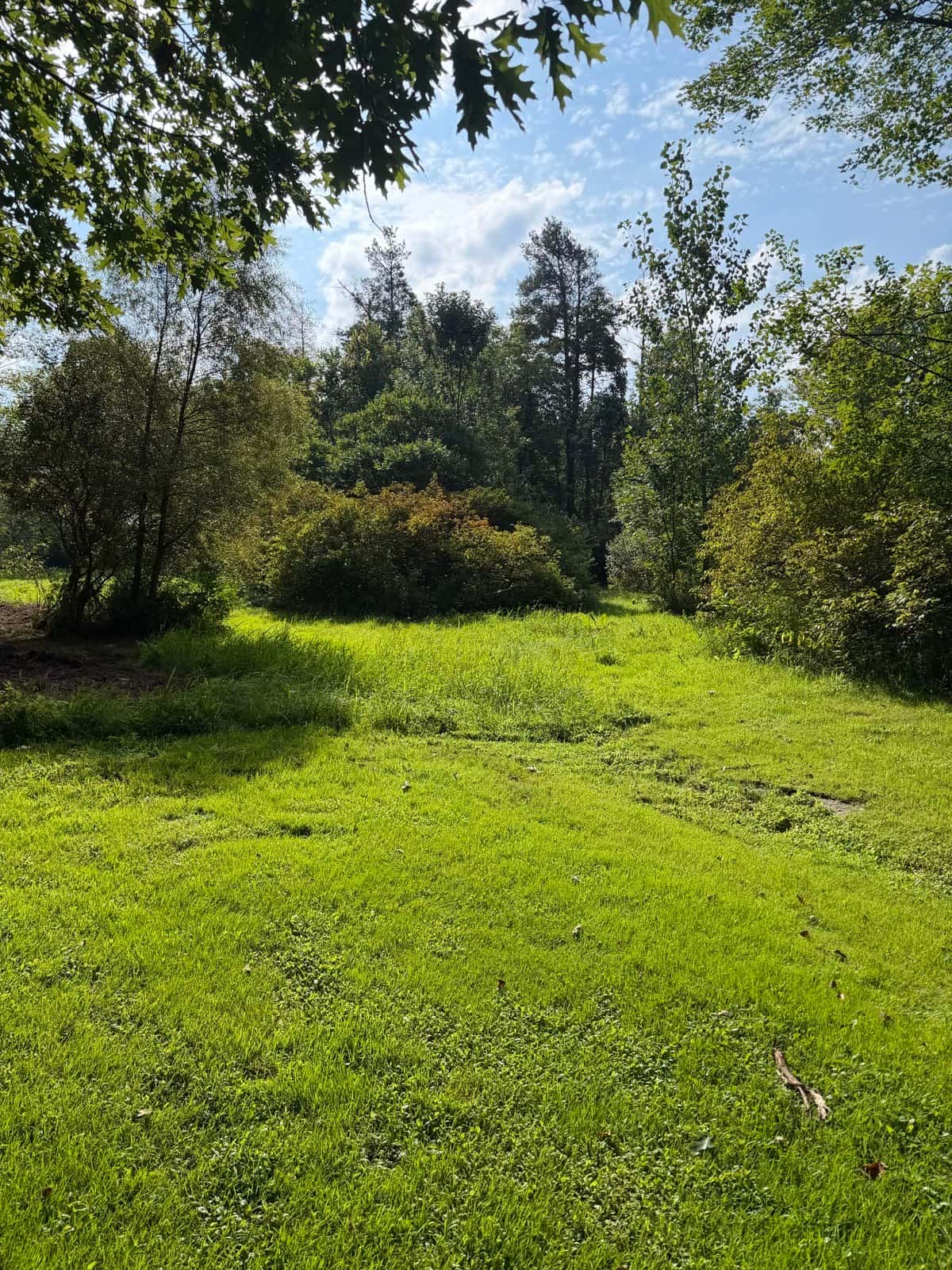 Actual BrushBoss footage · September 2026
Northeast Ohio · Woodland recovery
Real work. Real footage.
Brush and vines fill the space beneath your good trees. Start with the ground you want to use again.
Follow the transformation
Ohio State University Extension's fact sheet F-68 names the three most common bush honeysuckles in Ohio: Amur (Lonicera maackii), Morrow (Lonicera morrowii) and Tartarian (Lonicera tatarica), plus Bella, a hybrid of the last two. All are upright, arching shrubs, commonly 6 to 20 feet tall, that form dense thickets and block sunlight from reaching the forest floor. For control they can be treated as one group.
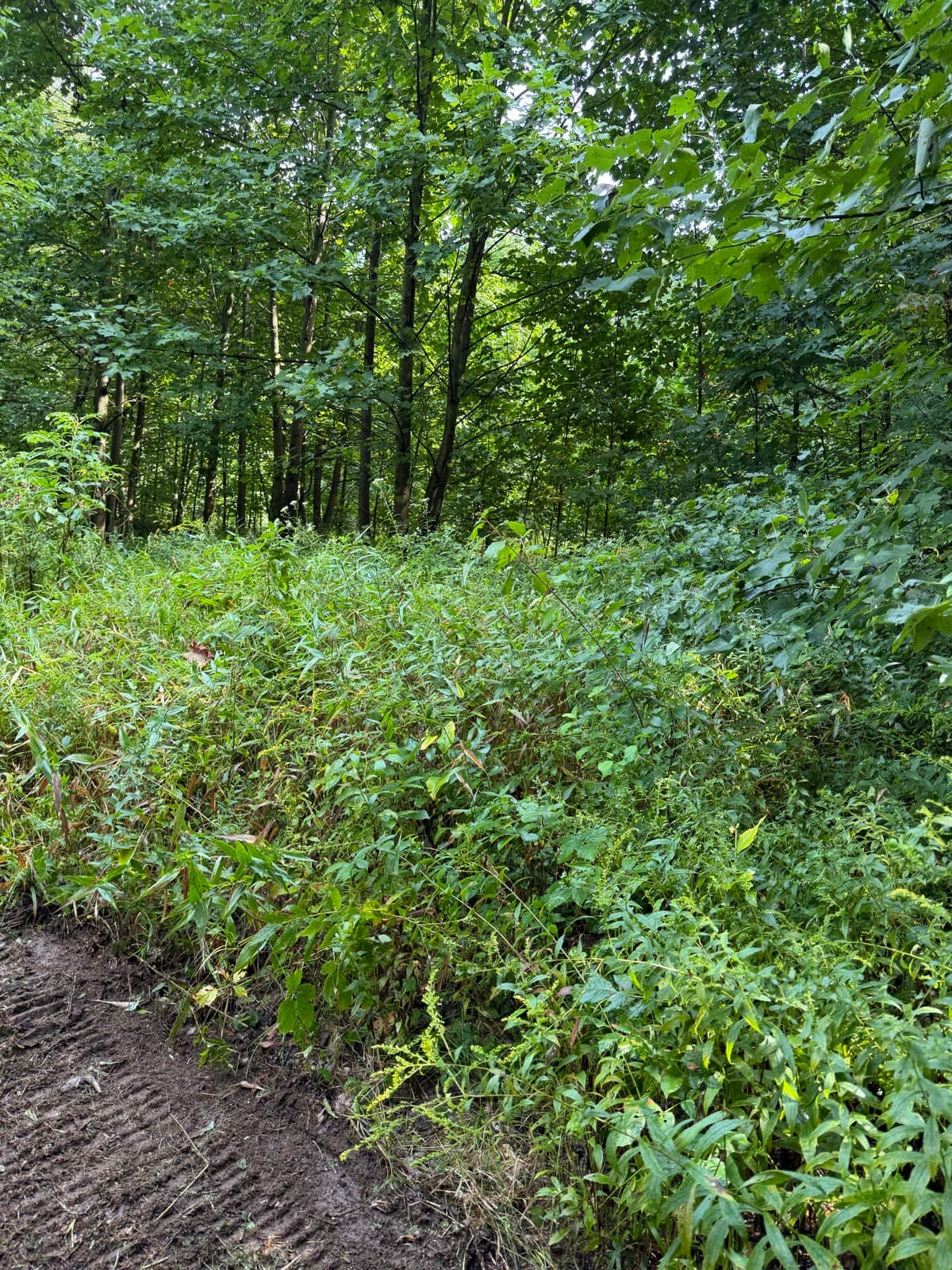
Bush honeysuckle has three biological advantages that make it nearly impossible for native plants to compete:
Extended growing season. Honeysuckle leafs out 2–3 weeks before native trees in spring and holds its leaves 2–3 weeks later in fall. During those windows, it captures sunlight that native understory plants need to photosynthesize and build root reserves. Native wildflowers, seedlings, and shrubs that depend on early spring or late fall light are starved out gradually.
Prolific seed production. A single mature honeysuckle plant produces thousands of berries that birds eat and carry off, so every songbird on your property is spreading it to new ground. The fruit is plentiful but poor food: F-68 notes it is rich in carbohydrates but lacks the high-fat, nutrient-rich content most native plants give migrating birds.
Dense monoculture formation. Once established, honeysuckle forms a closed canopy at the shrub layer that eliminates all native understory. No native wildflowers, no tree seedlings, no ground cover — just a bare forest floor under a wall of honeysuckle.
Because birds carry the seed, honeysuckle arrives where birds perch and feed: along fence rows, at the edge of the lawn where it meets the woods, under power lines and along creek banks. Any gap where light reaches the ground, from a fallen tree to a cleared lot, is colonised within a few seasons. That is why it so often looks as if the woods are closing in from the edges: they are, a few feet a year.
Cutting it without a plan makes it spread faster, not slower. A shrub cut at the base answers with a ring of new stems from the crown, and a mown thicket comes back denser than it was.
For a few seedlings or small shrubs, our guide on how to get rid of honeysuckle yourself walks through each scale, from pulling seedlings to the follow-up calendar that stops the resprouts.
Where it has become the understory, our honeysuckle removal service clears the thicket mechanically and mulches it in place, keeps every tree worth keeping, and comes back to cut the regrowth while it is small. Where the stand worth saving is the mature canopy above it, that work is woodland restoration.
Not sure what you are looking at? The Geauga Park District's naturalists answer plant identification questions, and Cleveland Metroparks runs a standing invasive plant program across its reservations. Where honeysuckle has moved into an old field rather than the woods, the thorny trees coming up alongside it are often Callery (Bradford) pear.
Sources: Ohio State University Extension fact sheet F-68: Bush Honeysuckle; Geauga Soil & Water Conservation District: invasive plant resources; Geauga Park District: Ask a Naturalist; Cleveland Metroparks: Invasive Plant Management. All checked October 10, 2026.
The reason most people miss
The prickly, thorny stuff at the back of the yard does not just block your view. It holds deep shade, a layer of wet leaves that never dries out, and thick cover deer bed down in — the cover ticks live in. Much of it is bush honeysuckle, though most people just call it brush.
And it sits right between the house and everywhere the grandchildren, the guests and the dog actually go. That wall of green is the reason the back of the property stopped being part of it.
It is rarely just brush, either. That same edge is where poison ivy runs — along the ground, up the trunks, through the tangle where you cannot see it until you are already in it. Vines are what make an overgrown edge genuinely unusable rather than merely ugly, and they come out with everything else.
Cover
What the tangle holds
Deep shade, a layer of wet leaves that never dries out, and thick cover deer bed down in. That is habitat: the cover ticks live in, and where poison ivy runs along the ground unseen.
Step one
The CDC's advice for a yard
The CDC's advice for reducing tick encounters in a yard starts with clearing brush and leaf litter. That is the entire job.
Open
Ground you can use again
Open ground, dry, with light reaching the floor and every good tree still standing — somewhere the family, a guest who does not know the property, and the dog can all walk without watching their step.
Clearing takes that layer out. The big trees stay, the canopy stays, and the wet tangle at knee height is what goes — fewer places for ticks to live, and ground that dries in the sun. What is left is somewhere the people you love, and the animals, can be without anyone checking the ground first.
We describe what leaves the property — the brush, the vines, the damp layer underneath — and nothing more. We make no promise about what lives in it, and we will not let a statistic make one for us.
Source: CDC, Preventing Tick Bites — “Remove leaf litter. Clear tall grasses and brush around homes and at the edge of lawns.”
Tell us the approximate area and we'll assess the density from satellite. Fixed pricing in writing, no hourly billing.
The cover ticks live in sits at the edge of your lawn.
Taking it out leaves fewer places for them to live, and it is a morning's work.
We'll tell you what the edge you walk would cost. From $295.
Ground you can walk without watching your step — because we take the cover out.
Without losing a tree worth keeping.