Poison Ivy Removal — The Edge of the Property, Back
Poison ivy removal gives you back the edge everybody stopped walking: the vines climbing your trees are cut at the base, the ground cover comes out with the brush it grows through, and all of it is mulched where it stood. The work is mechanical, so the roots will try to come back, and we plan the follow-up with you. Small edges start at $295; larger ground is priced from $2,000 per acre.
Land recovery and property protection · Northeast Ohio
We give you your land back, and we make it safe to use.
The brush, thorn and poison ivy that grew up under your good trees comes out, and what you get back is ground you can walk without watching your step.
From $295 for an afternoon's work to full estate restoration.
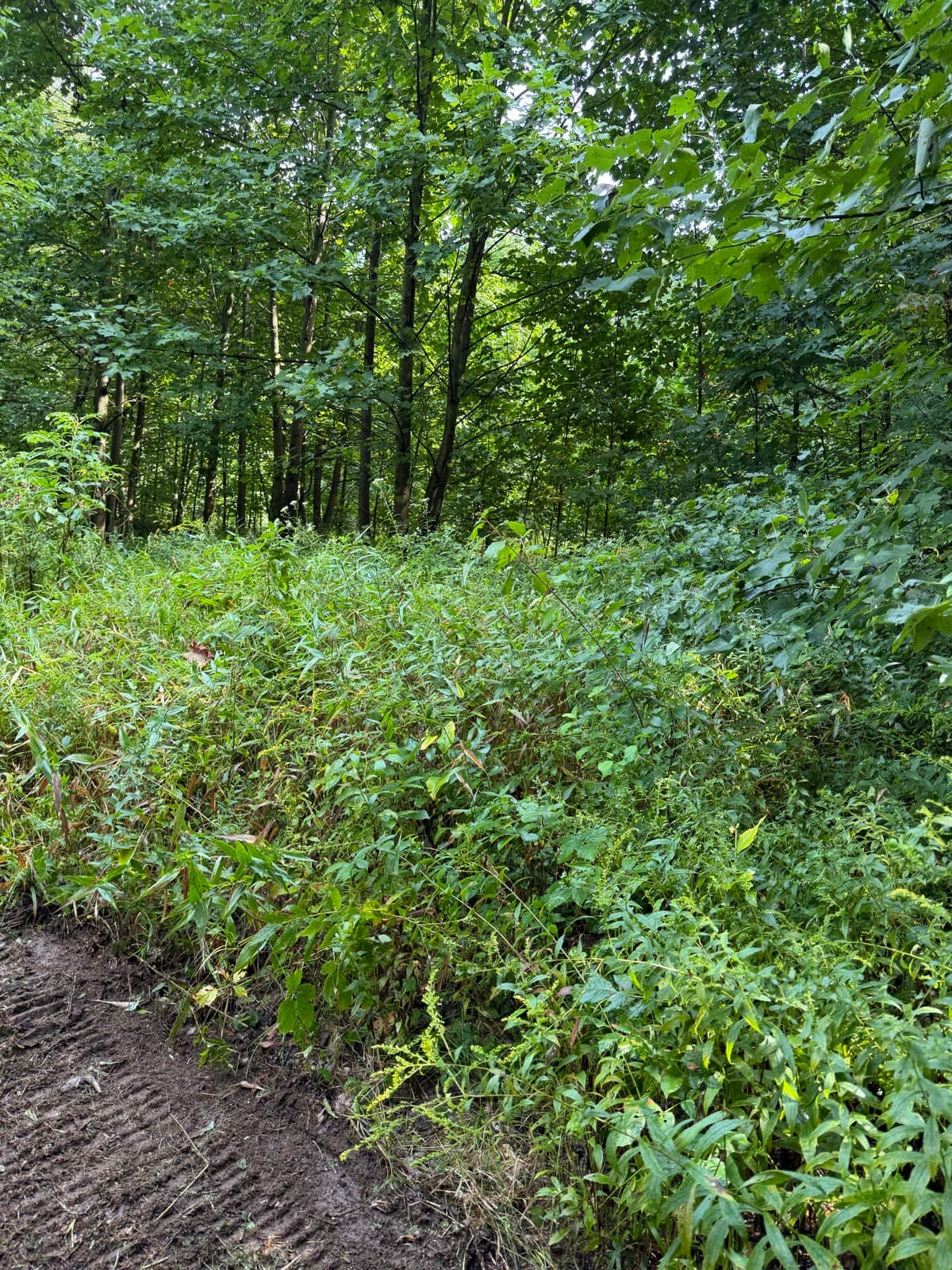
 Actual BrushBoss footage · September 2026
Northeast Ohio · Woodland recovery
Real work. Real footage.
See past the tangle.
Brush and vines fill the space beneath your good trees. Start with the ground you want to use again.
Follow the transformation
How to Get Rid of Poison Ivy
There are two honest ways to get rid of poison ivy on a property: take it out mechanically and keep after the regrowth, or spray it. We do the first. The vines are cut at the base of each tree, the ground cover is cleared with the brush around it, and the ground is left open and in the sun, which is the condition poison ivy likes least. Then a short follow-up visit catches the new shoots while they are low.
Mechanical removal is a strong first move, not the last one. Poison ivy spreads by roots and runners under the ground, and cutting what is above the ground does not reach them. Anyone who tells you a single visit ends it is selling you the visit. What does work is taking the whole tangle out at once, so the edge is open and walked, and then not letting it re-establish in the first seasons.
The result is the part of the property you paid for, usable again: the walk to the back line, the corner behind the garage, the path the dog has always taken.
Where Poison Ivy Takes Hold
Poison Ivy Removal, Step by Step
Vines cut at the base of the tree. Each vine climbing a trunk is cut through low on the tree. The upper vine is cut off from its roots and withers where it hangs; we do not strip it off the bark, which tears the tree and throws the oil into the air for no gain.
Ground cover taken out with the brush. The low patches come out with everything else at the edge: the thorn, the prickers and the scrub they grow through, ground into mulch where they stood. Nothing is piled, burned or carried through the yard.
The trees you keep are left alone. We work around every tree worth keeping. The point is to get the edge back, not to make it bare, and the good trees are what makes the cleared ground worth walking.
The mulch stays where it was cut. The ground material stays on the ground it came from. We never move it into your beds or your lawn, so the oil in it stays where the plant was.
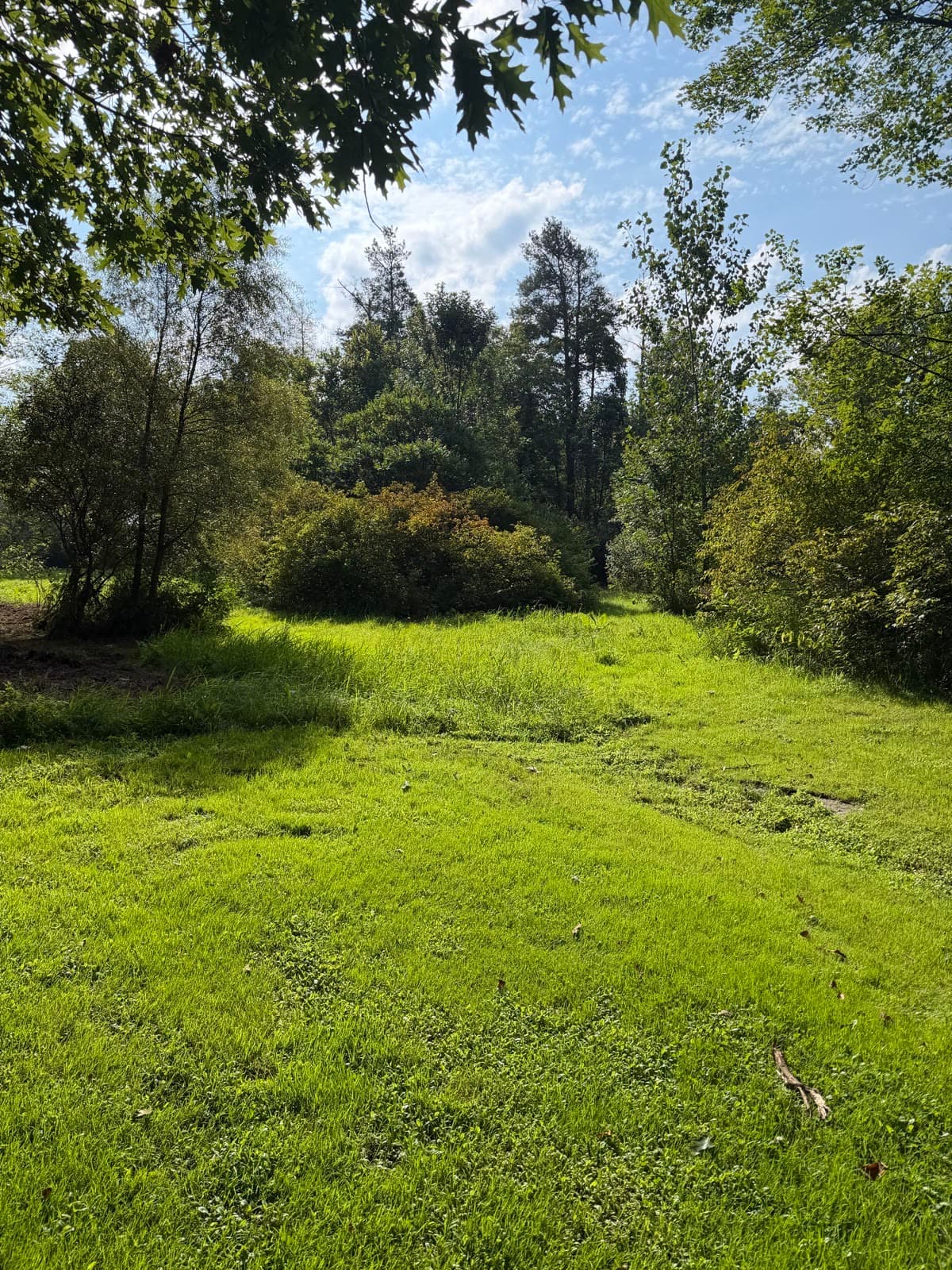
Poison ivy rarely grows alone. It threads through the brush and thorn at the edge, up through the honeysuckle thickets and along the fence line, so we clear the whole tangle together. Under standing woods it is part of the underbrush we take out with forestry mulching.
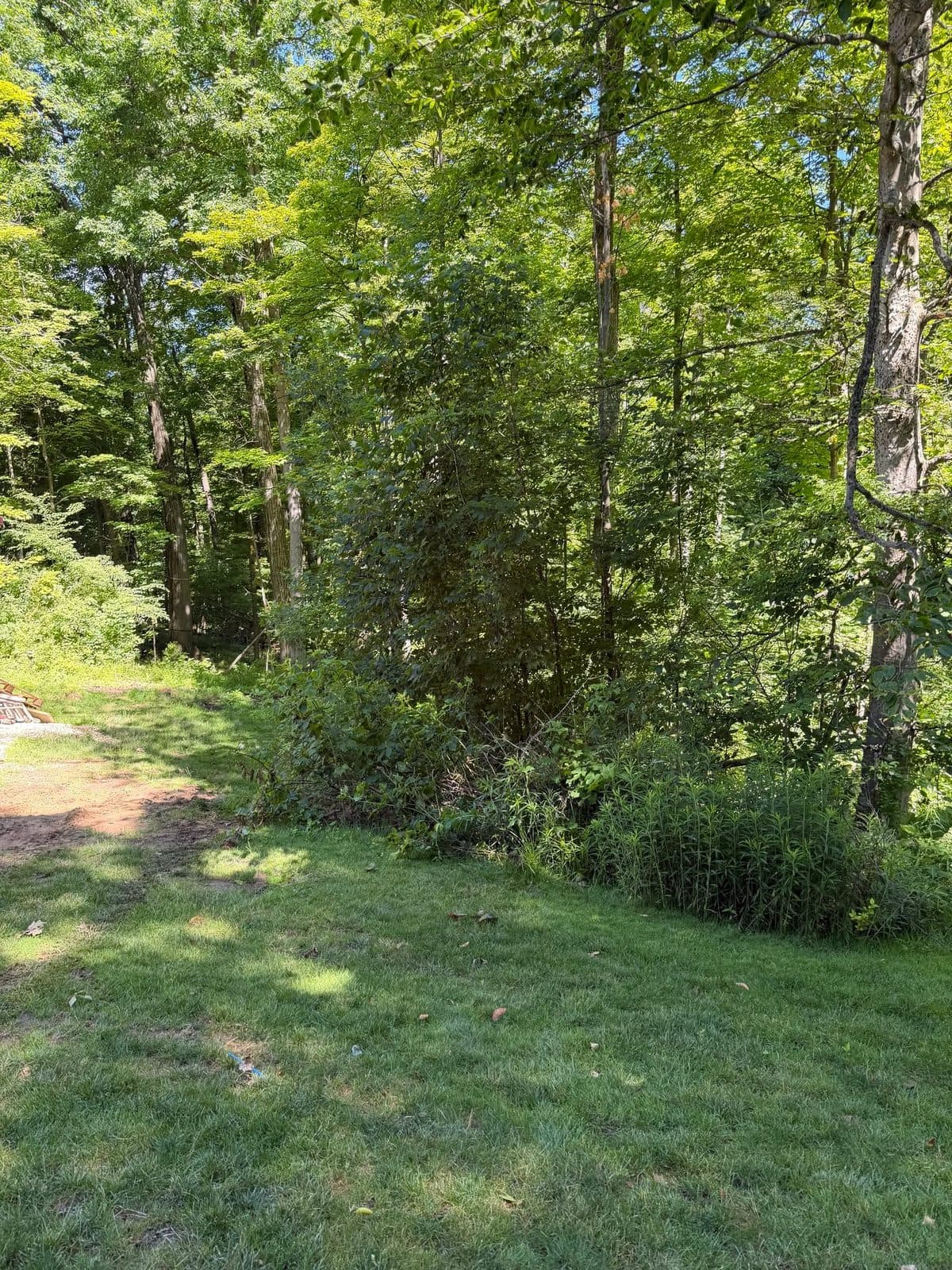
Actual BrushBoss job photograph. Results depend on your property.
What Poison Ivy Looks Like
Leaves of three, each leaflet pointed, the middle one on a longer stalk than the two at the sides. The edges can be smooth, toothed or lobed, and the leaves can be glossy or dull, which is why people miss it. New leaves come out reddish in spring, turn green in summer and go red, orange or yellow early in the fall.
On the trunks, it is a hairy, rope-like vine clinging to the bark, often as thick as a wrist on an old tree. In winter, with no leaves at all, that hairy vine is the giveaway, and it carries the oil all year.
On the ground, it runs as a low ground cover or as a small shrub at the woods edge, with clusters of pale berries in late summer that birds carry to the next fence post. Not sure? Send us a photo with your quote request and we will tell you what you are looking at.
Handling Poison Ivy Around the House
The oil in poison ivy does not stay on the plant. It stays on whatever touched it — gloves, tool handles, boots, clothing and the dog's coat — and it transfers from there. General guidance for the household, from the CDC's poisonous plants guidance:
- Never burn it. The CDC's instruction is direct: do not burn plants that may be poison ivy. The oil travels in the smoke, so a brush pile with vines tangled through it should never go on a fire.
- Dead vines still carry the oil. A vine that withered on the trunk last year is not finished with; leave it for us or handle it with gloves.
- Wash tools after any contact, with rubbing alcohol or with soap and plenty of water. The CDC notes the oil can stay active on handles, gloves and boots for years.
- Wash clothing that has been through it on its own, separately from the rest of the laundry.
- Think about the dog. Her coat carries the oil in from the edge and passes it to whoever towels her off, which is why the oil turns up on people who never go back there.
- Give the mulched ground a season. For the first year, wear gloves and boots if you work in it, as you would around the plant itself.
What Poison Ivy Removal Costs
Poison ivy is priced like the rest of our small work, on one published ladder. Most jobs are an edge or a corner; whole woodlands are priced by the acre from $2,000.
Keeping It From Coming Back
Poison ivy comes back from the roots for the first season or two after clearing. The cheapest way to deal with that is a short visit while the new shoots are still low, before they climb or spread. Clearing ground the first time is the expensive part. Holding it costs a fraction of that, because a season of regrowth on open ground is nothing like the tangle that was there before — and because a scheduled visit means the machine is already on your road.
More of the Edge, Back
Is BrushBoss insured, and what is guaranteed?
- Insured
- BrushBoss is insured. A certificate of insurance is available on request, before anyone sets foot on the property.
- Quoted in writing
- You have a written, fixed price before any work starts, and the price quoted is the price you pay. Every published rate is on the pricing page.
- Guaranteed
- We agree with you what stays before anything starts — without losing a tree worth keeping. Every BrushBoss clearing project includes a workmanship guarantee: if we miss material within the agreed clearing zone, we come back and finish — free.
- Local
- Based at 14669 Castlewood Dr, Newbury Township, Geauga County. (440) 557-4660, or book a walk-through.
Common Questions
Do you spray poison ivy?
No. Our work is entirely mechanical: vines cut at the base, ground cover taken out with the brush, and the material mulched where it stood. Spraying is a separate trade that we do not offer, so nothing is applied to your property. That is also why we are straight with you that the roots will try to come back.
Will the poison ivy come back after you clear it?
Some of it will try. Cutting and mulching takes out everything above the ground, but poison ivy spreads by roots and runners, and those send up new shoots for a season or two. The answer is follow-up: a short visit while the regrowth is still low catches it at a fraction of the original work, which is what our yearly plan is for. Ground that stays open, in sun and walked, holds far better than ground left to close in again.
Can you get the vines off my trees without hurting the trees?
Yes. The vine is cut through low on the trunk and the upper part is left to wither in place rather than pulled, because pulling a mature vine tears bark and can bring dead wood down with it. The tree keeps growing; the vine above the cut does not.
How much does poison ivy removal cost?
It is priced like the rest of our small work, on the same published ladder: a drive or fence line edge, a longer strip and a corner up to a quarter acre are each flat-priced, and anything larger is priced by the acre. There is no project minimum and you get the number before anything starts. Most poison ivy jobs are an edge or a corner rather than acreage.
Is it safe to burn poison ivy once it is cut?
No. The CDC's guidance is not to burn plants that may be poison ivy, because the oil travels in the smoke. It is one of the reasons we mulch on site rather than pile and burn.
When is the best time of year to have it removed?
Any season works for the clearing itself. In leaf, from late spring to early fall, it is easy to point at and easy to see what is left. Bare in winter, the hairy vines on the trunks are easy to find and the ground cover is down, but the stems still carry the oil. Plan the first follow-up for the next growing season either way.
Do I need to be home while you work?
No. We walk the edge with you or agree it from photos and a satellite view first, mark the trees that stay, and do the work on the agreed day. Keep children and pets in while we are working and for the rest of that day.
Do you remove poison ivy around Cleveland and Akron?
Yes. Poison ivy removal is part of our clearing work across Northeast Ohio, including Cleveland, Akron and the townships of Geauga, Lake, Cuyahoga and Summit counties.
Poison Ivy at the Edge of the Lawn?
Send the address and a photo of the edge. We will tell you what is growing there, what it costs to take out, and when to come back for the regrowth — before anything starts.
Poison ivy is why nobody goes back there.
It comes out with the rest of the tangle.
Still in leaf this month — the last easy time to point at it.
Ground you can walk without watching your step — because we take the cover out.
Without losing a tree worth keeping.