Honeysuckle Removal
Troy, OH
We give you your land back, and we make it safe to use.
Get Your Instant Estimate ↗About this service in your area
Honeysuckle removal in Troy, Ohio, is not just a cosmetic upgrade; it's a critical ecological intervention, especially given the township’s unique position straddling the Ohio River divide. Here, the pervasive Amur honeysuckle thrives in the ground moraine with its wet clay flats, creating dense, light-blocking thickets that choke out native understory plants. This invasive species, often spread by birds from backyard plantings, leaves bare ground beneath its canopy, making it a prime candidate for erosion on the moderate slopes that characterize parts of Troy, particularly those leading down to the Mahoning River watershed. Our approach to honeysuckle removal is rooted in understanding the biology of this invasion. We don't just clear; we leave you a written plan for what comes back. The honeysuckle's canopy, stems, and root crowns are taken to grade in one visit, and the invasive growth becomes a finely textured mulch layer. This immediate on-site mulching is crucial for Troy's clay-rich soils, as it directly suppresses the vast seed bank lying dormant beneath the honeysuckle. Without this suppression, the invasion would rapidly re-establish itself from the seeds that readily germinate in the disturbed soil. We carefully work around desirable native trees, preserving them while removing the invasive understory. The timing of this removal is also paramount in Troy. We advocate for dormant-season removal whenever possible, targeting the honeysuckle when its energy reserves are at their lowest. This weakens the plant significantly, making it less likely to rebound vigorously and minimizing disruption to native species during their active growth periods. Every honeysuckle removal project in Troy comes with a written follow-up plan because we know that even after mechanical removal, the root crowns will push one weak flush of regrowth in the first season. The plan is simple: cut that regrowth back while it is ankle-high, or have us back to cut it. It is a biology-driven approach to reclaiming your Troy property from honeysuckle and restoring its ecological balance and appeal. Landscape designers, landscapers, and developers regularly partner with us for this precise, outcome-focused service, knowing we clear the way for their projects without competing for their subsequent work. We clear, they build.
5.0 out of 5 from 8 Google reviews. Read them in full
Land recovery and property protection · Northeast Ohio
We give you your land back, and we make it safe to use.
The brush, thorn and poison ivy that grew up under your good trees comes out, and what you get back is ground you can walk without watching your step.
From $295 for an afternoon's work to full estate restoration.
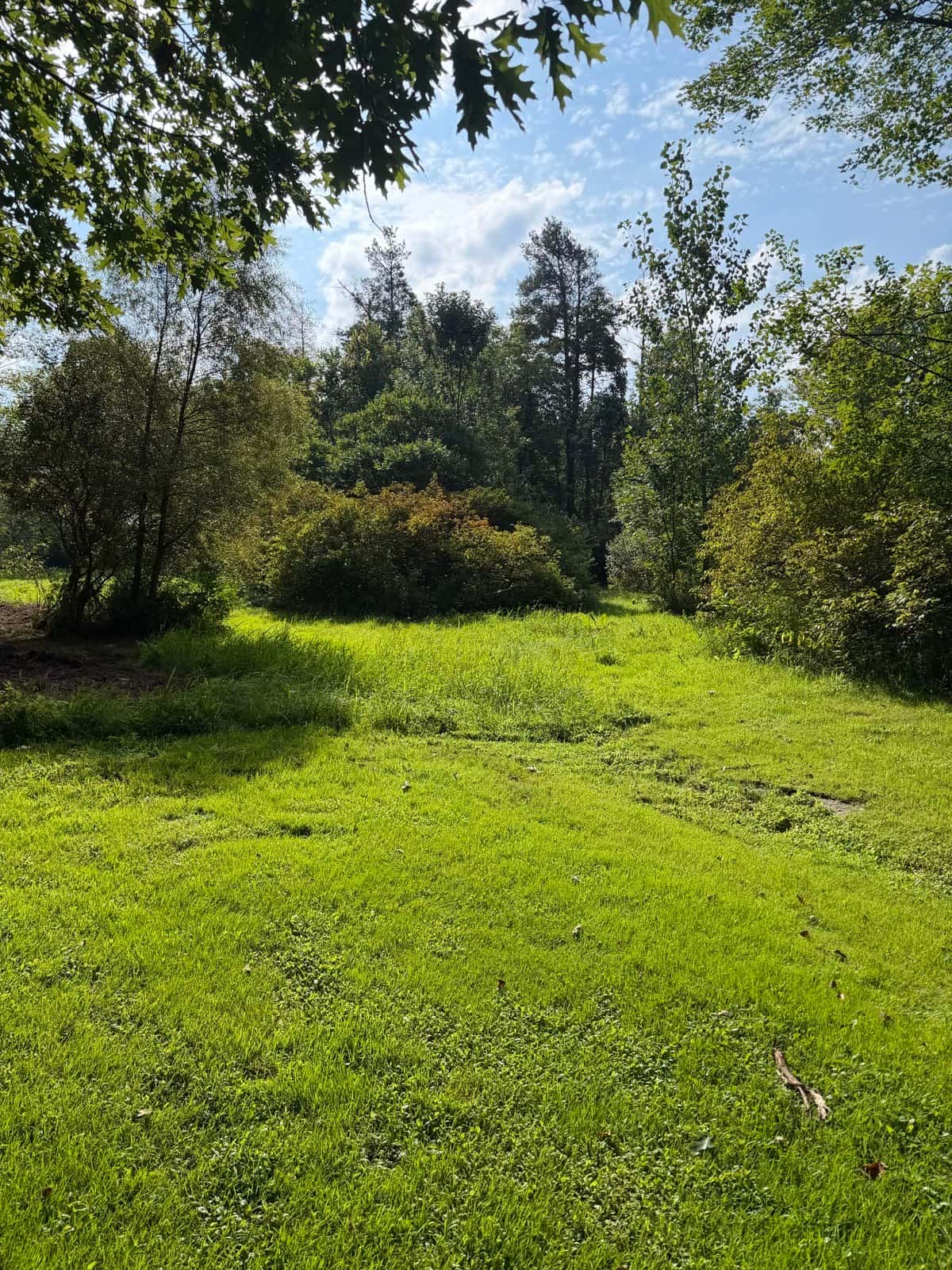 Actual BrushBoss footage · September 2026
Northeast Ohio · Woodland recovery
Real work. Real footage.
See past the tangle.
Brush and vines fill the space beneath your good trees. Start with the ground you want to use again.
Follow the transformation
Honeysuckle Removal in Troy's Clay Flats
Troy Township’s unique position, straddling Geauga County's only Ohio River divide, means its southern end drains toward the Mahoning, while the rest of the county feeds Lake Erie. This landscape is dominated by ground moraine with wet clay flats, making it particularly susceptible to honeysuckle invasions. The dense clay soils retain moisture, creating an ideal environment for honeysuckle to thrive and spread rapidly. Our removal process is tailored to these conditions; the resulting mulch layer helps to improve soil structure over time, rather than compacting the already dense clay, and prevents erosion on the moderate slopes found in areas like those near Nash Road or on the way to the Mahoning River.
The typical property pattern in Troy often involves larger parcels, many with significant wooded areas or former agricultural lands that have gone to seed. Homeowners along Jug Street or Messenger Road frequently encounter the 'green wall' of honeysuckle encroaching on their yards, wood-lines, and recreational spaces. This invasive complex, often accompanied by other aggressive species, forms impenetrable thickets that choke out native plants, reduce biodiversity, and make large sections of property unusable. Identifying honeysuckle early, by its opposite branching and often persistent red berries, allows for more effective intervention before it forms monocultures.
Our honeysuckle removal process in Troy is efficient and predictable. After a detailed site assessment to understand the density and spread of the invasion, we provide a fixed per-acre quote. With minimal ground disturbance, we reach the affected areas and take honeysuckle and its associated invasives down to grade. We operate through much of the year, though dormant-season removal is ecologically preferred. The result is a clean, mulched surface that immediately begins to suppress the underlying seed bank, a critical step on Troy’s ground. This fixed-price model means no hourly meters, just a clear outcome.
Being on the Ohio River divide means projects in Troy may answer to different watershed authorities depending on the specific parcel's drainage. While there are no specific township-level regulations unique to honeysuckle removal, any significant soil disturbance could trigger sediment control plans from the Geauga Soil and Water Conservation District. Our mulching method, by minimizing soil disturbance and creating an on-site mulch layer, aligns with best management practices, helping to prevent runoff and sediment migration into local waterways. This ensures your project remains compliant and environmentally responsible, whether your property drains toward the Mahoning or Lake Erie.
What We Remove in Troy, OH
Invaded Woodlots
Woods where honeysuckle replaced the entire understory — bare dirt below, green wall at eye level. Your native trees get their floor back.
Yard & Wood-Line Edges
The green wall creeping toward the house a few feet a year, pushed back to where the property line actually is.
Creek & Ravine Corridors
Honeysuckle loves stream banks and ravine edges — the hardest ground to fight by hand, and ground we clear as a matter of routine.
Whole-Thicket Grinding
Canopy, stems, and root crowns cut to grade, with the mulch layer immediately suppressing the seed bank underneath.
A Written Regrowth Plan
Crowns push one weak flush the first season. Your quote includes a written follow-up plan: cut the regrowth back while it is ankle-high, or we come back and cut it.
FAQ — Troy, OH
Honeysuckle removal in Troy costs between $2,000 – $2,990 per acre on flat terrain. The price within this range depends on the density of the honeysuckle thicket. Moderate slopes, common in areas leading to the Mahoning River watershed, add 10% to the cost, while steep ground adds 25%. There is no project minimum. This fixed price includes a written regrowth plan for the first season's follow-up.
Honeysuckle on Troy properties is typically identified by its opposite branching pattern, often arching stems, and in fall and winter, persistent red berries. It's one of the first shrubs to leaf out in spring and one of the last to drop its leaves in fall, making it visibly green when native trees are bare. By the time homeowners along Troy-Messopotamia Road or Claridon-Troy Road contact us, the invasion has usually spread significantly, forming dense thickets that have completely replaced the native understory, creating bare ground beneath its canopy, and often encroaching on yard edges or fence lines.
Yes, we serve all of Troy Township. Whether your property is near the Troy Community House, along State Route 700, or in the more rural sections closer to the Geauga-Trumbull County line, we provide honeysuckle removal services across the entire township.
Even after the most thorough removal, honeysuckle root crowns will push one weak flush of regrowth during the first growing season. Our written follow-up plan, included in your quote, details simple steps to address this. Typically, that means cutting the new growth back while it is ankle-high where the ground is open, or a careful follow-up cut from us where it grows among plants you want to keep. Dealing with those sprouts in the first season matters, because they draw on the energy left in the roots.
Take the Woods Back From Honeysuckle
Honeysuckle thickets mulched in place across the whole stand, not cut stem by stem. Written scope, per-acre pricing, and a plan for keeping it out.
Per acre on flat terrain by thicket density. No project minimum. The written regrowth plan is part of the quote, so the first season's follow-up is spelled out before the work begins.
Get Your Instant Estimate ↗