Honeysuckle Removal
Bainbridge, OH
We give you your land back, and we make it safe to use.
Get Your Instant Estimate ↗About this service in your area
Honeysuckle removal in Bainbridge is a fight against more than just a nuisance shrub; it's a battle to reclaim the very ecology of your woodlot. This township, where the interlobate moraine breaks toward the Chagrin River and the Tinker's Creek headwaters, presents a specific challenge. The pervasive Amur honeysuckle, often bird-planted, thrives in the bare understory it creates, forming dense, light-blocking thickets. The problem is exacerbated by Bainbridge's generally slow to very slow permeability soils, which means water drains poorly, creating a consistent moisture source that invasive species exploit. Our approach targets the biology of the invasion, not just the visible growth. We tackle the entire complex of invasive species that travel with honeysuckle, cutting canopy, stems, and root crowns to grade. This action creates a thick, organic mulch layer directly on your property, which is crucial in Bainbridge. This layer immediately suppresses the honeysuckle seed bank, preventing the rapid re-emergence that would otherwise occur in these moisture-retentive soils. Our method works around desirable trees, preserving them and allowing their native understory to eventually return. We don't just clear; we set the stage for ecological recovery. The timing of this removal is as vital as the method. Dormant-season removal is the strongest play here, hitting the plant when its energy reserves are at their lowest, maximizing impact while minimizing disturbance to native species during their active growth. Every project in Bainbridge includes a written follow-up plan, because we know honeysuckle crowns push one weak regrowth flush in the first season. The written plan sets out the follow-up: cut the regrowth back while it is ankle-high, or we come back and cut it. The written follow-up plan is part of the price. This strategic, biology-focused approach ensures your Bainbridge property, whether along Bainbridge Road or close to the Geauga Lake area, gets a lasting solution to honeysuckle, restoring the health and usability of your land.
5.0 out of 5 from 8 Google reviews. Read them in full
Land recovery and property protection · Northeast Ohio
We give you your land back, and we make it safe to use.
The brush, thorn and poison ivy that grew up under your good trees comes out, and what you get back is ground you can walk without watching your step.
From $295 for an afternoon's work to full estate restoration.
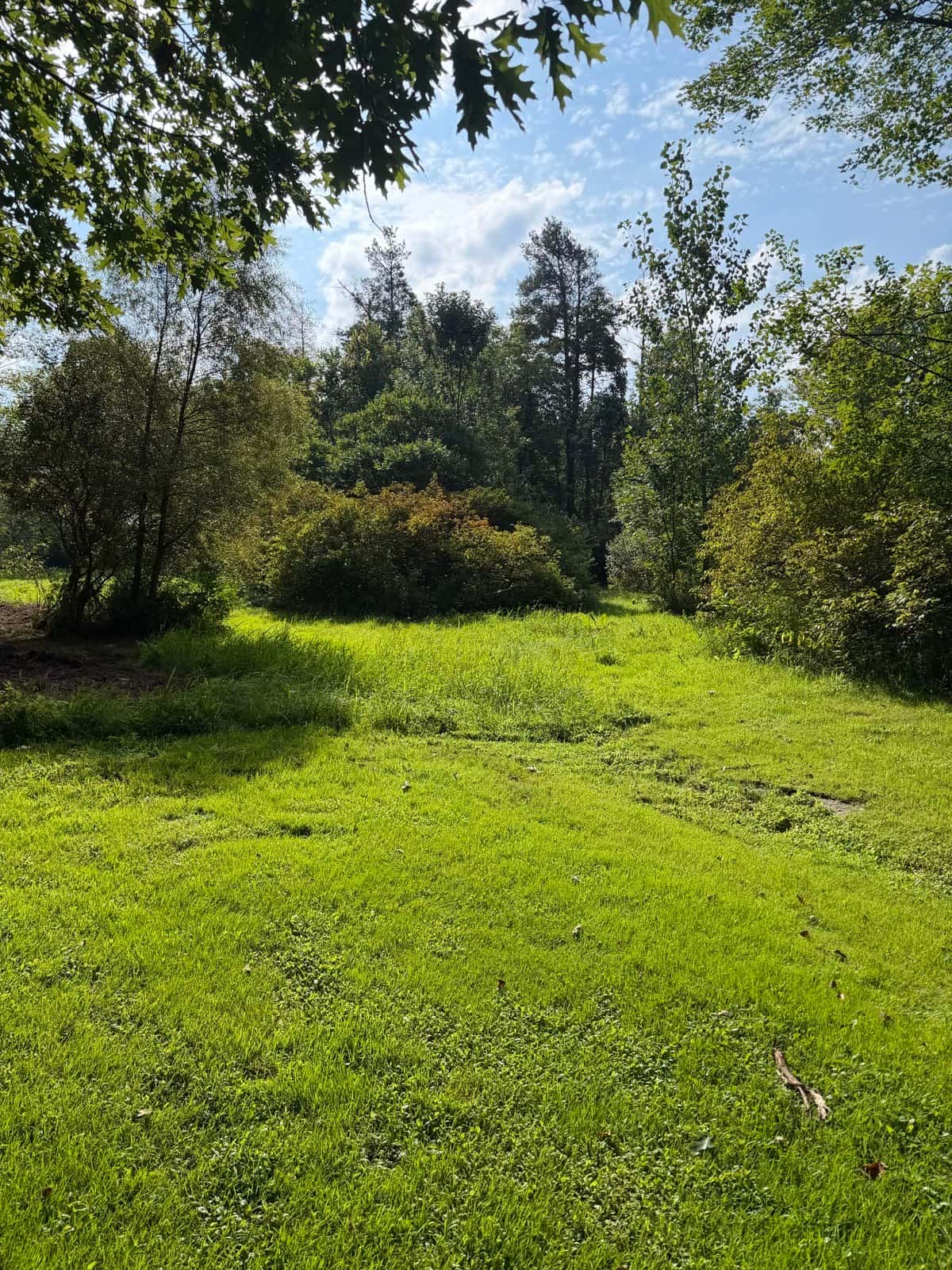 Actual BrushBoss footage · September 2026
Northeast Ohio · Woodland recovery
Real work. Real footage.
See past the tangle.
Brush and vines fill the space beneath your good trees. Start with the ground you want to use again.
Follow the transformation
Honeysuckle Removal on Bainbridge's Slopes and Slow Draining Soils
Bainbridge's western edge in Geauga County is a landscape shaped by glacial retreat, where the interlobate moraine gives way to the Chagrin and Tinker's Creek headwaters. This means varied terrain, with Sharon Conglomerate ledges near the surface in the northwest, and the largest inventory of slopes over 25% in Geauga County. Most of Bainbridge's soil has slow to very slow permeability, which means water moves through it slowly, creating a network of cut ditches rather than natural creeks. For honeysuckle, these conditions are ideal: the consistent moisture in the heavy soils, combined with areas of disturbed ground on the slopes, allows the invasion to spread aggressively and establish deep root systems. Our removal methods are designed to integrate the resulting mulch layer into this specific ground, improving soil structure over time rather than compacting it.
The typical property pattern in Bainbridge often involves wooded parcels descending into ravines, or older residential lots where honeysuckle has crept from neglected woodlots into yard edges. Property owners here are frequently battling the 'green wall' of invasives encroaching on their lawns, fence lines along Auburn Road, or along the banks of Tinker's Creek. This leads to a loss of usable land, reduced visibility, and a significant decline in biodiversity as native understory plants are choked out. We target these specific patterns of invasion, transforming dense thickets into manageable, usable acreage without disrupting the residential aesthetic.
Our honeysuckle removal process in Bainbridge is tailored for efficiency and effectiveness. After an initial property assessment to gauge the density of the thicket and the presence of slopes, we provide a fixed per-acre quote. This quote covers the complete removal of honeysuckle and its associated invasives, transforming thickets into a fine mulch layer that immediately begins to suppress the underlying seed bank – a critical step on Bainbridge’s ground. We work across the varied terrain and around existing trees and structures, even on moderate or steep slopes. We operate year-round, though dormant-season removal is often preferred for its ecological benefits, ensuring transparency and predictability for homeowners, LANDSCAPE DESIGNERS, LANDSCAPERS, and DEVELOPERS.
Bainbridge’s extensive network of cut ditches highlights the township's long-standing concern with water management. While there isn't a specific riparian setback article, responsible land management here means understanding the interaction between surface vegetation and subsurface drainage. Our mulching process, by keeping soil disturbance minimal and creating an on-site mulch layer, aligns with these local concerns. It reduces runoff and promotes healthy soil infiltration rather than exacerbating drainage issues, which is particularly important in areas where the Chagrin River watershed begins. This means less sediment entering the drainage network and a healthier landscape overall.
What We Remove in Bainbridge, OH
Invaded Woodlots
Woods where honeysuckle replaced the entire understory — bare dirt below, green wall at eye level. Your native trees get their floor back.
Yard & Wood-Line Edges
The green wall creeping toward the house a few feet a year, pushed back to where the property line actually is.
Creek & Ravine Corridors
Honeysuckle loves stream banks and ravine edges — the hardest ground to fight by hand, and ground we clear as a matter of routine.
Whole-Thicket Grinding
Canopy, stems, and root crowns cut to grade, with the mulch layer immediately suppressing the seed bank underneath.
A Written Regrowth Plan
Crowns push one weak flush the first season. Your quote includes a written follow-up plan: cut the regrowth back while it is ankle-high, or we come back and cut it.
FAQ — Bainbridge, OH
Honeysuckle removal in Bainbridge ranges from $2,000 – $2,990 per acre. This fixed price depends on the density of the thicket and the terrain. Moderate slopes add 10%, and steep ground adds 25%. There is no project minimum. The written regrowth plan is included in this quote.
Amur honeysuckle in Bainbridge forms dense, multi-stemmed shrubs or small trees, often with hollow stems and opposite leaves that stay green late into fall. It creates a 'green wall' that shades out everything underneath, leaving a bare understory. If you see this green barrier along your woodlot edges or creeping into ravines near the Tinker's Creek headwaters, it's likely honeysuckle. Given Bainbridge's slow-draining soils and varied terrain, it can spread rapidly, often colonizing entire understories or forming impenetrable thickets in neglected areas.
Yes, we serve all of Bainbridge, from properties bordering the Chagrin River to those near the Geauga Lake area, and from Bainbridge Road down to the Tinker's Creek corridor. We work across the township, addressing honeysuckle on both flat ground and the steeper slopes found in the township.
The follow-up is modest, but it matters. After we remove the honeysuckle, the crowns will push one weak flush of regrowth in the first season. Your written plan will detail how to address this, typically by cutting it back while it is ankle-high, or having us back to cut it. This single action is usually enough to exhaust the plant's remaining energy and prevent re-establishment, ensuring the work we've done becomes a lasting solution.
Take the Woods Back From Honeysuckle
Honeysuckle thickets mulched in place across the whole stand, not cut stem by stem. Written scope, per-acre pricing, and a plan for keeping it out.
Per acre on flat terrain by thicket density. No project minimum. The written regrowth plan is part of the quote, so the first season's follow-up is spelled out before the work begins.
Get Your Instant Estimate ↗