Honeysuckle Removal
Thompson, OH
We give you your land back, and we make it safe to use.
Get Your Instant Estimate ↗About this service in your area
In Thompson, controlling honeysuckle is a fight against a particularly aggressive biology, especially on ground where the glacial till is thin. The township, known for areas like Thompson Ledges, rests on a mere five feet of till, directly atop sandstone and conglomerate ledges. This geology means any significant soil disturbance, such as what a dozer would create, quickly brings up rock and disrupts delicate soil layers. Honeysuckle, however, thrives in this environment, with birds readily planting its seeds in the bare understory it creates. Our approach to honeysuckle removal in Thompson is grounded in understanding this biological cycle and the local terrain. We don’t just clear the thickets; we dismantle the invasion. Canopy, stems and root crowns are taken to grade in one visit, and the dense thicket becomes a fine, protective mulch cover. This layer is critical for Thompson’s ground, as it immediately suppresses the underlying seed bank, preventing a rapid re-emergence. This method avoids the deep soil disruption that would otherwise bring up rock and create an uneven surface, a common problem on properties along areas like Sidley Road or those leading down to the Grand River valley. We meticulously work around desirable native trees, preserving them while removing the invasive growth, restoring the natural integrity of your woodlots. Timing is a key factor here: dormant-season removal is often the strongest play, as it targets the plant when its energy reserves are lowest, maximizing the effectiveness of the cut and minimizing disturbance to native species during their active growth. Every honeysuckle removal project in Thompson includes a written follow-up plan, because we know these crowns will push one weak flush of regrowth in the first season. Our written plan covers that regrowth: cut it back while it is ankle-high, or leave it for our return visit. This comprehensive approach is how we make your Thompson property usable again.
5.0 out of 5 from 8 Google reviews. Read them in full
Land recovery and property protection · Northeast Ohio
We give you your land back, and we make it safe to use.
The brush, thorn and poison ivy that grew up under your good trees comes out, and what you get back is ground you can walk without watching your step.
From $295 for an afternoon's work to full estate restoration.
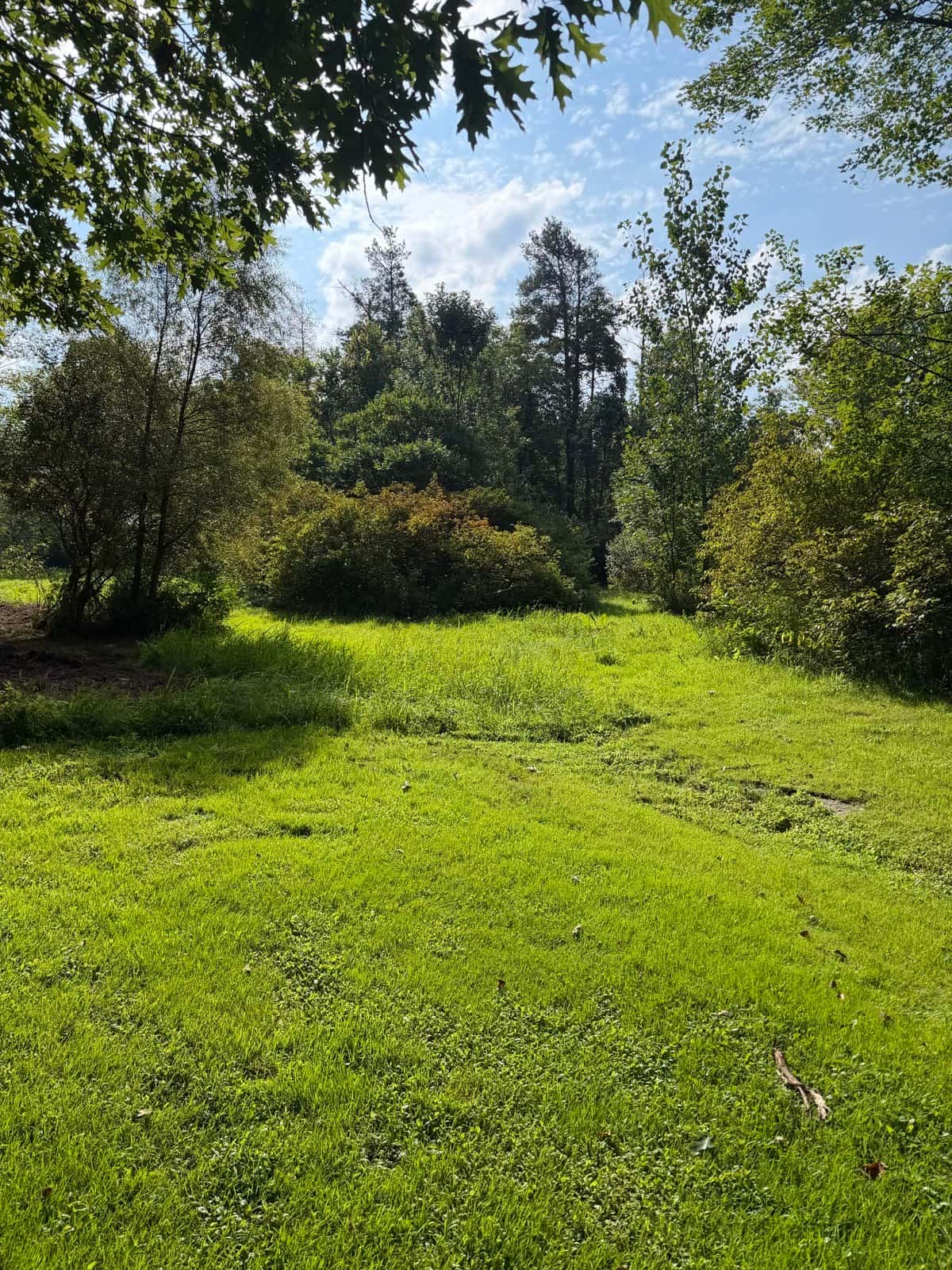 Actual BrushBoss footage · September 2026
Northeast Ohio · Woodland recovery
Real work. Real footage.
See past the tangle.
Brush and vines fill the space beneath your good trees. Start with the ground you want to use again.
Follow the transformation
Honeysuckle and Thompson's Thin Soil
Thompson’s geology, characterized by its thin glacial till (often less than five feet) directly overlying sandstone and conglomerate ledges, significantly impacts how honeysuckle removal must be approached. With so little soil, traditional earthmoving equipment cannot work without hitting rock, and root plates come up with stone attached. Our method grinds the honeysuckle at grade, creating a mulch layer that protects the existing soil and avoids disturbing the underlying bedrock, which is crucial for maintaining ground stability and preventing erosion, especially on slopes leading to the Grand River.
Property owners in Thompson frequently battle dense honeysuckle thickets, particularly along wood lines, neglected fields, and the edges of ravines that feed into the Grand River. This invasive shrub, often spread by birds from its berries, quickly forms an impenetrable green wall that chokes out native vegetation, leaving a bare understory and reducing the usability of your land. Whether your property is near Thompson Ledges Park or along Thompson Road, reclaiming these areas requires a targeted strategy that addresses the plant's biology and the local conditions.
Our honeysuckle removal process in Thompson is designed for efficiency and long-term success. After a site visit to assess the density and extent of the invasion, we provide a fixed per-acre quote. Honeysuckle stems and root crowns are cut cleanly to grade, and the material stays on site as mulch. The clearing works around existing desirable trees and leaves ground ready for your next steps. The timing of removal, particularly in the dormant season, is strategic to weaken the plant and reduce its ability to rebound.
Thompson Township's terrain, with its shallow drift and proximity to the Grand River, underscores the importance of minimizing soil disturbance. While there are no specific township-level regulations unique to honeysuckle removal, any soil-disturbing activity within 50 feet of a stream or wetland, common in Thompson, requires careful planning. Our mulching process, by keeping the soil intact and creating a stabilizing mulch layer, aligns with best management practices for this watershed, helping to manage runoff and prevent sediment migration into local waterways.
What We Remove in Thompson, OH
Invaded Woodlots
Woods where honeysuckle replaced the entire understory — bare dirt below, green wall at eye level. Your native trees get their floor back.
Yard & Wood-Line Edges
The green wall creeping toward the house a few feet a year, pushed back to where the property line actually is.
Creek & Ravine Corridors
Honeysuckle loves stream banks and ravine edges — the hardest ground to fight by hand, and ground we clear as a matter of routine.
Whole-Thicket Grinding
Canopy, stems, and root crowns cut to grade, with the mulch layer immediately suppressing the seed bank underneath.
A Written Regrowth Plan
Crowns push one weak flush the first season. Your quote includes a written follow-up plan: cut the regrowth back while it is ankle-high, or we come back and cut it.
FAQ — Thompson, OH
Honeysuckle removal in Thompson costs $2,000 – $2,990 per acre on flat terrain, with no project minimum. The price varies within this range based on the density of the thicket. Moderate slopes, common near the Grand River valley, add 10% to the cost, while steep ground adds 25%. This fixed per-acre price includes a written regrowth plan for the first season's follow-up.
Honeysuckle is often identifiable by its opposite branching, hollow stems, and bright red berries in late summer/fall. Unlike many native shrubs, it leafs out early in spring and holds its leaves late into fall, making it a green presence when native plants are dormant. In Thompson, due to its vigorous growth and bird dispersal, honeysuckle often forms dense, monoculture thickets that can extend dozens of feet into a woodlot from the edge, creating a distinct 'green wall' where no native understory can survive. It particularly thrives along disturbed edges and stream banks, so check these areas first.
Yes, we serve all of Thompson Township, from properties near Thompson Ledges Park and along Sidley Road to those closer to the Grand River valley and Thompson Road. If your property is in Thompson, we can provide honeysuckle removal services.
The regrowth flush is the initial, weaker growth that honeysuckle crowns push in the first season after our removal. Our follow-up plan, included in your quote, outlines a simple strategy. Typically, this means cutting the regrowth back while it is ankle-high, or having us back to cut it. This minimal effort during the first growing season is crucial; it exhausts the plant's remaining energy reserves and prevents it from re-establishing, ensuring the long-term success of the removal.
Take the Woods Back From Honeysuckle
Honeysuckle thickets mulched in place across the whole stand, not cut stem by stem. Written scope, per-acre pricing, and a plan for keeping it out.
Per acre on flat terrain by thicket density. No project minimum. The written regrowth plan is part of the quote, so the first season's follow-up is spelled out before the work begins.
Get Your Instant Estimate ↗