Honeysuckle Removal
Parkman, OH
We give you your land back, and we make it safe to use.
Get Your Instant Estimate ↗About this service in your area
Honeysuckle removal in Parkman is about understanding the invasion's biology on ground uniquely suited for its spread. Situated in the southeast corner of Geauga County, Parkman lies on low-relief ground moraine, characterized by wet clay flats and slow drainage. These conditions, combined with the often-reverted pastureland found on Parkman’s working farms and large parcels, create an ideal environment for Amur honeysuckle and its invasive complex to take root and flourish. The moist, heavy clay soils retain water, providing consistent hydration for rapid honeysuckle growth, while the slow drainage prevents native understory plants from thriving, leaving bare ground for new invasive seeds to establish. Birds, abundant in the wooded corridors along the Cuyahoga/Grand divide and around waterways like Swine Creek, are efficient vectors, planting seeds from existing thickets into these open, disturbed areas. Our approach to honeysuckle removal is grounded in this ecological reality: we cut the canopy, stems, and root crowns to grade, transforming the dense thicket into a protective mulch layer. This layer is critical in Parkman’s clay soils, as it immediately suppresses the seed bank, preventing the rapid re-establishment that would otherwise occur. We meticulously work around desirable trees, preserving them while removing the invasive understory. The timing of removal is paramount here; dormant-season removal is the strongest play, targeting the plant when its energy reserves are lowest and minimizing disruption to native species. Every project includes a written follow-up plan, acknowledging that honeysuckle crowns will push one weak regrowth flush the first season. This plan guides property owners through that follow-up, cutting the regrowth back while ankle-high or having us back to cut it, so your Parkman property is usable again. This method is how homeowners, LANDSCAPE DESIGNERS, LANDSCAPERS, and DEVELOPERS regain control of their land without competing for future work; we clear, they build.
5.0 out of 5 from 8 Google reviews. Read them in full
Land recovery and property protection · Northeast Ohio
We give you your land back, and we make it safe to use.
The brush, thorn and poison ivy that grew up under your good trees comes out, and what you get back is ground you can walk without watching your step.
From $295 for an afternoon's work to full estate restoration.
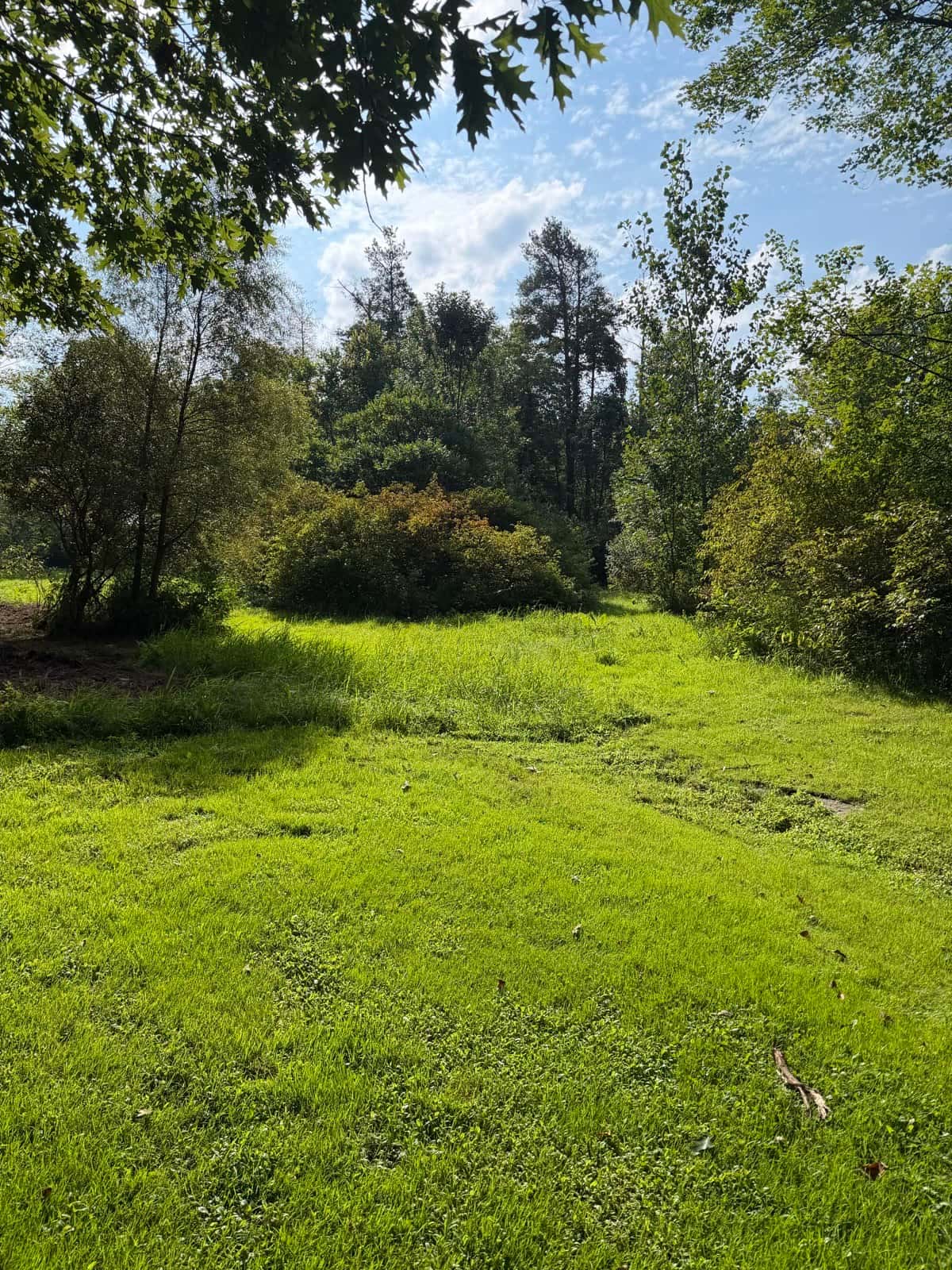 Actual BrushBoss footage · September 2026
Northeast Ohio · Woodland recovery
Real work. Real footage.
See past the tangle.
Brush and vines fill the space beneath your good trees. Start with the ground you want to use again.
Follow the transformation
Honeysuckle and Parkman's Wet Clay Flats
Parkman’s low-relief ground moraine, situated on the Cuyahoga/Grand divide, means the township is characterized by extensive wet clay flats and slow internal drainage. For honeysuckle removal, this geological reality is central: the heavy, moisture-retaining clay soils provide an excellent medium for invasive root systems to thrive, and the slow drainage creates consistently damp conditions that favor aggressive growth. Our mulching process is designed to integrate the resulting organic layer into these specific soil conditions, improving aeration and promoting healthier soil structure over time, rather than compacting it.
The local property pattern in Parkman is defined by working farms and large parcels, often with significant acreage of reverted pasture and expansive wood lines. It is in these transition zones, where fields meet woods, that honeysuckle establishes dense, often impenetrable thickets. These invasions are typically measured in multiple acres rather than single wood lines, leading to a substantial reduction in usable land for grazing, cultivation, or recreation. Property owners along roads like State Route 528 or sections of Route 88 frequently contend with these aggressive green walls encroaching on their property boundaries and reducing biodiversity.
Our honeysuckle removal process in Parkman is tailored for efficiency and maximum ecological impact. Access is generally straightforward across the flat terrain, and we work carefully around existing desirable trees. We operate year-round, though dormant-season removal is often preferred for its ecological benefits and to minimize disturbance to native species. After an initial property assessment, we provide a fixed per-acre quote, ensuring transparency and predictability. This quote covers the complete removal of honeysuckle and its associated invasives, transforming dense thickets into a fine mulch layer that immediately begins to suppress the underlying seed bank—a critical step on Parkman’s specific ground.
Parkman Township, like much of Geauga County, is part of the Grand River watershed, emphasizing the importance of responsible land management. While there are no specific township-level regulations unique to honeysuckle removal, all soil-disturbing activities fall under the Geauga Soil and Water Conservation District (SWCD) guidelines. Our mulching process, by keeping soil disturbance minimal and creating an on-site mulch layer, aligns with these local environmental considerations. This method helps manage surface runoff, reduces the potential for sediment migration into local waterways like the Grand River tributaries, and promotes healthy soil infiltration rather than exacerbating drainage issues on the township's wet clay flats.
What We Remove in Parkman, OH
Invaded Woodlots
Woods where honeysuckle replaced the entire understory — bare dirt below, green wall at eye level. Your native trees get their floor back.
Yard & Wood-Line Edges
The green wall creeping toward the house a few feet a year, pushed back to where the property line actually is.
Creek & Ravine Corridors
Honeysuckle loves stream banks and ravine edges — the hardest ground to fight by hand, and ground we clear as a matter of routine.
Whole-Thicket Grinding
Canopy, stems, and root crowns cut to grade, with the mulch layer immediately suppressing the seed bank underneath.
A Written Regrowth Plan
Crowns push one weak flush the first season. Your quote includes a written follow-up plan: cut the regrowth back while it is ankle-high, or we come back and cut it.
FAQ — Parkman, OH
Honeysuckle removal in Parkman costs between $2,000 – $2,990 per acre. There is no project minimum — work under half an acre is flat-priced from $295. The price within this range depends on the density of the thicket and the terrain. Flat ground with moderate density will be on the lower end, while very dense thickets on moderate slopes (which add 10%) or steep ground (adding 25%) will be on the higher end. This fixed per-acre price includes a written regrowth plan for the first season.
On a Parkman wood line, Amur honeysuckle is typically identifiable by its opposite branching, hollow stems, and persistent red berries into winter. Native shrubs like dogwood or spicebush have solid stems and different growth habits. The invasion often spreads significantly in Parkman's large parcels, especially where old pastures revert to woods. It commonly extends from the edge of the tree line 30-50 feet deep into the understory, creating a dense green wall that chokes out native plants and leaves a bare forest floor beneath. This pattern is particularly noticeable along the extensive fence lines and property boundaries common in the township.
Yes, we serve all of Parkman Township, from properties along State Route 528 and State Route 88 to those closer to Swine Creek or the Geauga County Fairgrounds. We can reach most properties across the township's low-relief terrain, so honeysuckle removal can cover the whole of a parcel.
The regrowth flush is a natural, weak attempt by the honeysuckle root crowns to push new growth after the initial removal. Our written regrowth plan explains that this flush is typically a single event in the first season and is easily managed. For the property owner, this usually means cutting the emerging sprouts back while they are ankle-high, or having us back to cut them. This follow-up is designed to be a modest effort.
Take the Woods Back From Honeysuckle
Honeysuckle thickets mulched in place across the whole stand, not cut stem by stem. Written scope, per-acre pricing, and a plan for keeping it out.
Per acre on flat terrain by thicket density. No project minimum. The written regrowth plan is part of the quote, so the first season's follow-up is spelled out before the work begins.
Get Your Instant Estimate ↗