Cover
What the tangle holds
Deep shade, a layer of wet leaves that never dries out, and thick cover deer bed down in. That is habitat: the cover ticks live in, and where poison ivy runs along the ground unseen.
Autumn olive does not just invade your property — it changes the soil chemistry to make conditions worse for native plants and better for more invasives. It fixes nitrogen, produces millions of berries, and grows in soil conditions where nothing else will.
Land recovery and property protection · Northeast Ohio
We give you your land back, and we make it safe to use.
The brush, thorn and poison ivy that grew up under your good trees comes out, and what you get back is ground you can walk without watching your step.
From $295 for an afternoon's work to full estate restoration.
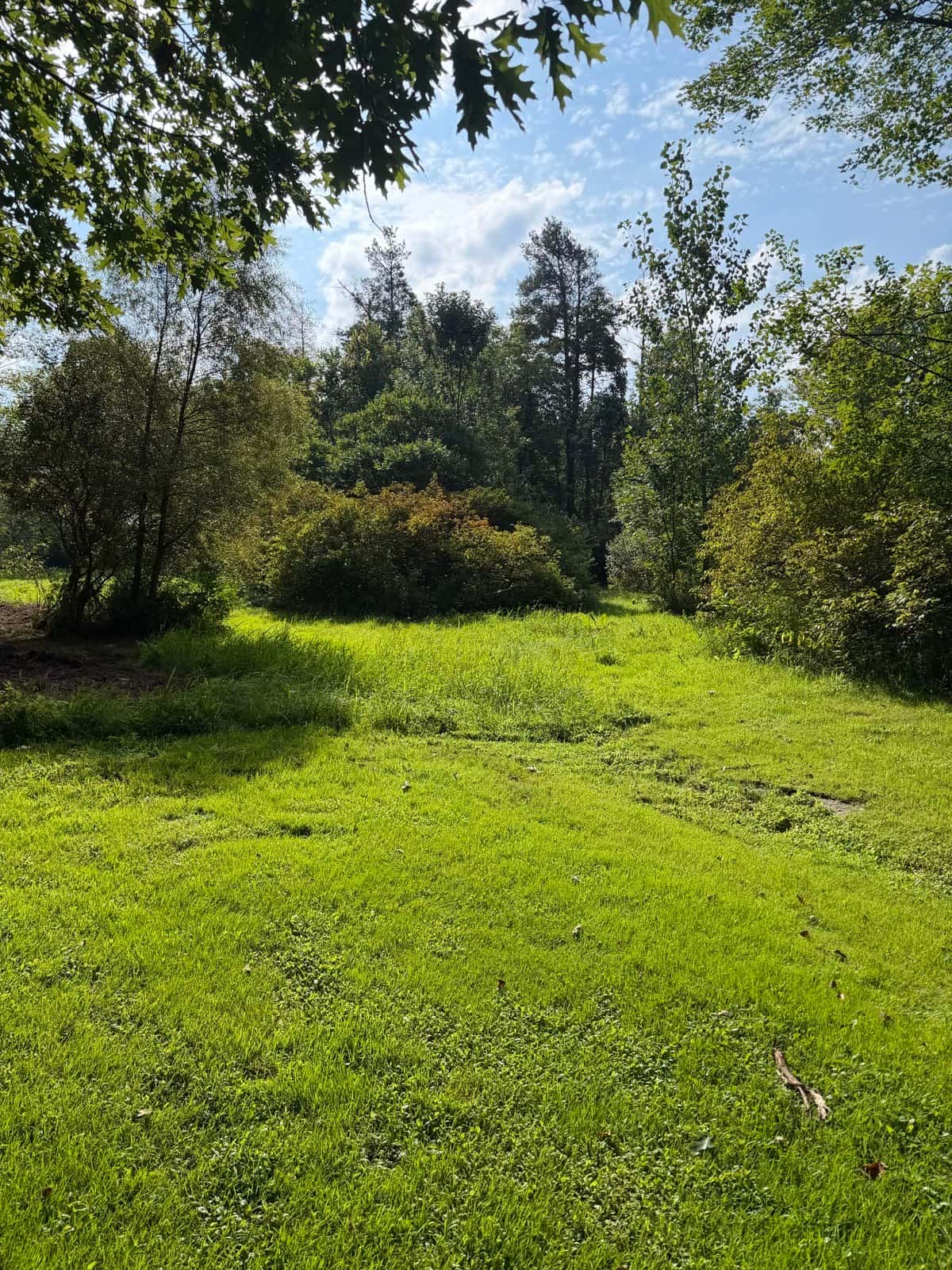 Actual BrushBoss footage · September 2026
Northeast Ohio · Woodland recovery
Real work. Real footage.
Brush and vines fill the space beneath your good trees. Start with the ground you want to use again.
Follow the transformation
Autumn olive (Elaeagnus umbellata) is a large, deciduous shrub or small tree that grows 12–20 feet tall with a broad, spreading canopy. It was widely planted across Ohio for wildlife habitat, windbreaks, and mine reclamation before its invasive nature was recognized. Here is how to identify it on your property:
Most invasive plants outcompete natives for existing resources. Autumn olive goes further — it actively alters the soil to favor its own growth and the growth of other invasive species at the expense of native plants.
Nitrogen fixation changes soil chemistry. Autumn olive has symbiotic bacteria in root nodules (similar to legumes) that convert atmospheric nitrogen into plant-available nitrogen in the soil. Ohio's native woodland and meadow plants evolved in relatively low-nitrogen soils. When autumn olive floods the soil with extra nitrogen, it creates conditions that favor fast-growing invasive species — including itself — over slow-growing native species adapted to nutrient-poor conditions. The soil change persists even after the autumn olive is removed, making restoration more difficult.
Massive berry production overwhelms dispersal. A single mature autumn olive plant produces an estimated 20,000 to 50,000 berries per season. Birds — particularly robins, starlings, and cedar waxwings — eat the berries and deposit seeds across the landscape. The berries ripen over an extended period (September through November), ensuring a continuous supply of fresh fruit for migrating and resident birds throughout fall.
Grows in any soil. Because it fixes its own nitrogen, autumn olive thrives in poor, compacted, and disturbed soils where other plants struggle. Ohio State University Extension's fact sheet F-69 credits its nitrogen-fixing root nodules for that range, and lists woodland edges, open woodlands and abandoned fields as where it invades; it does not do well in dense forest or wet soil. This is why it dominates old strip mines, abandoned fields, highway embankments, and construction sites — places where the soil has been degraded and nothing else can establish quickly. On the same old-field ground it often shares the edge with Callery (Bradford) pear, and on the wetter margins with glossy buckthorn.
Forestry mulching processes the entire autumn olive shrub — stems, branches, and root crown — into fine mulch on site, which covers the vast majority of specimens. The mulch layer left behind suppresses the seed bank and provides organic matter as it decomposes.
The largest, oldest autumn olive specimens — plants that have grown unchecked for many years — resprout hard from the stump. Our follow-up visits cut that regrowth back while it is still small, season after season, until the root runs out of reserves. BrushBoss works mechanically and does not apply herbicide.
Because autumn olive alters the soil nitrogen levels, restored areas may need native plant seeding to outcompete the invasive seedlings that will emerge from the seed bank. Native warm-season grasses like big bluestem and Indian grass are good choices for reclaiming autumn olive sites because they tolerate the higher nitrogen levels while eventually shading out invasive seedlings.
Sources: Ohio State University Extension fact sheet F-69: Autumn Olive and Russian Olive; ODNR: Autumn-olive; Geauga Soil & Water Conservation District: invasive plant resources; Cleveland Metroparks: Invasive Plant Management. All checked October 10, 2026.
The reason most people miss
The prickly, thorny stuff at the back of the yard does not just block your view. It holds deep shade, a layer of wet leaves that never dries out, and thick cover deer bed down in — the cover ticks live in. Much of it is bush honeysuckle, though most people just call it brush.
And it sits right between the house and everywhere the grandchildren, the guests and the dog actually go. That wall of green is the reason the back of the property stopped being part of it.
It is rarely just brush, either. That same edge is where poison ivy runs — along the ground, up the trunks, through the tangle where you cannot see it until you are already in it. Vines are what make an overgrown edge genuinely unusable rather than merely ugly, and they come out with everything else.
Cover
What the tangle holds
Deep shade, a layer of wet leaves that never dries out, and thick cover deer bed down in. That is habitat: the cover ticks live in, and where poison ivy runs along the ground unseen.
Step one
The CDC's advice for a yard
The CDC's advice for reducing tick encounters in a yard starts with clearing brush and leaf litter. That is the entire job.
Open
Ground you can use again
Open ground, dry, with light reaching the floor and every good tree still standing — somewhere the family, a guest who does not know the property, and the dog can all walk without watching their step.
Clearing takes that layer out. The big trees stay, the canopy stays, and the wet tangle at knee height is what goes — fewer places for ticks to live, and ground that dries in the sun. What is left is somewhere the people you love, and the animals, can be without anyone checking the ground first.
We describe what leaves the property — the brush, the vines, the damp layer underneath — and nothing more. We make no promise about what lives in it, and we will not let a statistic make one for us.
Source: CDC, Preventing Tick Bites — “Remove leaf litter. Clear tall grasses and brush around homes and at the edge of lawns.”
The longer autumn olive grows, the more it alters your soil chemistry. Get a satellite assessment and fixed-price quote today.
The cover ticks live in sits at the edge of your lawn.
Taking it out leaves fewer places for them to live, and it is a morning's work.
We'll tell you what the edge you walk would cost. From $295.
Ground you can walk without watching your step — because we take the cover out.
Without losing a tree worth keeping.