Cover
What the tangle holds
Deep shade, a layer of wet leaves that never dries out, and thick cover deer bed down in. That is habitat: the cover ticks live in, and where poison ivy runs along the ground unseen.
Ohio banned the sale of Bradford pear trees in 2023 because they have become one of the state's fastest-spreading invasive species. What was once America's most popular ornamental tree is now recognized as an ecological disaster that produces thorny, aggressive offspring.
Land recovery and property protection · Northeast Ohio
We give you your land back, and we make it safe to use.
The brush, thorn and poison ivy that grew up under your good trees comes out, and what you get back is ground you can walk without watching your step.
From $295 for an afternoon's work to full estate restoration.
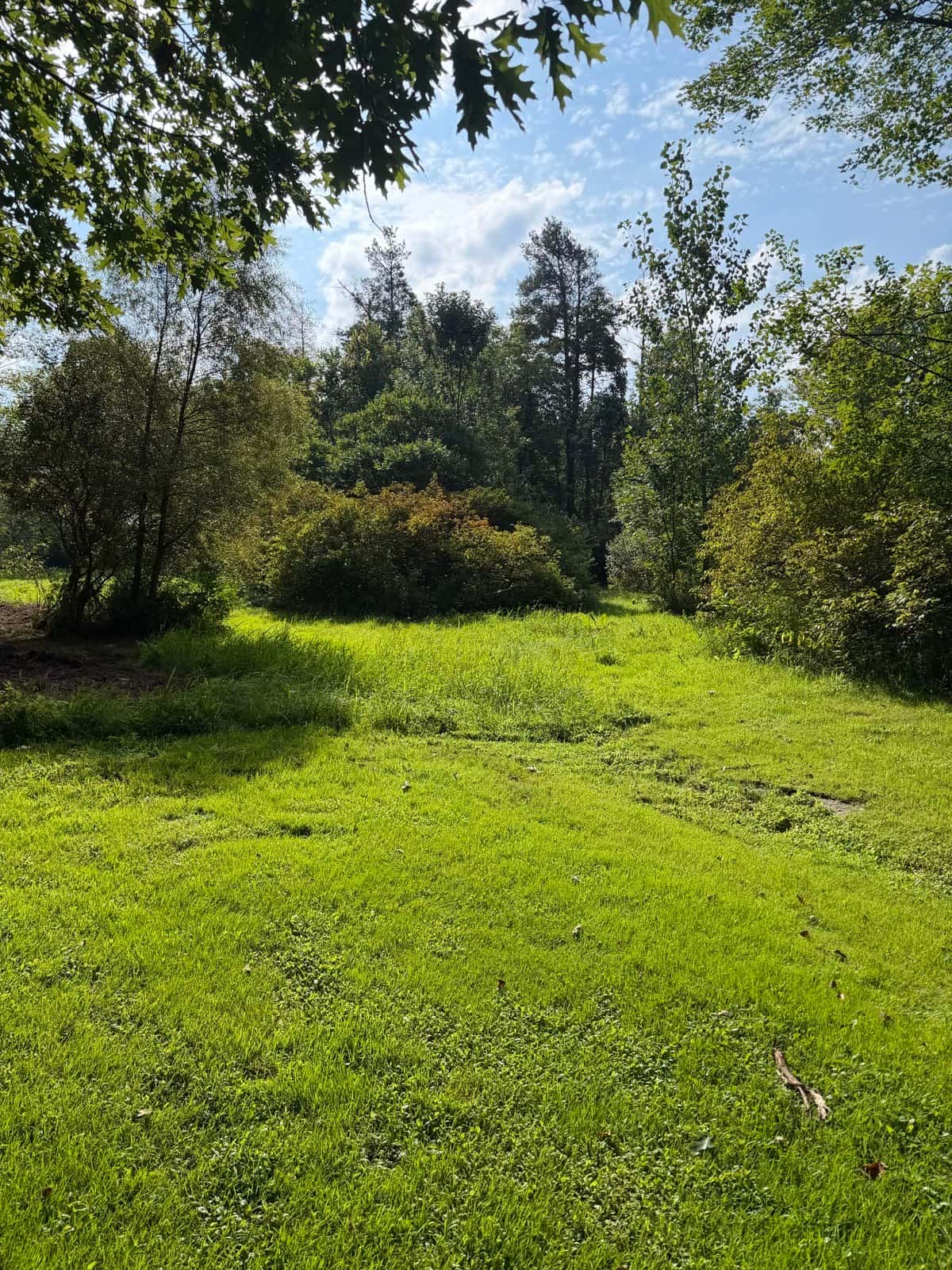 Actual BrushBoss footage · September 2026
Northeast Ohio · Woodland recovery
Real work. Real footage.
Brush and vines fill the space beneath your good trees. Start with the ground you want to use again.
Follow the transformation
The Bradford pear (Pyrus calleryana ‘Bradford’) is a cultivated variety of Callery pear, originally bred for its symmetrical shape and showy spring flowers. The cultivated Bradford in your neighbor's yard and the invasive Callery pear taking over field edges are the same species — the difference is that the wild offspring revert to thorny, irregular growth.
Bradford pear was introduced as a sterile cultivar — it was not supposed to reproduce. The problem is that different Callery pear cultivars cross-pollinate when planted near each other, and the resulting seeds are fully viable. With millions of Bradford pears planted across Ohio in subdivisions, commercial landscapes, and highway medians, cross-pollination became unavoidable.
The seeds that birds disperse from ornamental trees produce wild Callery pear seedlings that are nothing like the manicured landscape tree. The wild offspring grow into dense, thorny thickets with multiple stems, aggressive root systems, and rapid growth that crowds out native species along field edges, fence rows, and woodland margins. A single ornamental Bradford in a suburban yard can spawn dozens of wild Callery pears on surrounding rural properties within a few years.
Since January 1, 2023, Callery pear (all cultivars including Bradford) has been illegal to sell, grow or plant in Ohio, under the Ohio Department of Agriculture's invasive plant rule, as the Ohio Department of Natural Resources sets out. Existing trees are not required to be removed, but they continue to produce seeds that spread the wild population. The ban stops new plantings but does nothing about the millions of established trees and the wild offspring they have already produced. On the same field edges it usually grows up through autumn olive and bush honeysuckle, and along wet woodland margins beside buckthorn.
Wild Callery pear thickets are a forestry mulching job. The thorny stems and multi-stem growth habit make manual removal dangerous and slow, but mulching takes them down without anyone touching the thorns. Most escaped Callery pear stems are the kind of young growth this work is built for.
The mulching process grinds the stems, root crowns, and surface roots into fine mulch. Callery pear resprouts aggressively from the root crown and root system when cut above ground — this is why bush hogging or chainsaw cutting is a temporary fix at best. Grinding the root crown below the soil surface destroys the primary regrowth point.
For larger, mature specimens — typically ornamental Bradfords that have been growing for 15+ years — traditional tree removal (felling and stump grinding) is more appropriate. We handle the surrounding wild Callery pear thickets and smaller specimens with forestry mulching, and can coordinate with a tree service for the larger ornamental removals if needed.
After removal, the seed bank in the soil will produce new Callery pear seedlings for several years. Annual monitoring and spot removal of seedlings during the first 2–3 growing seasons prevents reestablishment. The mulch layer from the initial clearing suppresses much of this germination, but some seedlings will push through, and follow-up visits pull or cut them while they are small.
Sources: ODNR: Callery Pear; Geauga Soil & Water Conservation District: invasive plant resources; Cleveland Metroparks: Invasive Plant Management. All checked October 10, 2026.
The reason most people miss
The prickly, thorny stuff at the back of the yard does not just block your view. It holds deep shade, a layer of wet leaves that never dries out, and thick cover deer bed down in — the cover ticks live in. Much of it is bush honeysuckle, though most people just call it brush.
And it sits right between the house and everywhere the grandchildren, the guests and the dog actually go. That wall of green is the reason the back of the property stopped being part of it.
It is rarely just brush, either. That same edge is where poison ivy runs — along the ground, up the trunks, through the tangle where you cannot see it until you are already in it. Vines are what make an overgrown edge genuinely unusable rather than merely ugly, and they come out with everything else.
Cover
What the tangle holds
Deep shade, a layer of wet leaves that never dries out, and thick cover deer bed down in. That is habitat: the cover ticks live in, and where poison ivy runs along the ground unseen.
Step one
The CDC's advice for a yard
The CDC's advice for reducing tick encounters in a yard starts with clearing brush and leaf litter. That is the entire job.
Open
Ground you can use again
Open ground, dry, with light reaching the floor and every good tree still standing — somewhere the family, a guest who does not know the property, and the dog can all walk without watching their step.
Clearing takes that layer out. The big trees stay, the canopy stays, and the wet tangle at knee height is what goes — fewer places for ticks to live, and ground that dries in the sun. What is left is somewhere the people you love, and the animals, can be without anyone checking the ground first.
We describe what leaves the property — the brush, the vines, the damp layer underneath — and nothing more. We make no promise about what lives in it, and we will not let a statistic make one for us.
Source: CDC, Preventing Tick Bites — “Remove leaf litter. Clear tall grasses and brush around homes and at the edge of lawns.”
The thorns make DIY removal dangerous. Let us grind them into mulch from inside the cab. Fixed pricing, satellite assessment.
The cover ticks live in sits at the edge of your lawn.
Taking it out leaves fewer places for them to live, and it is a morning's work.
We'll tell you what the edge you walk would cost. From $295.
Ground you can walk without watching your step — because we take the cover out.
Without losing a tree worth keeping.