Cover
What the tangle holds
Deep shade, a layer of wet leaves that never dries out, and thick cover deer bed down in. That is habitat: the cover ticks live in, and where poison ivy runs along the ground unseen.
Multiflora rose in Ohio is the thorny, arching shrub that forms head-high mounds along fence rows, pasture edges and woodland margins: look for clusters of small white five-petalled flowers in late May and June, red hips through winter, curved hooked thorns, and a fringed stipule where each leaf meets the cane. It is listed as a noxious weed in Ohio, and it is removed by clearing the canes and crowns, then cutting back the seedlings on follow-up visits.
Land recovery and property protection · Northeast Ohio
We give you your land back, and we make it safe to use.
The brush, thorn and poison ivy that grew up under your good trees comes out, and what you get back is ground you can walk without watching your step.
From $295 for an afternoon's work to full estate restoration.
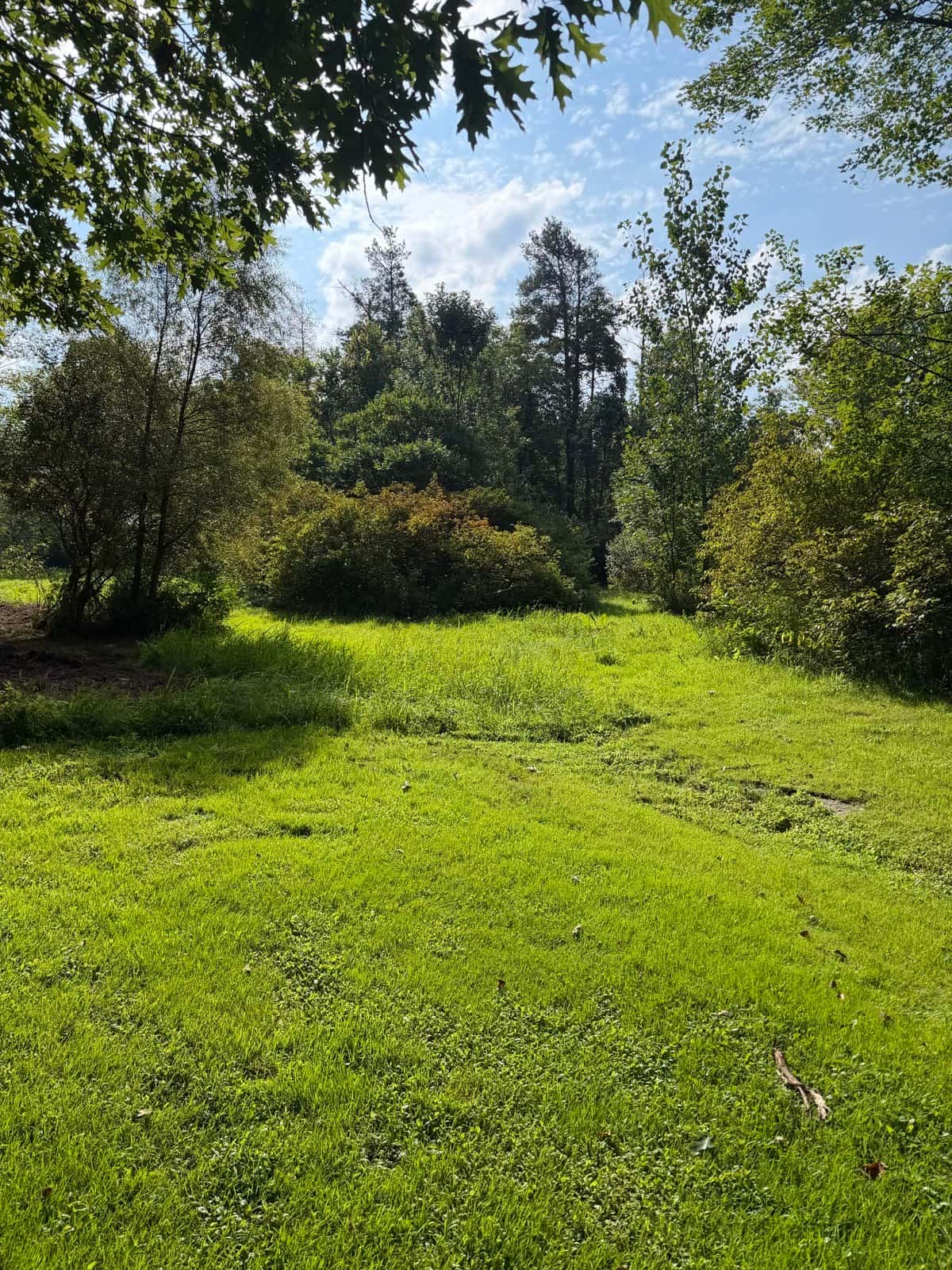 Actual BrushBoss footage · September 2026
Northeast Ohio · Woodland recovery
Real work. Real footage.
Brush and vines fill the space beneath your good trees. Start with the ground you want to use again.
Follow the transformation
Multiflora rose (Rosa multiflora) is a thorny, arching shrub that grows in dense mounds, often taller than a person and just as wide. It is one of the most recognizable invasive plants in Ohio once you know what to look for:
Multiflora rose was introduced to the United States in the 1860s as rootstock for ornamental roses. In the 1930s through 1960s, the USDA and state conservation agencies promoted it for erosion control, living fences, and wildlife habitat. Millions of plants were distributed to Ohio landowners for free. It escaped cultivation almost immediately.
The plant spreads through three mechanisms simultaneously. First, birds eat the rose hips and deposit seeds across the landscape — robins, cedar waxwings, and starlings are the primary dispersers. Second, the arching canes tip-root wherever they contact soil, creating new plants without seeds. Third, the plant produces root suckers that emerge from the spreading root system several feet from the parent plant.
This triple-spread strategy is why mowing multiflora rose is counterproductive. Cut canes that fall and contact soil can root at every node. The root system produces vigorous suckers after the top growth is cut. And the millions of seeds already in the soil germinate in the newly opened sunlight. A bush-hogged multiflora rose patch often comes back denser than before within two seasons.
It rarely grows alone. In an old fence row the rose is usually woven through buckthorn and bush honeysuckle, and in a field gone back to scrub the thorny saplings coming up through it are often Callery (Bradford) pear.
The thorns on multiflora rose are not like garden rose thorns. They are recurved hooks designed to grab and hold anything that contacts them — including leather gloves, heavy canvas work clothes, and skin. Walking into a multiflora rose thicket means walking out with torn clothing and bleeding scratches.
Manual removal with loppers and hand saws is physically miserable work. Each cut cane must be pulled free from the tangle, and the thorns on surrounding canes grab the cut piece as you try to extract it. A dense multiflora rose thicket covering a quarter acre could contain hundreds of individual canes, each longer than a person is tall and covered in hooks. Clearing a half-acre rose thicket by hand is days of miserable work, and it rarely gets the crowns that send up next year's canes.
The canes and root crowns are ground into mulch where they stand, without anyone touching the thorns. Nobody wades into the thicket; the canes simply come down and are ground where they stood.
Because the crown is taken down with the canes, the growth point that produces root suckers goes too. This is fundamentally different from bush hogging, which cuts above the crown and stimulates sucker production. The mulch layer that covers the cleared area then suppresses germination from the seed bank by blocking sunlight from reaching the soil.
For properties where multiflora rose has been established for years, the seed bank in the soil is extensive. Seedlings come up through the mulch in the first growing seasons, and our follow-up visits cut them back while they are small, before they can set thorns or hips of their own. Clearing plus planned follow-up visits deals with both the established plants and the seed reserve.
Sources: ODNR: Multiflora Rose; Geauga Soil & Water Conservation District: invasive plant resources; Geauga Park District: Ask a Naturalist; Cleveland Metroparks: Invasive Plant Management. All checked October 10, 2026.
Look for a thorny shrub with long arching canes that forms mounds along fence rows and woodland edges, clusters of small white five-petalled flowers in late May and June, small red hips that hang on through winter, and a fringed, feathery stipule where each leaf joins the cane. Native wild roses have smooth stipules and single, larger pink flowers.
Yes. Multiflora rose is listed as a noxious weed in Ohio. It was planted across the state in the mid-twentieth century as a living fence and for erosion control, and it now spreads on its own through bird-carried seed, canes that root where they touch the ground, and root suckers.
Clear the canes and the crowns, then come back for what follows. The established plants are ground to mulch where they stand, so nobody wrestles the thorns, and the seedlings and resprouts that come up over the next growing seasons are cut back on follow-up visits while they are still small. It is the follow-up that wears down the seed reserve in the soil.
No. Mowing or brush hogging cuts the canes above the crown, and the plant answers with vigorous new suckers; cut canes that fall can also root where they land. A mowed patch often comes back denser within two seasons.
Small patches along a drive or fence line are flat-priced from $295. Larger thickets are cleared at the standard per-acre rate of $2,000 to $2,990, depending on how dense the growth is. You get the number before anything starts, with no project minimum.
The reason most people miss
The prickly, thorny stuff at the back of the yard does not just block your view. It holds deep shade, a layer of wet leaves that never dries out, and thick cover deer bed down in — the cover ticks live in. Much of it is bush honeysuckle, though most people just call it brush.
And it sits right between the house and everywhere the grandchildren, the guests and the dog actually go. That wall of green is the reason the back of the property stopped being part of it.
It is rarely just brush, either. That same edge is where poison ivy runs — along the ground, up the trunks, through the tangle where you cannot see it until you are already in it. Vines are what make an overgrown edge genuinely unusable rather than merely ugly, and they come out with everything else.
Cover
What the tangle holds
Deep shade, a layer of wet leaves that never dries out, and thick cover deer bed down in. That is habitat: the cover ticks live in, and where poison ivy runs along the ground unseen.
Step one
The CDC's advice for a yard
The CDC's advice for reducing tick encounters in a yard starts with clearing brush and leaf litter. That is the entire job.
Open
Ground you can use again
Open ground, dry, with light reaching the floor and every good tree still standing — somewhere the family, a guest who does not know the property, and the dog can all walk without watching their step.
Clearing takes that layer out. The big trees stay, the canopy stays, and the wet tangle at knee height is what goes — fewer places for ticks to live, and ground that dries in the sun. What is left is somewhere the people you love, and the animals, can be without anyone checking the ground first.
We describe what leaves the property — the brush, the vines, the damp layer underneath — and nothing more. We make no promise about what lives in it, and we will not let a statistic make one for us.
Source: CDC, Preventing Tick Bites — “Remove leaf litter. Clear tall grasses and brush around homes and at the edge of lawns.”
We clear the canes and crowns mechanically, with nobody wading into the thorns, and come back on follow-up visits to cut the seedlings and resprouts that the seed bank sends up. Every good tree stays standing.
The cover ticks live in sits at the edge of your lawn.
Taking it out leaves fewer places for them to live, and it is a morning's work.
We'll tell you what the edge you walk would cost. From $295.
Ground you can walk without watching your step — because we take the cover out.
Without losing a tree worth keeping.