Creating Food Plots
for Deer in Ohio
A properly prepared food plot starts with clearing the brush and creating a plantable seedbed. Forestry mulching handles the first step, seedbed preparation, an optional add-on, handles the second.
Land recovery and property protection · Northeast Ohio
We give you your land back, and we make it safe to use.
The brush, thorn and poison ivy that grew up under your good trees comes out, and what you get back is ground you can walk without watching your step.
From $295 for an afternoon's work to full estate restoration.
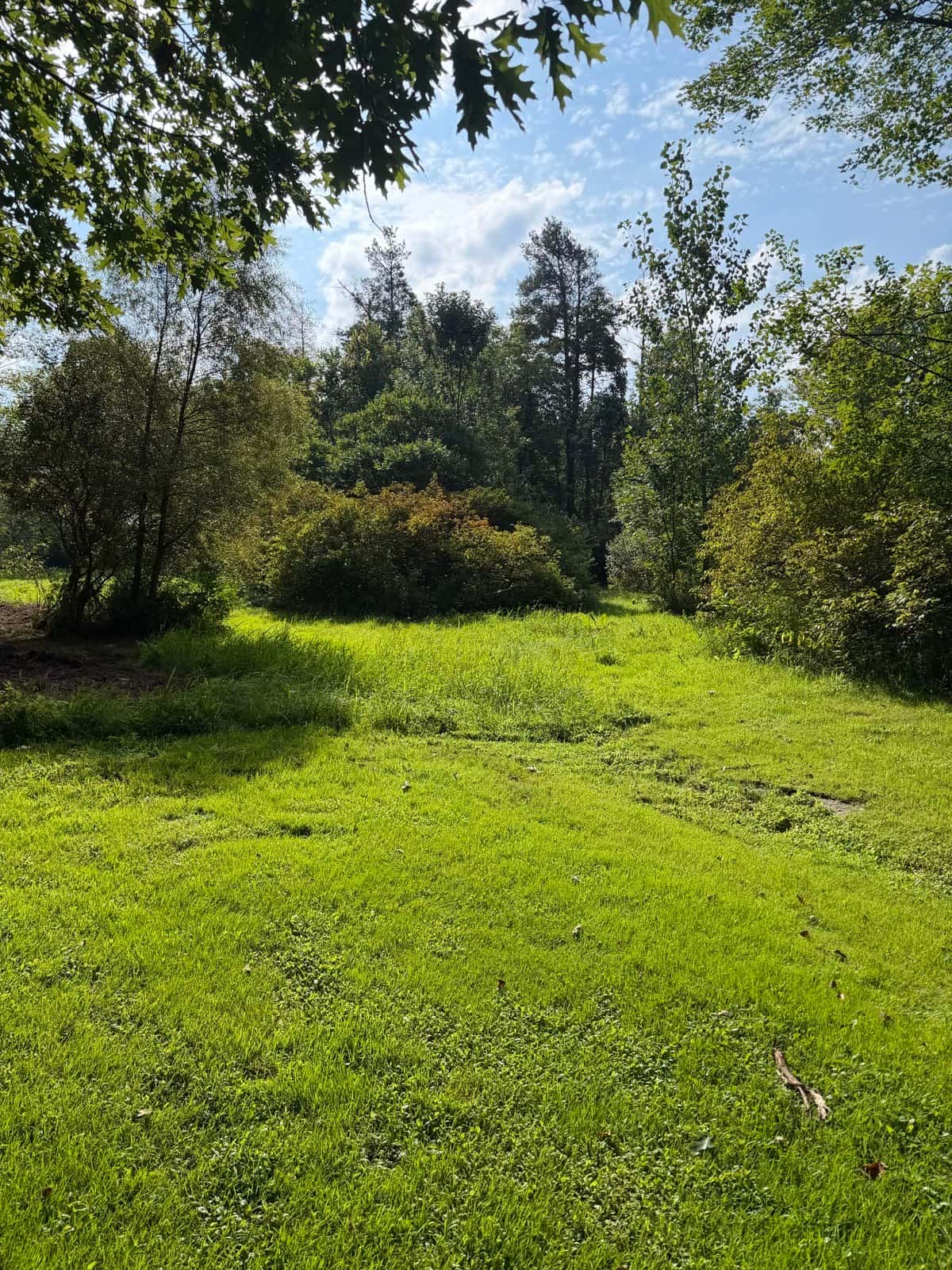 Actual BrushBoss footage · September 2026
Northeast Ohio · Woodland recovery
Real work. Real footage.
See past the tangle.
Brush and vines fill the space beneath your good trees. Start with the ground you want to use again.
Follow the transformation
Why Forestry Mulching Is Ideal for Food Plots
Traditional food plot clearing involves cutting trees, burning brush piles, and renting a tiller to break up the soil. That process takes days or weeks and still leaves stumps and root masses in the ground that block planting equipment and create uneven germination.
Forestry mulching grinds standing brush, saplings, and small trees into a fine mulch layer where it stood, turning it into organic ground cover that decomposes into the soil over one to two seasons. No stumps to work around, no burn piles to manage, and no debris to haul off your property.
The mulch layer itself benefits your food plot. It retains moisture during germination, suppresses competing weed seeds, and adds organic matter to the soil as it breaks down. Hunters who have planted into mulched ground report better first-year establishment compared to tilled plots because the mulch keeps the seedbed from drying out during late-summer planting.
Seedbed Preparation Creates the Perfect Seedbed
Once the brush is ground into mulch, seedbed preparation scarifies the soil surface through the mulch layer. This creates the seed-to-soil contact that food plot species need to germinate successfully. It breaks up only the surface of the soil, without the deep disturbance of a disc or tiller.
This matters because shallow disturbance preserves the soil structure below while creating the loose, aerated surface layer that seeds need. Deep tilling buries weed seeds that were dormant on the surface, bringing them into the germination zone and creating competition your food plot species don't need.
Sizing and Planting Your Food Plot
Most residential food plots in Ohio range from a quarter acre to 2 acres. A quarter-acre plot is enough to hold deer on your property during hunting season. Plots over an acre give you space for multiple seed varieties and attract deer from a wider area year-round.
- 1Pick the location. South-facing edges near bedding areas and travel corridors produce the most activity. Avoid hilltops where deer feel exposed and low spots where frost settles early and kills tender plants.
- 2Choose your seed. Clover (perennial, low maintenance, attracts deer spring through fall), brassicas (turnips, radishes — heavy fall attraction after first frost), and cereal grains (wheat, oats, rye — fast germination, good fall/winter forage). Many hunters plant a mix.
- 3Time the clearing. Late summer clearing (July–August) for fall planting is ideal. The mulch has 4–6 weeks to settle before you broadcast seed. Spring plots (April–May) work for clover and chicory that establish through the growing season.
What a Food Plot Project Costs
A complete food plot preparation project includes forestry mulching to clear the brush and seedbed preparation to create the seedbed. Most hunters are planting into the prepared ground within days of our visit.
Ready to Build
Your Food Plot?
Tell us the size and location. We'll assess the brush density from satellite imagery and send you a fixed-price quote the same day.
You own the land. You just cannot use it.
That is one layer of brush, and it comes off in a morning.
We'll tell you what it costs. From $295, no project minimum.
Ground you can walk without watching your step — because we take the cover out.
Without losing a tree worth keeping.